Renewable projects ask different things of a transformer than a conventional substation does. A solar transformer has to follow a daily generation curve and tolerate rapid temperature swings; a wind turbine transformer has to survive vibration, variable output and, in some cases, a salt-laden offshore environment. Add battery storage and high-power charging, and the transformer becomes the interface between an intermittent source and a grid that expects stable power. This guide covers the four fastest-growing renewable applications, how their duty differs, and how to specify equipment that will last. Daqo Group has more than 30 years of transformer manufacturing experience and supplies products to IEEE, IEC and ANSI standards.
Key Takeaways
- A solar transformer steps inverter output up to collection voltage and must handle daily thermal cycling and inverter harmonics.
- A wind turbine transformer is compact, vibration-tolerant and sized for highly variable output; offshore units add corrosion demands.
- Energy storage transformers see bidirectional power flow and frequent charge/discharge cycles, which change the thermal and harmonic picture.
- EV charging clusters create sharp, simultaneous demand peaks that are best served by a properly sized padmount transformer.
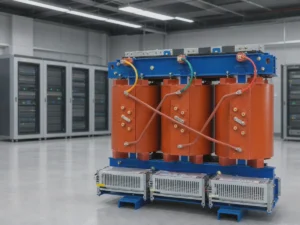
- Oil-immersed construction dominates outdoor renewable sites; dry-type units appear in inverter halls and buildings.
- Size from the real generation or charging profile, not from a single rated-power number.
Why Renewable Projects Stress Transformers Differently
A conventional distribution transformer often runs at a fairly steady load for long periods. Renewable transformers rarely do. Solar output rises and falls with irradiance, wind output follows the weather, storage reverses direction several times a day, and charging stations see traffic patterns that can spike in a few minutes. Each pattern changes the way losses, temperature and insulation aging accumulate.
Three consequences follow. First, load loss is not constant — it rises with the square of current, so short peaks matter more than an average suggests. Second, temperature cycles cause repeated expansion and contraction of windings, tank and seals, which is a mechanical fatigue issue as much as an electrical one. Third, power electronics are everywhere: inverters, converters and rectifiers inject harmonics that add heating and can excite resonances. A specification that ignores these factors may look adequate on paper yet age quickly in service.
If you are still weighing the basic technology families, the transformer types selection guide compares dry-type, oil-immersed and padmount options before you narrow down to a renewable duty.
What Is a Solar Transformer?
A solar transformer is the step-up unit between a photovoltaic inverter and the collection or distribution network. Inverters typically produce low-voltage AC — commonly in the range of a few hundred volts to around one kilovolt — while the plant collects power at medium voltage. The transformer bridges that gap. Because it sits outdoors near the array or in a skid-mounted station, construction, cooling and enclosure protection matter as much as the electrical ratio.
PV step-up and array layout
Utility-scale plants group inverters into block stations, each with its own step-up transformer feeding a medium-voltage collector ring. The transformer location is a trade-off: place it close to the inverters to reduce low-voltage cable cost, but keep it serviceable and clear of shading or flood paths. Central inverters tend to pair with larger units; string inverters distribute the function across smaller transformers. Either way, the transformer sees the inverter’s full output during peak sun and near-idle conditions at night.
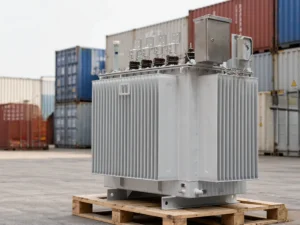
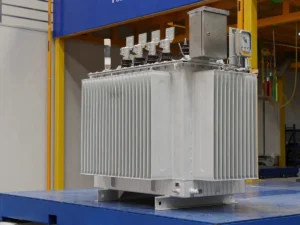
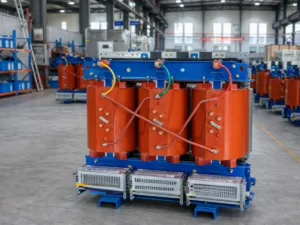
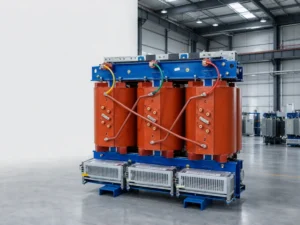
Outdoor PV duty normally points to an oil-immersed PV transformer, whose sealed tank and cooling system handle daily heat cycles and ambient exposure. Where the inverter is inside a building or a fire-sensitive enclosure, a dry-type unit can be used instead, with the usual trade-offs on outdoor protection.
Thermal cycling, harmonics and voltage range
Daily start-up and shutdown produce a pronounced thermal cycle. Specify insulation and seals suited to that cycling rather than assuming a flat-load duty. Modern inverters also generate harmonic currents; ask for a loss evaluation that reflects the expected harmonic spectrum, and confirm that the neutral and winding design can absorb the additional heating. Voltage on a collector ring can drift as output changes, so tap range is worth checking carefully — an off-circuit tap changer is common, but voltage regulation requirements may justify an on-load type.
Efficiency and the value of low losses
A PV plant generates revenue only during daylight, yet its transformer is energized for long hours. No-load loss therefore matters even when the array is producing little. Load loss dominates around midday. Ask suppliers for both figures and evaluate them against your site’s generation profile, not against a single peak-efficiency claim.
What Is a Wind Turbine Transformer?
A wind turbine transformer steps generator or converter output up to the wind farm’s collection voltage. In many designs it sits at the tower base or inside the nacelle, which makes size, weight and mechanical robustness design drivers. Onshore farms typically collect at medium voltage and step up again at a substation; offshore projects may use a larger offshore substation transformer after the array cables.
Turbine step-up and collector networks
Each turbine is effectively a small generating plant with a strongly variable output. The transformer must handle everything from cut-in speed to rated power without excessive temperature rise, and it must tolerate the vibration and occasional electrical disturbances associated with switching and grid events. An oil-immersed wind power transformer is the usual choice where the unit is exposed to weather, with a sealed tank and a cooling arrangement matched to the available space.
Onshore versus offshore considerations
Onshore, the main concerns are ambient temperature range, dust and access for maintenance. Offshore adds salt spray, high humidity and a much higher cost of intervention. Corrosion protection, enclosure sealing and coating systems move to the top of the specification, and every component should be selected with the assumption that site work is difficult. Where equipment must be brought into a nacelle, weight and dimensions can override otherwise preferable options.
Variable output and fault duty
Wind farms see frequent switching as turbines connect and disconnect, and converters can contribute unusual fault current signatures. Confirm short-circuit withstand and impedance with the system designer, and make sure protection settings remain selective across the whole collector network. Harmonics from converters deserve the same attention as in a PV plant.
Energy Storage Transformers: Bidirectional Duty
Battery energy storage systems invert and rectify power as they charge and discharge, so the transformer linking the batteries to the grid carries power in both directions. That changes the design conversation in several ways.
- Frequent cycling: a battery site may switch between charging and discharging several times a day, producing repeated thermal transients.
- Rapid ramps: power electronics can change output quickly; the transformer and its protection must follow without nuisance tripping.
- Harmonic content: converters introduce harmonics whose spectrum depends on topology and switching strategy.
- Location: containerized systems often use an outdoor skid, while building-integrated systems may use an indoor unit.
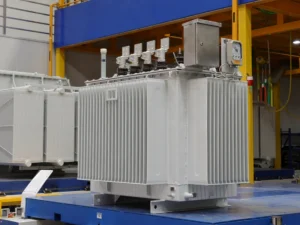
An oil-immersed ESS transformer is commonly specified for containerized outdoor storage because the sealed tank tolerates cycling and ambient exposure well. The specification should state the expected charge/discharge profile, the harmonic environment and the number of full cycles per day, since those inputs drive both thermal design and loss evaluation.
EV Charging Stations and the Local Grid
High-power charging changes a local distribution network. A depot or highway site can draw several megawatts when many vehicles charge at once, and the load can jump sharply as sessions begin. Unlike a factory, the site has little natural diversity unless charging is actively managed.
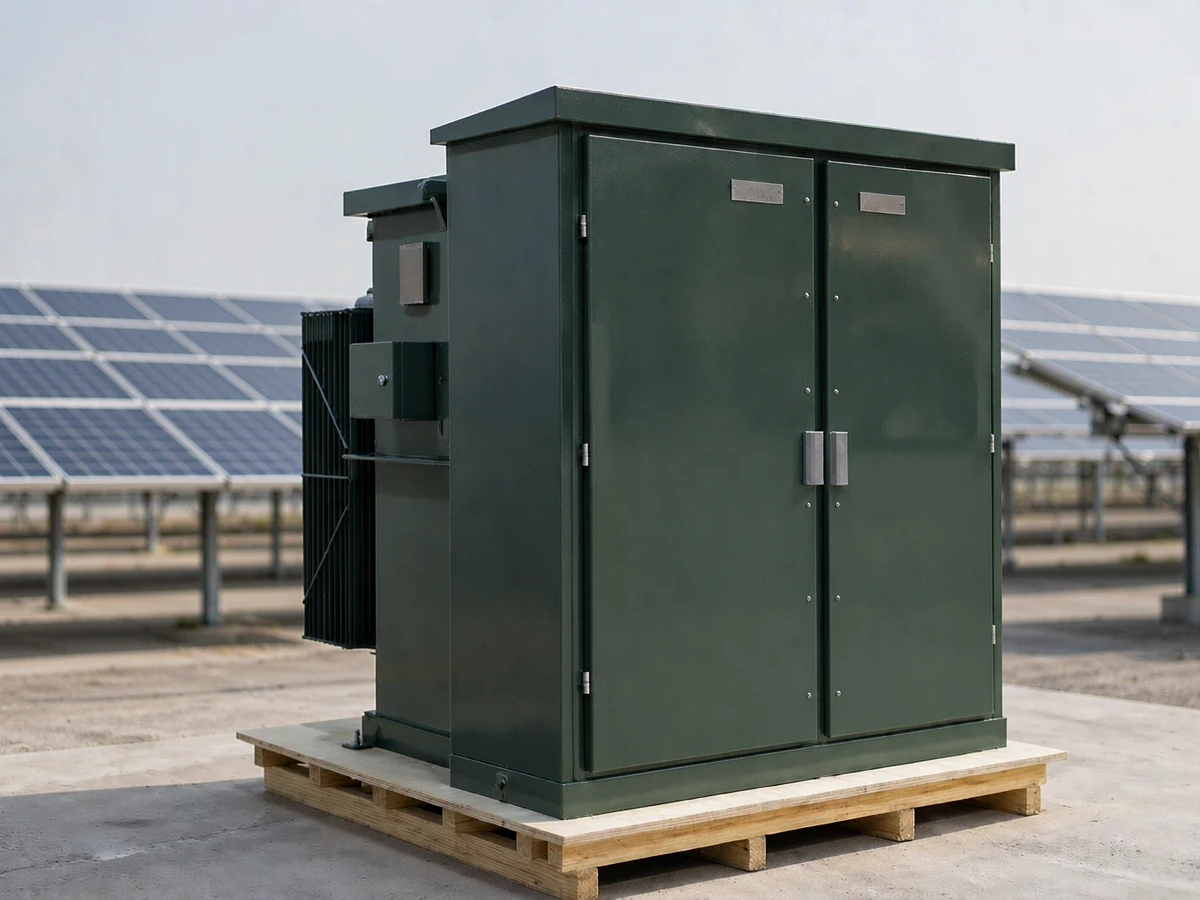
A padmount transformer is the typical interface because it is safe for public or semi-public outdoor areas, compact and readily connected to underground distribution. Key specification points include the simultaneous demand assumption, harmonic content from chargers, and thermal headroom for future charger additions. Smart charging that staggers sessions can reduce the peak substantially, but the transformer must still be rated for the worst credible case.
Charging infrastructure also sits alongside manufacturing and fleet facilities. Daqo has published a case study on electrification at a BYD Chengdu EV manufacturing base project, which illustrates the kind of concentrated electrical demand that EV-related sites create. Treat it as context for the load environment rather than as a claim about any particular equipment rating.
Comparison: Four Renewable Transformer Duties
| Application | Typical role | Duty pattern | Main design concern | Common construction |
|---|---|---|---|---|
| Solar PV | Inverter output to collection voltage | Daily peak, night idle | Thermal cycling, harmonics, voltage drift | Oil-immersed outdoor; dry-type in inverter hall |
| Wind | Turbine to collector network | Highly variable, weather-driven | Vibration, space, corrosion offshore | Oil-immersed, compact |
| Energy storage | Battery to grid interface | Bidirectional, frequent ramps | Cycling fatigue, converter harmonics | Oil-immersed skid or indoor unit |
| EV charging | Distribution to charger cluster | Short, sharp demand peaks | Simultaneous demand, overload margin | Padmount outdoors |
The table shows why a single “renewable transformer” specification does not exist. Each row has a different thermal profile, harmonic environment and siting constraint, and each pushes the design in a different direction.
Choosing the Right Construction
Outdoor renewable sites favor oil-immersed and padmount designs because they combine weather protection with effective cooling and relatively simple maintenance. Dry-type units earn their place in inverter buildings, battery halls and other indoor spaces where fire behavior and indoor air quality dominate. The decision is fundamentally the same one described in the selection guide, but renewable projects add two twists: the load profile is less predictable, and the site is often remote.
Remote sites raise the value of condition monitoring. Temperature, dissolved gas analysis for oil-filled units, and harmonic trends can warn of developing problems before a trip occurs. Specify sensor provisions and communication interfaces at purchase rather than trying to add them in the field.
Ambient and altitude deserve a separate check. A transformer rated for a moderate climate will run hotter on a sun-exposed pad in a desert, and thin air at high elevation reduces cooling efficiency. State the maximum ambient, solar exposure and site altitude in the enquiry so the thermal design can be confirmed for real conditions rather than a reference atmosphere. The same discipline applies to pollution and humidity: specify the cleaning and sealing arrangements you expect, especially where a site sits near a coast, a desert or an industrial area.
Sizing and Specification Checklist
Work through the following points before requesting quotations. More background on the calculation method is available in the transformer sizing guide.
- Peak and average power with time of day, including future expansion.
- Harmonic spectrum at the transformer terminals, not just at the inverter or charger nameplate.
- Ambient temperature range, altitude and pollution level at the site.
- Voltage range and required tap changer type and range.
- Short-circuit impedance and protection coordination with upstream and downstream devices.
- Loss evaluation based on the actual duty cycle.
- Enclosure type, ingress protection and corrosion protection appropriate to the environment.
- Required tests, monitoring provisions and spare parts strategy.
Common Pitfalls in Renewable Transformer Procurement
- Rating from nameplate DC capacity: AC output is lower and varies; size from the real export profile.
- Ignoring night-time no-load loss: a PV transformer is energized even when it earns nothing.
- Underspecifying harmonics: converter harmonics add heating that a purely sinusoidal model misses.
- Forgetting maintenance access: a remote transformer that cannot be reached safely becomes a long outage.
- Buying without a loss evaluation: in high-hours applications, efficiency differences dominate lifetime cost.
Conclusion
Renewable projects reward careful transformer selection. A solar transformer needs to live with daily cycles and inverter harmonics; a wind turbine transformer needs mechanical resilience and, offshore, serious corrosion protection. Storage adds bidirectional cycling, and EV charging adds sharp demand peaks best handled by a well-specified padmount unit. Define the real duty profile first, match the construction to the site, and evaluate losses over the life of the asset. Daqo Group’s oil-immersed PV transformer and related renewable lines are a starting point for that conversation; the engineering team can help align a configuration with your project’s standards.
Frequently Asked Questions
1. What is the difference between a solar transformer and a standard distribution transformer?
A solar transformer is selected for a daily generation cycle, inverter harmonics and outdoor siting. Losses, thermal cycling and voltage range are evaluated against a generation profile rather than a steady industrial load.
2. Why are wind turbine transformers so compact?
Because they often sit at the tower base or inside the nacelle, where space and weight are constrained. That drives tank design, cooling choices and component layout more than it would at a ground-mounted substation.
3. Can a dry-type transformer be used in a solar plant?
Yes, especially inside inverter buildings or where fire considerations dominate. Outdoors, oil-immersed or padmount construction is more common because it handles weather and ambient temperature ranges more easily.
4. What is special about a transformer for battery storage?
It must handle power flowing in both directions and frequent, sometimes rapid, changes in magnitude. Cycling fatigue and converter harmonics are the main design concerns.
5. How do I size a padmount transformer for an EV charging site?
Estimate simultaneous charging demand, include harmonic heating, and add reasonable expansion margin. Smart charging can reduce the peak, but the transformer should still be rated for the worst credible case.
6. Do renewable transformers need on-load tap changers?
It depends on how much the network voltage varies. Many PV and wind sites use off-circuit tap changers, while projects with tight voltage regulation requirements may justify an on-load type.
7. What standards apply to renewable transformers?
Common references include IEC 60076 and the IEEE C57 series, alongside local grid codes. The exact set depends on the project location and the utility’s requirements, so confirm them early.
8. How can I reduce losses in a renewable transformer?
Specify low no-load and load losses, evaluate them against your actual duty cycle, and avoid oversizing. Because these units run for many hours, small efficiency gains translate into meaningful lifetime savings.
Talk to an Engineer
Renewable duty is site-specific. To discuss a solar, wind, storage or EV charging application, contact our engineering team with your one-line diagram, load profile and site conditions.