An energy efficient transformer is no longer a niche specification — it is a practical response to rising electricity costs, efficiency regulations and corporate sustainability targets. Transformers move enormous amounts of energy every hour of every day, and even a small reduction in losses compounds over a service life measured in decades. This guide explains where those losses come from, how efficiency standards shape design, why total cost of ownership matters more than purchase price, and what recycling, customization and green manufacturing mean for buyers who want a defensible sustainability story. The goal is to give you a framework for evaluating claims rather than a list of slogans.
Key Takeaways
- Transformer losses are continuous: no-load losses occur whenever the unit is energized, and load losses rise with the square of current.
- A higher-efficiency unit can repay a higher purchase price through reduced electricity cost over its operating life — evaluate with TCO, not sticker price.
- Core material is the biggest lever on no-load loss; amorphous metal and high-grade grain-oriented steel are common options.
- Efficiency levels are regulated in many markets, so verify the applicable standard and required documentation before ordering.
- End-of-life transformers are highly recyclable: steel, copper or aluminum and most oil can be recovered and reused.
- Customization that matches the real load profile avoids oversizing and wasted energy — right-sizing is a sustainability measure.
- Green manufacturing claims should be supported by evidence, not assumed from a supplier’s location or product category.
What Makes an Energy Efficient Transformer: Where Losses Come From
To understand efficiency, you must separate the two kinds of loss. No-load loss, also called core loss or excitation loss, occurs whenever the transformer is energized, regardless of load. It is dominated by the magnetic properties of the core and is present 24 hours a day. Load loss, or copper loss, occurs in the windings and rises roughly with the square of the load current. It includes resistive loss in the conductor and additional eddy and stray losses.
Because no-load loss runs continuously, it often dominates the lifetime energy cost of a distribution transformer that is lightly loaded for much of the day. Load loss matters most in units that run near full capacity. A useful efficiency specification therefore states both values at defined conditions, not a single percentage that flatters one operating point. Our detailed article on no-load and load losses and efficiency explains how the two are measured and compared.
Material choice is the main design lever. Grain-oriented silicon steel is the established core material; amorphous metal has much lower no-load loss but different mechanical and cost characteristics. In the windings, conductor cross-section, material and transposition affect load loss. These trade-offs are examined in our guide to copper vs aluminum windings and core materials, which is useful background for any efficiency discussion.
Efficiency Standards and Tiers
Many markets now regulate transformer efficiency through minimum efficiency levels or maximum loss limits. In North America, DOE requirements and related efficiency tiers apply to many distribution and power transformer categories; in Europe, the Ecodesign framework and ErP requirements set similar expectations. Other regions have their own schemes. The relevant document set usually includes the test method, the efficiency calculation and the labeling or reporting obligation.
For buyers, the practical steps are straightforward: identify the standard that applies to the destination market and product class, require the manufacturer to state the losses at the reference conditions, and ask for the test evidence. Confusion often arises because standards differ in test conditions and in whether they regulate losses or efficiency at a defined load point. Our guide to transformer standards and certifications provides a structured way to compare IEC and IEEE frameworks and the associated compliance documents. Never accept a vague “high efficiency” description in place of measured loss values.
Total Cost of Ownership: Looking Beyond the Purchase Price
An energy efficient transformer usually costs more to buy than a standard unit, particularly when it uses a premium core material or a larger conductor cross-section. The question is whether that premium is recovered. Total cost of ownership (TCO) answers it by adding the present value of losses over the operating life to the purchase price, along with installation, maintenance and expected end-of-life costs.
The loading profile is the critical input. A unit that sits lightly loaded for most of its life is dominated by no-load loss, so a premium core material tends to win. A unit that runs continuously near full load is dominated by load loss, so conductor size and winding design matter more. The electricity price and the assumed service life also shift the result. Because these inputs vary by project, a blanket claim that “efficient transformers always pay back” is not useful — the calculation must use your numbers.
| Factor | Standard-efficiency unit | High-efficiency unit | What to weigh |
|---|---|---|---|
| Purchase price | Lower | Higher | Premium varies with core and winding material |
| No-load loss | Higher | Lower | Dominant when the unit is lightly loaded or energized 24/7 |
| Load loss | Higher | Lower | Dominant when the unit runs near full load |
| Energy cost over life | Higher | Lower | Depends on local tariff and annual operating hours |
| Cooling and maintenance | Comparable if design is sound | Comparable or lower due to less heat | Lower heat can reduce cooling energy and aging |
| End-of-life value | Recoverable materials | Recoverable materials | Steel, copper or aluminum and oil can be reclaimed |
| Best fit | Low utilization, low tariff, short horizon | High utilization, high tariff, long horizon | Always calculate with your own load profile |
When you request quotations, ask bidders to provide the same loss figures and calculate TCO on a common basis. Doing so turns a price comparison into a value comparison and makes the efficiency premium visible as an operating cost rather than a hidden line item.
Energy Savings and Carbon
Reducing losses saves electricity, and saved electricity means lower indirect carbon emissions. The connection is simple but easy to overstate. The carbon benefit depends on the electricity mix of the grid supplying the losses, the number of operating hours and the actual load profile. A transformer that reduces losses by a modest amount but runs continuously for decades can still avoid a meaningful quantity of energy over its life.
For reporting purposes, the defensible approach is to base any claim on measured loss values and the site’s actual electricity data, then apply a published emissions factor for the relevant grid. Avoid generic “green” percentages that cannot be traced to a calculation. Buyers with formal ESG programs should also consider that transformer efficiency contributes to Scope 2 reductions indirectly through lower purchased electricity, while manufacturing and end-of-life handling sit in other parts of the value chain.
End of Life: Recycling and Circularity
Transformers are among the most recyclable pieces of electrical equipment. The tank and structural steel, the copper or aluminum windings, the core steel and, in liquid-filled units, most of the insulating oil can be recovered. This gives a retired transformer a residual material value and reduces the need for virgin material. Amorphous cores and specialty alloys may have different recycling routes, so confirm what applies to a specific design.
Responsible end-of-life handling is not automatic. Oil must be tested and either reconditioned or disposed of according to environmental rules, especially if it contains contaminants. PCBs, where legacy units are involved, require specialized handling. Solid insulation and composite materials are harder to recover than metal and may need controlled disposal. Before retirement, document the unit’s oil type and condition; this information protects both the buyer and the recycler.
From a procurement perspective, ask suppliers what design choices support disassembly and material separation at end of life, and whether they offer take-back or documentation options request current take-back, recycling-partner and material-recovery documentation for the specific product line. A circularity claim is only as strong as the evidence behind it.
Green Manufacturing: What It Really Means
“Green manufacturing” is a broad term, and buyers should translate it into specific, checkable questions. Does the supplier measure energy use per unit produced? Are process emissions monitored? Are waste streams segregated and recycled? Are hazardous materials managed under a documented system? Is there a formal environmental management standard in place? Answers to these questions are more useful than a general statement about sustainability.
Process choices matter. Controlled vacuum drying and impregnation, accurate material cutting and good process yield all reduce scrap and rework, which lowers the environmental footprint of each finished unit. Consistent manufacturing also supports efficiency, because a well-built unit achieves its design losses in service — the subject of our guide to the transformer manufacturing process and quality control. Quality and sustainability are therefore linked: a transformer that fails early wastes far more resources than one built right the first time.
Daqo Group draws on more than 30 years in the transformer industry, six production bases and four research institutes, with products supplied to IEEE, IEC and ANSI standards. Specific environmental metrics such as renewable-energy share, emissions per unit or recycled-material content are not assumed here and should be requested directly together with current factory-level environmental data and any third-party environmental management certification before making a claim. Company background is available on our About Us page.
Customization as a Sustainability Tool
A sustainably specified transformer is one that fits the application. Oversizing is common: designers add margin for future growth, uncertain load data or simple caution, and the result is a unit that operates lightly loaded with relatively high no-load loss for much of its life. Right-sizing against a realistic load profile reduces both cost and energy waste. This is why a detailed load study is one of the most valuable sustainability steps available at the design stage.
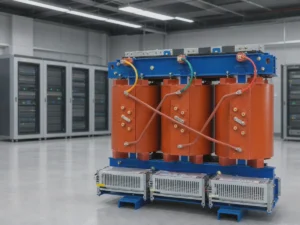
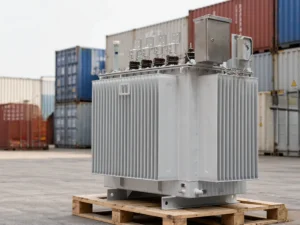
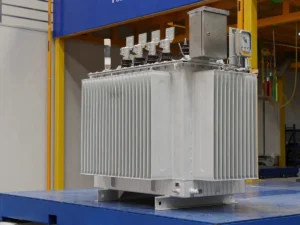
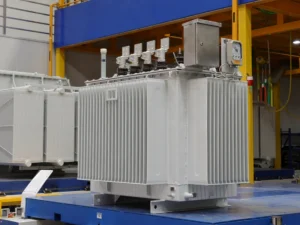
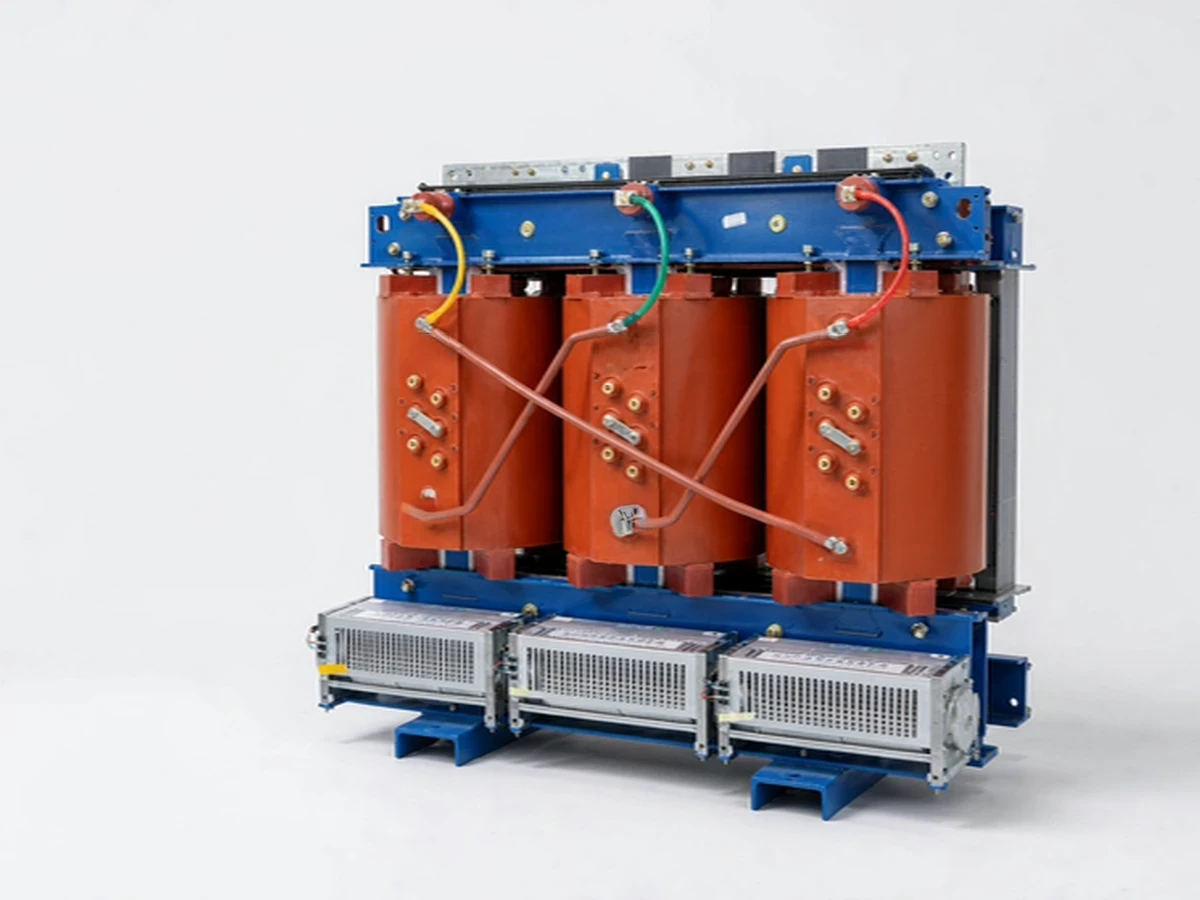
Customization also allows the right material and cooling choice for the environment. A dry-type cast-resin unit may be preferable where fire safety and indoor installation dominate; an oil-immersed design may be more economical outdoors or at higher ratings. Voltage class, tap range, vector group, cooling method and enclosure all affect how efficiently the unit serves its duty. Our products overview introduces the main families, with dedicated pages for dry-type transformers and oil-immersed transformers.
The practical sequence is to define the real load profile, set the required loss values, choose the standard and enclosure, and only then compare suppliers. A supplier willing to discuss derating, loss capitalization and end-of-life handling is more likely to deliver a genuinely efficient solution than one that simply offers the lowest price.
A Buyer’s Checklist
- State measured no-load and load losses at defined reference conditions, not a single efficiency figure.
- Confirm the applicable efficiency standard and required documentation for the destination market.
- Compare bids on total cost of ownership using your load profile and electricity tariff.
- Ask how material and cooling choices affect both efficiency and end-of-life recyclability.
- Request evidence for any green manufacturing or carbon claim rather than accepting general statements.
- Avoid oversizing; validate the load profile before freezing the rating.
If you want to work through a loss and TCO comparison for a specific project, you can contact our engineering team with your load data and applicable standard.
Conclusion
An energy efficient transformer delivers value through lower losses every hour it is energized, and a sustainable specification extends that thinking to materials, manufacturing and end of life. The decision should rest on measured loss values, the applicable standard and a total cost of ownership calculation built on your own load profile — not on a purchase price or an unverified environmental claim. Right-sizing, appropriate material selection and attention to manufacturing quality all reduce waste and energy use over the unit’s life. Use this framework to turn sustainability from a marketing term into a set of requirements you can actually specify, verify and defend.
Frequently Asked Questions
What makes a transformer energy efficient?
Low no-load and load losses for its rating and duty. No-load loss depends mainly on core material and design; load loss depends on conductor material, cross-section and winding construction. Both must be stated at defined reference conditions.
Why is no-load loss so important?
Because it occurs whenever the transformer is energized, even with no load connected. For lightly loaded distribution transformers, no-load loss often dominates lifetime energy cost.
Does a higher-efficiency transformer pay for itself?
It often does when utilization and electricity prices are high and the service life is long, but it depends on your load profile. Compare bids using total cost of ownership with your own tariff and operating hours.
Are amorphous-core transformers always the best choice?
Not always. Amorphous cores offer very low no-load loss but involve different cost, handling and design considerations. They tend to be most attractive where the unit is energized continuously at light load.
Can transformers be recycled at end of life?
Yes. Steel, copper or aluminum and most insulating oil can be recovered. Oil and some solid insulation require controlled handling, so document the oil type and condition before retirement.
What efficiency standards apply to transformers?
Depending on the market, DOE requirements and efficiency tiers in North America or Ecodesign and ErP rules in Europe may apply, among other regional schemes. Confirm the standard for your destination market and product class.
How does customization improve sustainability?
Matching the rating, materials and cooling to the real load profile avoids oversizing, which wastes energy through unnecessary no-load loss. A right-sized unit also uses materials more efficiently.
What evidence should I ask for to support a green manufacturing claim?
Ask for measured energy and emissions data, waste and recycling records, environmental management documentation and any third-party verification. Treat general statements without data as unverified.