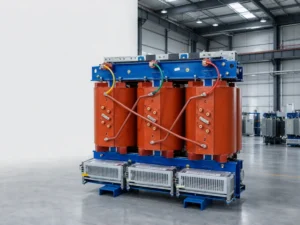
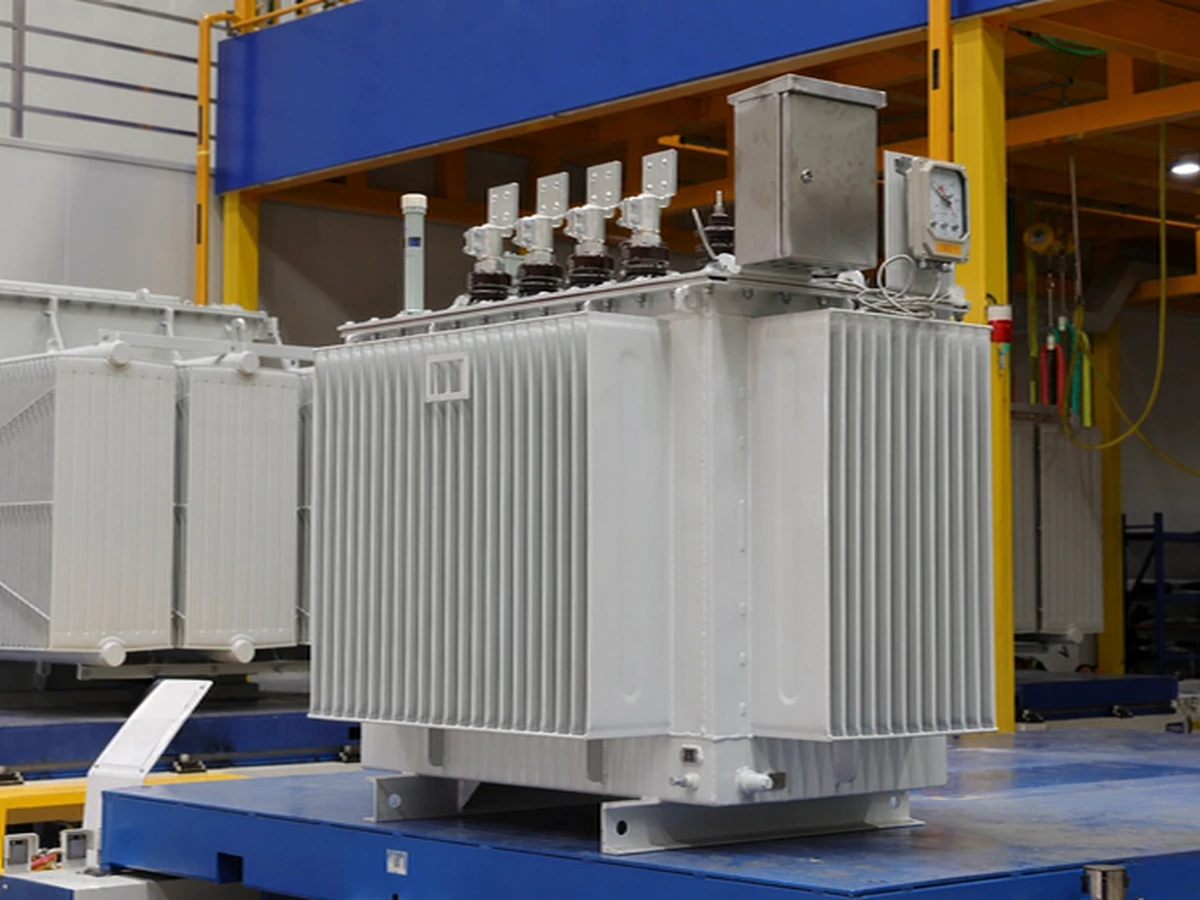
If you specify, buy, or maintain liquid-filled equipment, understanding transformer oil types is one of the highest-value things you can learn. The fluid inside an oil-immersed unit is not just a passive filler. It is simultaneously an electrical insulator, a heat-transfer medium, an arc-suppression agent, and a protective barrier for the cellulose insulation and steel core. Choose the wrong fluid, or fill it poorly, and even a well-designed transformer will overheat, age prematurely, or fail. This guide explains what the oil actually does, compares the three main fluid families, walks through vacuum filling, and gives you a practical framework for matching oil and filling method to your application. For the broader equipment context, start with our máy biến áp ngâm dầu overview.
Những điểm chính cần ghi nhớ
- Transformer oil performs four jobs at once: dielectric insulation, cooling, arc quenching, and protection of paper and steel from moisture and oxygen.
- The three main transformer oil types are mineral oil, silicone fluid, and vegetable-based natural ester, each with a distinct fire-safety, viscosity, and environmental profile.
- Dielectric strength, viscosity, flash point, pour point, oxidation stability, and water content are the properties that matter most in service.
- Vacuum filling removes air and moisture from the tank and windings; it is standard practice for higher-voltage and properly dried units.
- Dissolved gas analysis (DGA) is the primary early-warning tool for incipient faults in oil-filled equipment.
- Fire sensitivity, ambient temperature, and local environmental rules usually decide which fluid family is correct — not price alone.
What Is Transformer Oil and Why Does It Matter?
Transformer oil, also called insulating oil or transformer fluid, is a highly refined liquid that fills the tank of an oil-immersed transformer. Its purity is far higher than that of a lubricating oil. Even small amounts of water, gas, or particulate contamination can sharply reduce its ability to withstand electrical stress. That is why the fluid is treated as a critical component of the insulation system rather than a commodity top-up.
The reason liquid filling is so effective comes down to physics. Relative to air, oil has a much higher dielectric strength and a much higher heat capacity and thermal conductivity. Replacing air with oil around the windings suppresses partial discharge and corona, while the fluid’s ability to circulate carries heat from the hot windings to the tank walls and radiators. The result is a compact, quiet, and long-lived machine. You can see how the fluid interacts with cooling hardware in our article on oil-immersed transformer heat dissipation and radiator design.
The Four Core Functions
1. Electrical insulation. The oil separates energized conductors from each other and from grounded parts. It impregnates the kraft paper wrapping on the windings, creating a combined oil-paper insulation system with far greater breakdown strength than either material alone. Good oil also suppresses partial discharge that would slowly erode the paper.
2. Cooling and heat transfer. Losses in the core and windings turn into heat. The oil adjacent to the windings absorbs this heat, becomes less dense, and rises, setting up a natural convection current in ONAN (oil natural, air natural) cooling. Fans and pumps can augment this in ONAF, OFAF, and OFWF arrangements. Without the fluid, the same losses would drive much higher winding temperatures.
3. Arc quenching. When a fault or a load tap changer operates, an arc can form. Oil decomposes rapidly in the arc, generating a gas bubble rich in hydrogen. The pressure and cooling effect of this bubble help extinguish the arc. This is why oil remains valuable in certain switching and regulator duties despite the growth of dry-type equipment.
4. Protection of paper and steel. Oil coats the cellulose insulation and the core, limiting contact with oxygen and moisture that would accelerate aging. The fluid also carries corrosion inhibitors and, in some formulations, scavenging additives that neutralize acids formed during service. In short, healthy oil means slow paper aging and a long transformer life.
Transformer Oil Types: Mineral, Silicone, and Vegetable Compared
Most of the world’s installed liquid-filled transformers use mineral oil, but silicone and vegetable fluids have carved out important niches. Understanding transformer oil types is mainly a matter of comparing fire point, environmental behavior, viscosity, and cost. The table below summarizes the practical trade-offs.
| Tài sản | Mineral oil | Silicone fluid | Vegetable (natural ester) |
|---|---|---|---|
| Fire / flash point | Low (about 145–170 °C flash) | High (about 300 °C+ fire point) | High (about 300 °C+ fire point) |
| Biodegradability | Poor; persistent in soil and water | Poor; not readily biodegradable | Excellent; readily biodegradable |
| Viscosity at low temperature | Good; flows well in cold climates | Poor; thickens significantly | Moderate to poor; thickens in cold |
| Oxidation stability | Good with inhibitors; proven long life | Very good | Good but can oxidize faster if overheated |
| Moisture tolerance | Low; water hurts dielectric strength | Thấp | High; paper can hold more water safely |
| Relative cost | Lowest | Cao | Moderate to high |
| Typical use case | General distribution and power | Fire-sensitive or high-temperature sites | Environmentally sensitive sites, indoor/near water |
Mineral Oil
Mineral oil is a petroleum distillate, carefully refined and often dosed with oxidation inhibitors. It offers the best combination of low viscosity, good heat transfer, long proven service life, and low cost. For the majority of distribution and power transformers, it remains the default choice. Its main weakness is flammability: with a flash point near 150 °C, a serious internal fault can ignite the fluid. Where fire spread is a concern, a less flammable fluid or a dry-type unit is preferred.
Silicone Fluid
Silicone (polydimethylsiloxane) fluid has a very high fire point and produces little smoke, which makes it attractive for indoor substations, tunnels, and buildings where fire safety is paramount. It is chemically stable and resists oxidation well. Its drawbacks are a high viscosity that worsens heat transfer — often requiring a larger radiator surface or a derating — and a tendency to thicken in cold weather. Silicone is also more expensive and is not biodegradable.
Vegetable Oil / Natural Ester
Vegetable-based fluids, commonly called natural esters, are derived from rapeseed, soybean, or sunflower oils. They combine a high fire point with excellent biodegradability, making them attractive near waterways, in environmentally sensitive areas, and indoors. They also tolerate moisture better than mineral oil, which can slow paper aging. Trade-offs include higher viscosity, higher cost, and a need to manage oxidation at elevated temperatures. Many specifiers pair natural ester with oil-immersed distribution transformers serving green or sensitive sites, and the choice also connects to the sustainability themes covered in our sustainable transformers guide.
Properties That Determine Oil Performance
When you review a fluid data sheet or a test report, a handful of properties do most of the diagnostic work.
- Dielectric breakdown voltage. Measured with a standard test cell, this indicates resistance to electrical breakdown. Low values point to water, particles, or degradation.
- Water content. Dissolved water lowers breakdown strength and accelerates paper aging. It is usually reported in parts per million.
- Viscosity. Lower viscosity improves convection and heat transfer, especially at startup in cold weather.
- Flash and fire point. These determine fire hazard and are the key reason to choose silicone or ester over mineral oil.
- Pour point. The temperature below which the fluid stops flowing freely; critical for outdoor units in cold climates.
- Oxidation stability and acidity. As oil ages it forms acids and sludge. Inhibited oils resist this for longer, and rising acidity is a sign to recondition or replace the fluid.
- Dissipation factor (power factor). A sensitive indicator of contamination and aging.
These properties also interact with design. The viscosity of the chosen fluid directly affects how effectively the cooling system can move heat, which is why fluid selection and cooling design should be decided together rather than in isolation.
Vacuum Filling: Why and How It Is Done
Vacuum filling is the process of evacuating air and moisture from the transformer tank and then introducing oil under vacuum. It matters because trapped air pockets become sites of partial discharge, and dissolved moisture reduces dielectric strength. For medium- and high-voltage units, and for any unit whose insulation has been properly dried, vacuum filling is standard good practice.
Typical Vacuum Filling Sequence
- Pre-fill checks. Confirm the core and windings are dry, the tank is clean and sealed, and all bushings and valves are correctly fitted.
- Evacuation. Pull a deep vacuum on the tank to remove air and residual moisture from the paper insulation. Holding a vacuum also reveals leaks.
- Oil degassing. The filling oil itself is degassed, often in a vacuum treater, so that it does not reintroduce dissolved air.
- Filling under vacuum. Oil is admitted from the bottom while the vacuum is maintained, allowing it to penetrate windings and eliminate voids.
- Top-up and sealing. The unit is filled to the correct level at the operating temperature and sealed, often with a conservator or expansion tank.
- Post-fill testing. Dielectric strength, moisture, and dissolved gas are checked before energization.
Skipping or rushing vacuum filling is a common cause of early-life failures that are then wrongly blamed on the transformer itself. If you are comparing filling requirements across liquid-filled products, the note on cooling and derating in our transformer cooling and temperature guide provides useful context, while the transformer troubleshooting guide explains how trapped gas and moisture show up as faults later on.
Testing, DGA, and Routine Maintenance
Once in service, the oil becomes a window into the transformer’s health. Routine sampling and testing can reveal problems long before they become outages.
Dissolved gas analysis (DGA) is the most important diagnostic. Different faults generate different gas signatures: overheating of paper produces carbon monoxide and carbon dioxide, partial discharge produces hydrogen and methane, and arcing produces acetylene. Tracking the rate of gas increase is often more informative than a single absolute value.
Alongside DGA, technicians track dielectric strength, water content, acidity, and dissipation factor. Moisture can be removed with vacuum dehydration or a portable filter press, and degraded oil can be reclaimed. The aim is to keep the oil-paper system dry and chemically stable, because paper insulation cannot be replaced without a major refurbishment. Dry-type equipment avoids oil maintenance entirely, which is one reason it is chosen for certain indoor sites; the trade-offs are discussed in our dry-type vs oil-immersed selection guide.
Fire Safety and Environmental Considerations
Fire safety is the most common reason to move away from mineral oil. A high fire-point fluid such as silicone or natural ester dramatically reduces the chance that an internal fault escalates into a sustained external fire. Local codes may also require fire barriers, oil containment pits, or bladders for large oil-filled units, regardless of fluid type.
Environmentally, mineral oil spills are persistent and costly to clean up. Natural esters break down readily and are often favored near rivers, aquifers, or farmland. Some projects specify them to meet corporate sustainability goals or to simplify environmental permitting. If environmental performance is a priority for your project, our team can discuss fluid options and documentation; raise a specific requirement when you enquire.
How to Choose the Right Fluid and Filling Method
Use the following decision guide as a starting point, then validate it against local codes, the equipment design, and the operating environment.
| Priority | Recommended fluid | Why |
|---|---|---|
| Lowest cost, general outdoor use, cold climate | Inhibited mineral oil | Best viscosity and heat transfer at lowest cost |
| Indoor, tunnel, or fire-sensitive location | Silicone or natural ester | High fire point reduces fire spread risk |
| Near water, farmland, or sensitive ecology | Natural ester | Biodegradable, lower environmental impact |
| Very low ambient temperature | Low-pour-point mineral oil | Maintains flow and cooling in cold weather |
| High-voltage or critical duty | Any fluid, with full vacuum filling and strict testing | Eliminates voids and moisture that cause discharge |
Daqo Group co., Ltd. is a professional transformer manufacturer with more than 30 years in the industry, 2000+ global customers, 40+ countries, 6 production bases, and 4 research institutes, supplying dry-type, oil-immersed, and padmount lines built to IEEE/IEC/ANSI standards. Confirm the available fluid families, vacuum-filling capability and fluid-specific test documentation for your project with the sales team before specifying. Our full product range covers the main liquid-filled categories discussed here.
Phần kết luận
Transformer oil is a working part of the insulation and cooling system, not a background detail. The right choice among transformer oil types balances fire safety, environmental impact, low-temperature behavior, and cost, while correct vacuum filling ensures the fluid actually does its job. Treat the oil as a diagnostic asset: sample it regularly, interpret DGA trends, and keep it dry and clean. Whether you are specifying a new unit or extending the life of an existing fleet, getting the fluid decision right pays back in reliability. To discuss a specific voltage, environment, or fluid requirement, reach the team through the trang liên hệ với chúng tôi.
Câu hỏi thường gặp
What are the main transformer oil types?
The three main families are mineral oil, silicone fluid, and vegetable-based natural ester. Mineral oil is the low-cost default, silicone offers high fire resistance, and natural ester combines a high fire point with biodegradability.
Why is vacuum filling necessary?
Vacuum filling removes trapped air and moisture from the tank and windings. This eliminates voids where partial discharge can start and prevents dissolved water from weakening the insulation, which is especially important at higher voltages.
How often should transformer oil be tested?
Common practice is to check dielectric strength, moisture, and acidity at regular intervals, and to run dissolved gas analysis annually or per a risk-based schedule. Critical units may be monitored more frequently.
Can vegetable oil replace mineral oil in an existing transformer?
Sometimes, but retrofills require compatibility checks on seals, paints, and the residual mineral oil, plus a careful conversion procedure. Always consult the equipment manufacturer before converting.
Which oil is best for cold climates?
A low-pour-point inhibited mineral oil generally performs best because it stays fluid and transfers heat effectively at low temperatures. Silicone and esters thicken more and may need derating or heating.
Does oil-filled equipment require fire protection?
Depends on the fluid and local code. Mineral-oil units often need containment or fire barriers in sensitive locations, while high-fire-point silicone or ester units reduce — but do not always eliminate — those requirements.
What does dissolved gas analysis tell you?
DGA identifies gases produced by overheating, partial discharge, or arcing. The gas ratios and their rate of increase help diagnose the fault type and how quickly it is developing.