A transformer for harsh environment duty is specified less by its kVA rating than by what the site will do to it. Coastal salt, desert heat, mountain altitude, explosive atmospheres and fire-sensitive buildings each attack a transformer in a different way, and a unit that performs perfectly in a mild substation can fail early in any of them. This guide walks through the main environmental threats, how they affect construction, and what to put in a specification so the equipment survives its location. Daqo Group brings more than 30 years of transformer industry experience and products built to IEEE, IEC and ANSI standards to these conversations.
Những điểm chính cần ghi nhớ
- Salt and chemical corrosion attack enclosures, terminals and cooling parts; coatings, sealing and materials selection matter as much as the electrical design.
- High altitude reduces air density, weakening both cooling and external insulation — plan a derating or verify performance at site altitude.
- Hazardous locations are defined by classification; the transformer, its controls and its installation must all suit the zone.
- Fire-sensitive sites favor dry-type construction with no free oil, plus the fire separation the local code requires.
- Cold climates affect oil viscosity and condensation control; hot climates raise the ambient the cooling system must handle.
- State the real site conditions in the enquiry — “harsh” is not a specification.
What Makes a Transformer for Harsh Environment Different
A standard transformer assumes a moderate ambient, reasonably clean air and an installation that people can reach. Harsh environments break one or more of those assumptions. The result is usually not an immediate electrical failure but accelerated aging: paint blisters, terminals corrode, seals harden, insulation tracks, fans seize or oil thickens. By the time performance drifts out of spec, the damage is often widespread.
The engineering response is to treat the environment as a design input alongside voltage and load. That means defining the site in measurable terms — temperature range, altitude, pollution level, humidity, salt exposure, presence of flammable gases or dust, and expected maintenance access — and then selecting construction and protection to match. Where specific test methods or exposure levels are required, agree them with the supplier in writing; generic references such as IEC 60068-2-52 or ASTM B117 are commonly used for salt-spray evaluation, but the duration and acceptance criteria must fit the site.
Salt Spray and Corrosion: Coastal, Offshore and De-Icing Exposure
Corrosion is the most widespread environmental problem. It appears on seashores, on offshore platforms, on roads treated with de-icing salts, in chemical plants and in any process releasing aggressive vapors. Salt is especially troublesome because it is conductive when damp and it holds moisture against a surface, creating a permanently aggressive microclimate.
How corrosion reaches the transformer
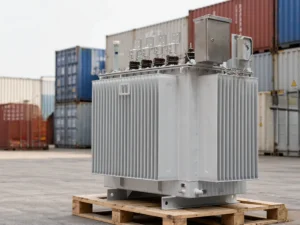
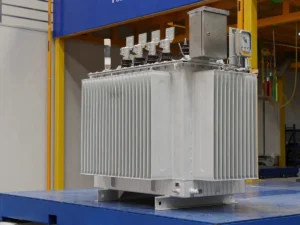
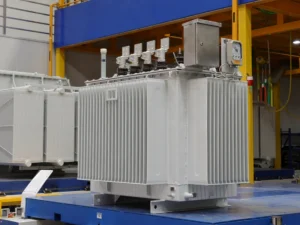
Tank seams, welds, bolts, lifting lugs, radiators, fan guards and cable terminations are the usual starting points. Paint defects or bare steel give salt a foothold, and crevices trap moisture. On dry-type units, the winding itself is often well protected by encapsulation, but support structures, terminals and enclosures are exposed. On oil-filled units, the tank and cooling surfaces are large, so coating quality and drainage details become critical.
Enclosure, coating and sealing choices
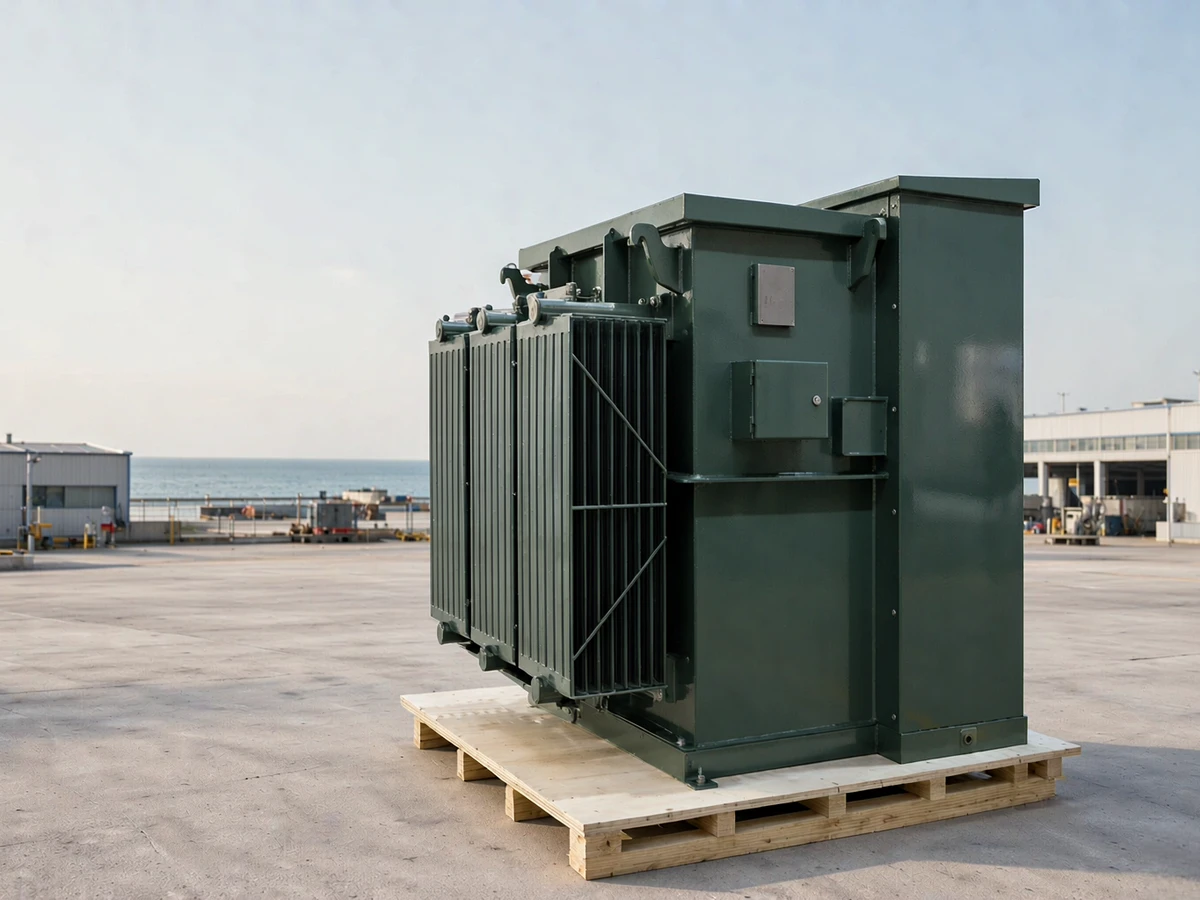
Start with the enclosure or tank specification. Higher ingress protection reduces contaminant entry but increases the need for managed ventilation and condensation control. Coating systems should be selected for the specific chemical environment, with surface preparation and dry-film thickness stated rather than left to the supplier. Stainless or suitably plated hardware, sealed cable glands and protected breathing paths prevent the small failures that lead to big ones. For outdoor coastal locations, a weatherproof dry-type transformer approach can be appropriate where dry-type construction is otherwise required.
Inspection and maintenance planning
No coating lasts forever. Build a inspection interval into the operating plan, with attention to drainage points, seals and terminals. Record coating condition over time so you can predict recoating rather than react to a leak or a tracking fault. Where the transformer sits offshore or on a remote platform, specify the maximum practical interval between visits and choose protection accordingly.
High Altitude: Thin Air Changes the Rules
Altitude is easy to overlook because it does not look hostile. Above roughly 1,000 meters, however, air density falls. Two things follow. Cooling is less effective because there are fewer air molecules to carry heat away, and the dielectric strength of air drops, so external clearances and creepage distances that are adequate at sea level may no longer be sufficient.
Practical responses include derating the continuous current, increasing clearances, and confirming that internal cooling arrangements still meet the temperature-rise limit at site altitude. For oil-filled units, the effect on the cooling system and on any external air-insulated terminations must be checked together. For dry-type units, forced-air cooling can recover some capacity but adds fan dependence at a site where maintenance may be difficult. The safest approach is to state altitude explicitly in the enquiry and ask the supplier to confirm performance at that altitude rather than relying on a sea-level datasheet.
Temperature and altitude interact. A high-altitude site may have cool nights and strong solar radiation during the day, producing wide swings that stress seals and insulation. If your project also involves rapid load changes, the cooling discussion in our transformer cooling and temperature guide provides useful background.
Explosion-Proof and Hazardous-Location Requirements
Oil and gas facilities, petrochemical plants, solvent handling areas, grain elevators and mines may contain flammable gases, vapors or combustible dust. In these areas the electrical installation is governed by a hazard classification — for example, Class and Division in North American practice or Zones in IEC practice. The classification determines what equipment may be installed and how it must be protected.
Classification drives the design
A transformer is rarely “explosion-proof” in the way a sealed junction box might be. More often, the design uses a combination of measures: locating the unit in a non-hazardous area, installing it in a pressurized or purged enclosure, using dry-type construction to remove free oil, and specifying controls and sensors with suitable protection. The auxiliary devices — thermostats, fans, gas detectors and junction boxes — must be rated for the zone just as carefully as the transformer itself.
Practical measures on site
Where oil-filled equipment is unavoidable in or near a classified area, fire separation, containment and detection become part of the safety case. Where dry-type construction is feasible, it removes the oil fire load and simplifies the discussion. Always have the site’s classification study and the authority having jurisdiction confirm the acceptable arrangement before the specification is frozen. This is one area where a generic catalog selection is not sufficient.
Fire-Sensitive Sites: Tunnels, Plants and Buildings
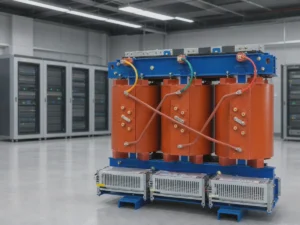
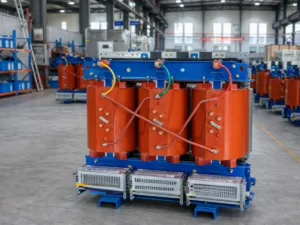
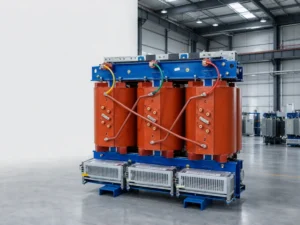
Rail and road tunnels, underground facilities, refineries, high-rise buildings and data halls share a common concern: a transformer fire must not threaten occupants or shut down an escape route. Here the absence of free oil is the decisive advantage. Cast resin dry-type windings encapsulate the conductor in epoxy, producing a unit with a low fuel contribution and strong short-circuit withstand. Our guide to dry-type transformer fire protection covers the design measures in more detail, and the NFPA perspective on dry-type transformers explains how codes shape indoor installations.
Fire strategy is more than the transformer itself. Room separation, ventilation paths, cable routing and suppression all interact. A unit that meets its electrical rating but sits in a poorly separated room can still violate the fire plan. Engage the fire protection engineer early, and confirm which standard governs the project — building codes, transport codes and industrial codes may all apply. For a detailed look at the specific case of critical IT load, see our data center transformer guide.
Other Extremes: Heat, Cold, Dust and Vibration
Desert sites combine high ambient temperature with solar gain and airborne dust. Cooling capacity must be sized for the real maximum ambient, and filters or positive-pressure ventilation may be needed to keep dust out of windings and cooling ducts. Cold climates bring the opposite problem: oil viscosity rises at low temperature, which affects circulation and may require heaters to bring the unit up to condition before full load. Condensation during warm-up is a separate risk, often managed with space heaters and controlled breathing.
Mining, quarry and cement applications add dust and mechanical shock. Higher ingress protection, robust enclosures and secure mounting matter more than a compact footprint. Offshore and seismic zones add motion and structural loads, so anchorage and flexible connections deserve explicit attention. In every case, the question to ask is not “is it harsh?” but “which of these mechanisms is present, and for how long each year?”
Comparison: Matching the Environment to the Construction
| Site condition | Primary risk | Preferred construction | Key specification items |
|---|---|---|---|
| Coastal / offshore | Salt corrosion, humidity | Sealed dry-type or protected oil-filled | Coating system, IP rating, stainless hardware, sealed glands |
| High altitude | Reduced cooling and insulation strength | Derated unit with increased clearances | Site altitude, temperature rise verification, terminal clearances |
| Hazardous / classified area | Ignition of gas or dust | Dry-type in purged or safely located enclosure | Zone classification, protected auxiliaries, detection |
| Fire-sensitive building | Fire and smoke spread | Cast resin dry-type | Fuel contribution, room separation, code compliance |
| Desert / dusty | Heat and contaminant ingress | Oil-filled or ventilated dry-type with filtration | Maximum ambient, filtration, ingress protection |
| Arctic / cold | Oil viscosity, condensation | Oil-filled with heaters or dry-type | Low-temperature start, heaters, breathing control |
No single row is universally best. A coastal substation and a coastal indoor hall may end up with completely different constructions because the fire and access requirements differ. Use the table to frame the conversation, then verify each selection against the actual site study.
How to Specify a Transformer for Harsh Environment
A useful enquiry gives the supplier enough information to design for the site rather than guess. Include the following as explicit lines, not as general notes.
- Ambient temperature range, maximum solar exposure and site altitude.
- Pollution level, presence of salt, chemicals, dust or conductive contamination.
- Humidity range and whether condensation or icing is expected.
- Hazardous-area classification, if any, and the applicable code framework.
- Fire requirements: separation, rating, fuel contribution limits and suppression interfaces.
- Required ingress protection, enclosure material and coating system.
- Access and maintenance interval, including whether live working is permitted.
- Test requirements and acceptance criteria for environmental exposure.
With those inputs, the supplier can propose a coherent design instead of a catalog model plus a list of exceptions. If the project also has unusual load behavior, resolve that separately — environmental hardening does not compensate for an undersized transformer.
Common Specification Mistakes
- Using “harsh environment” as a single requirement: it is a category, not a design input.
- Assuming a higher IP rating solves corrosion: sealing without condensation control can trap moisture inside.
- Ignoring altitude on the datasheet: sea-level ratings do not automatically apply at elevation.
- Forgetting the auxiliaries: fans, sensors and terminals often fail before the main tank or winding.
- Overlooking maintenance access: the best protection is useless if nobody can inspect it safely.
Phần kết luận
A transformer for harsh environment duty is defined by its location as much as by its rating. Salt demands a coating and sealing strategy; altitude demands derating and clearance checks; classified areas demand attention to the whole installation, not just the tank; and fire-sensitive sites favor dry-type construction with no free oil. Define the site in measurable terms, match the construction to each mechanism, and agree environmental test criteria before production. Daqo Group’s máy biến áp ngâm dầu Và padmount transformer lines are a starting point for that selection, and the engineering team can help translate site conditions into a specification.
Câu hỏi thường gặp
1. What is a harsh environment transformer?
It is a transformer specified for conditions beyond a normal substation — such as salt spray, high altitude, explosive atmospheres, extreme temperatures or fire-sensitive buildings. The environment drives construction and protection choices, not just the electrical rating.
2. How does salt spray affect a transformer?
Salt residue holds moisture and is conductive when damp, accelerating corrosion of tanks, terminals, bolts and cooling parts. Coatings, sealing, hardware selection and drainage details are the main defenses.
3. Do I need to derate a transformer at high altitude?
Often, yes. Thinner air reduces cooling efficiency and external insulation strength. Ask the supplier to confirm temperature rise and clearances at the actual site altitude rather than applying a sea-level rating.
4. What does explosion-proof mean for a transformer?
In practice it usually means the transformer and its accessories are arranged so they cannot ignite a classified atmosphere — through location, purged enclosures, dry-type construction and suitably rated controls. Have the site classification study define what is acceptable.
5. Why are dry-type transformers preferred in fire-sensitive buildings?
They contain no free oil, so they remove a major fuel source. Cast resin windings add encapsulation and strong short-circuit withstand, which suits tunnels, plants and occupied buildings.
6. Can a standard padmount transformer be used outdoors in a corrosive area?
Not without review. Enclosure material, coating, seals and hardware must be selected for the specific contaminant, and condensation control must be addressed. Specify the exposure rather than relying on a standard finish.
7. How should environmental testing be specified?
Name the test method, exposure level and acceptance criteria, and agree them before production. Methods such as IEC 60068-2-52 or ASTM B117 are common references for salt spray, but the right duration depends on the site and the required service life.
8. What information should I give a supplier for a harsh site?
Temperature range, altitude, pollution and salt exposure, humidity, hazardous-area classification, fire requirements, ingress protection, maintenance access and any mandatory test standards. Specific numbers are far more useful than the label “harsh”.
Talk to an Engineer
Environmental conditions are site-specific and rarely fit a catalog. To review a coastal, high-altitude, classified or fire-sensitive installation, contact our engineering team with your site data and applicable standards.