

In today’s rapidly evolving energy landscape, where innovation meets necessity, understanding the heartbeat of the power supply chain is crucial. Enter the world of a leading Chinese power transformer manufacturer—a realm where precision engineering and ambitious vision converge to illuminate not only cities but also the future of sustainable energy. Transforming mere components into the backbone of global power grids, these manufacturers play an unsung yet vital role in keeping our lights on and our industries moving forward.
Diving deeper into this fascinating arena reveals a narrative of cutting-edge technology and steadfast dedication. Explore how China’s premier manufacturers have not only embraced but also pioneered advancements in transformer technology, setting international benchmarks for quality and efficiency. Join us as we unveil the inner workings, the innovative practices, and the visionary leaders propelling this industry into new realms of possibility. This journey promises to reshape your understanding and appreciation of the powerhouse behind our modern world’s electric infrastructure.

Evolution of Power Transformer Technology in China
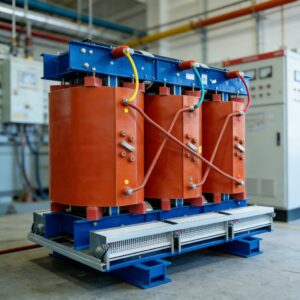
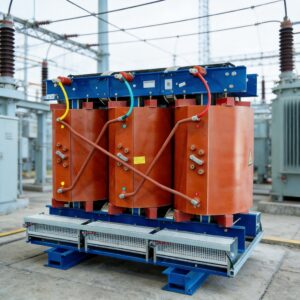
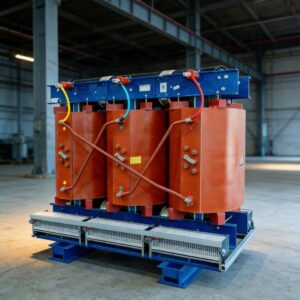
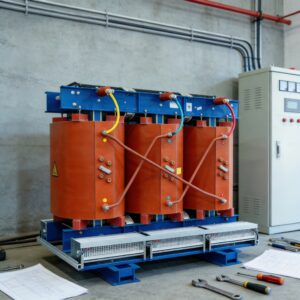
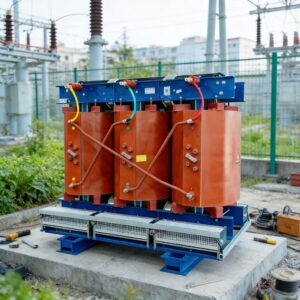
The origins of transformer manufacturing in China trace back to the mid-20th century, when rapid industrialization demanded robust electrical distribution systems. Early designs were largely adaptations of Soviet and European models, focusing on functionality over efficiency. As domestic research institutes collaborated with emerging manufacturers, incremental improvements in magnetic core materials and winding techniques began to emerge. This foundational phase laid the groundwork for a thriving china power transformer manufacturer sector, establishing a culture of continuous improvement and localization of key components.
By the late 1990s, China’s economic boom spurred massive infrastructure projects, including nationwide grid upgrades. Companies started experimenting with amorphous metal cores, which reduced core losses by nearly 70% compared to conventional silicon steel. Simultaneously, automatic winding machines and precision laser cutting systems became standard in production lines, boosting repeatability and cutting lead times. These advancements not only enhanced transformer performance but also significantly lowered maintenance costs, setting the stage for China’s rise as a global manufacturing powerhouse.
In recent years, the advent of smart grids and renewable integration has accelerated innovation in transformer technology. Modern designs incorporate digital monitoring modules, allowing real-time data analytics on temperature, voltage fluctuations, and partial discharges. Some leading Chinese power transformer manufacturers are now piloting SF₆-free transformers with eco-friendly insulation gases, addressing environmental concerns without compromising performance. As China continues to invest in ultra-high-voltage (UHV) transmission projects, the next chapter in transformer evolution promises even higher efficiencies, leaner designs, and seamless interoperability with battery storage and microgrid applications.
Quality Standards and Certifications in Transformer Manufacturing
Ensuring reliability and safety in power transformers hinges on rigorous adherence to domestic and international standards. In China, national regulations such as GB/T 10228 for oil-immersed transformers and GB 1094 series for power transformers form the regulatory backbone. Accredited china power transformer manufacturer facilities undergo regular audits to verify compliance with these metrics, covering aspects from core loss limits to impulse withstand voltage. Parallelly, many manufacturers pursue ISO 9001 certification for quality management systems, embedding a structured approach to continual improvement.
On the global stage, certifications from bodies like the International Electrotechnical Commission (IEC) and the Institute of Electrical and Electronics Engineers (IEEE) are indispensable for export-oriented producers. Achieving IEC 60076 compliance means transformers meet precise performance, testing, and safety criteria, facilitating seamless integration into power grids worldwide. Leading manufacturers also secure BSI, UL, and CE marks, broadening their market reach and reinforcing customer confidence in product integrity, longevity, and environmental responsibility.
Beyond standards, third-party testing at accredited laboratories adds an extra layer of assurance. Independent evaluations of partial discharge, impulse voltage tests, and thermal cycling provide empirical validation of design robustness. Many top Chinese power transformer manufacturer facilities maintain collaborative partnerships with national research institutes and university labs, ensuring the latest material science breakthroughs and testing protocols are rapidly adopted. This multi-tiered certification ecosystem underscores the industry’s unwavering commitment to delivering safe, reliable, and high-performance transformers on a global scale.
Role of Precision Engineering in Transformer Manufacturing
Precision engineering is the cornerstone of modern transformer manufacturing, where micron-level tolerances can spell the difference between optimal performance and costly failure. Automated coil winding machines, guided by computerized numerical control (CNC) systems, shape the conductor layers with unparalleled accuracy. This meticulous process minimizes voids and uneven turns, directly impacting the transformer’s electromagnetic characteristics and thermal dissipation. In high-stakes applications—such as ultra-high-voltage transmission—this level of precision ensures stable operation over decades.
Advanced laser cutting and bending technologies streamline the fabrication of core laminations, reducing scrap rates and improving magnetic flux uniformity. By employing digital twin simulations, engineers can model mechanical stresses, heat flow, and electromagnetic fields before physical prototypes are built. This virtual testing accelerates design validation and facilitates rapid iteration, enabling a china power transformer manufacturer to push design boundaries while maintaining stringent safety margins. Concurrently, robotic assembly lines integrate components with consistent repeatability, enhancing throughput without sacrificing quality.
Materials science innovations also play a pivotal role. Specialized insulating papers, high-purity copper windings, and next-generation composite resins demand exacting manufacturing conditions. Cleanroom environments control humidity and particulate levels, preventing contamination that could degrade dielectric strength. Real-time monitoring systems track critical parameters—like winding tension and transformer oil moisture content—triggering immediate corrective actions when anomalies arise. Collectively, these precision engineering practices underpin the reliability and efficiency that industry stakeholders worldwide expect from China’s leading transformer manufacturers.
Supply Chain Dynamics and Global Market Impact
The global footprint of transformer supply chains has expanded dramatically, with China emerging as a central node for raw material sourcing, component fabrication, and final assembly. Core steel, copper, and insulating materials often originate from diverse suppliers across Southeast Asia, Australia, and Europe. A robust logistics network—comprising rail, sea, and road transport—ensures timely delivery to manufacturing hubs. Strategic partnerships with shipping companies and customs brokers help leading china power transformer manufacturer operations navigate complex trade regulations, minimizing delays and costs.
However, geopolitical tensions and pandemic-induced disruptions have tested supply chain resilience. In response, many manufacturers have diversified their supplier base and adopted near-shoring strategies, locating critical component production closer to assembly plants. Digital supply chain platforms provide end-to-end visibility, enabling real-time tracking of shipments and inventory levels. This agile framework allows swift adjustments to procurement plans, mitigating risks from fluctuating material prices or transportation bottlenecks.
On the demand side, large-scale infrastructure investments in Asia, Africa, and Latin America have fueled export growth for China’s transformer industry. Competitive pricing, coupled with comprehensive after-sales service agreements, attracts utilities and EPC contractors worldwide. Simultaneously, joint ventures with local firms facilitate technology transfer and adherence to regional compliance standards. As global demand for electrification proliferates—driven by renewable energy integration and electric mobility—China’s strategic supply chain capabilities will continue to shape the competitive landscape of power transformer manufacturing.
Conclusion: Shaping the Future of Global Energy Infrastructure
China’s premier transformer makers stand at the nexus of tradition and innovation, leveraging decades of expertise to deliver advanced, reliable solutions for a rapidly evolving grid. By marrying rigorous quality standards, precision engineering, and resilient supply chains, they have solidified their status as indispensable partners in global electrification efforts.
Looking ahead, ongoing R&D in eco-friendly materials, smart diagnostics, and UHV applications promises to further elevate performance benchmarks. As sustainability and digitalization define the next era of energy infrastructure, leading china power transformer manufacturer players are poised to illuminate new pathways toward a cleaner, more connected world.

 English
 Français
 Español
 Deutsch