
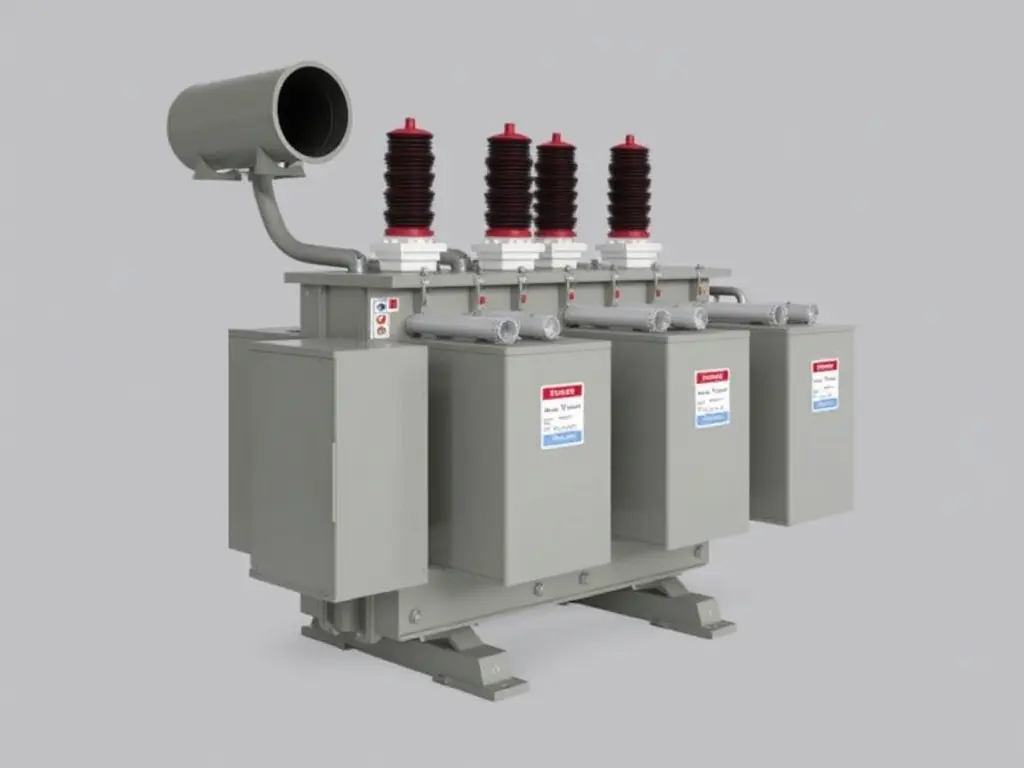
En el vertiginoso mundo de la tecnología moderna, el transformador eléctrico, silencioso y omnipresente, desempeña un papel fundamental, casi como el héroe anónimo de nuestra vida cotidiana. Imagínese: cada vez que enciende la luz, carga el teléfono o enciende el portátil, un transformador eléctrico trabaja discretamente para garantizar que la electricidad fluya de forma fluida y eficiente hacia sus dispositivos. Pero, ¿qué es exactamente un transformador eléctrico y cómo realiza una función tan vital? Su capacidad para convertir y manipular la energía eléctrica lo hace fascinante e indispensable, aunque su funcionamiento sigue siendo un misterio para muchos.
Imagina estar en la cima de una montaña, contemplando una extensa ciudad iluminada por innumerables luces. Cada destello es impulsado por la electricidad que fluye a través de una red de transformadores que gestionan los niveles de voltaje para satisfacer todas las necesidades, desde maquinaria industrial hasta electrodomésticos. En esta entrada del blog, profundizaremos en el funcionamiento interno de estos extraordinarios dispositivos, explorando su historia, sus diversos tipos y los secretos que los convierten en la columna vertebral de nuestros sistemas eléctricos. Descubre las complejidades ocultas de un transformador eléctrico y comprende por qué entender estos componentes es crucial a medida que avanzamos hacia un futuro más electrificado.

La historia de los transformadores eléctricos
La historia del transformador comienza con el descubrimiento de la inducción electromagnética por Michael Faraday en 1831. Los experimentos de Faraday revelaron que un campo magnético variable en una bobina podía inducir un voltaje en otra bobina cercana. Este principio sentó las bases para que la humanidad pudiera aumentar o disminuir los niveles de voltaje a distancia, resolviendo así uno de los desafíos críticos de la distribución de energía en sus inicios. En las décadas siguientes, ingenieros e inventores perfeccionaron las ideas de Faraday, experimentando con diferentes materiales para el núcleo y configuraciones de bobinas.
Hacia la década de 1880, surgieron en Europa los primeros diseños prácticos de transformadores. Ingenieros como Lucien Gaulard y John Dixon Gibbs demostraron sistemas de distribución de corriente alterna (CA) utilizando transformadores rudimentarios. Poco después, los ingenieros húngaros Károly Zipernowsky y Ottó Bláthy, junto con el ingeniero húngaro-estadounidense Miksa Déri, introdujeron transformadores eficientes con núcleo de hierro que mejoraron significativamente la regulación de voltaje y redujeron las pérdidas de energía. Estos avances convencieron a las compañías eléctricas de que los sistemas de CA —alimentados por transformadores— eran superiores para la transmisión de energía a larga distancia en comparación con la corriente continua (CC).
En el siglo XX, la tecnología de transformadores avanzó rápidamente. Las laminaciones de acero reemplazaron los voluminosos núcleos de hierro, minimizando las pérdidas por corrientes parásitas y permitiendo unidades más compactas y de mayor capacidad. Los métodos de refrigeración evolucionaron desde simples baños de aceite hasta sistemas de refrigeración por aceite forzado e incluso por agua, lo que permitió a los transformadores manejar cargas cada vez mayores. Los diseños estandarizados, los dispositivos de protección y las normas de seguridad surgieron junto con el crecimiento de las redes eléctricas nacionales e internacionales. Los transformadores actuales deben mucho a los pioneros que, hace más de un siglo, se preguntaron: ¿Qué es un transformador eléctrico y cómo podemos aprovecharlo para iluminar el mundo?
Tipos de transformadores eléctricos y sus funciones
Los transformadores se presentan en una gran variedad de formas y tamaños, cada uno diseñado para una función específica dentro de los sistemas eléctricos. En términos generales, existen transformadores de potencia, transformadores de distribución y variantes especiales utilizadas en instrumentación o aislamiento. Si bien todos estos dispositivos se basan en los mismos principios fundamentales de inducción mutua, sus diseños difieren para cumplir con distintos requisitos de voltaje, corriente y condiciones ambientales.
Los transformadores de potencia son fundamentales en las redes de transmisión de alta tensión. Instalados en centrales generadoras y subestaciones principales, elevan la tensión de los generadores —a menudo a cientos de kilovoltios— para una transmisión eficiente a larga distancia. En el extremo receptor, otros transformadores de potencia reducen la tensión para su distribución. Los transformadores de distribución, en cambio, operan a tensiones más bajas (normalmente entre 4 kV y 35 kV primarios) para abastecer a zonas residenciales y comerciales, reduciendo la tensión a 120/240 V para el uso diario.
Los transformadores de medida, incluidos los transformadores de corriente (TC) y los transformadores de potencial (TP), cumplen funciones de monitorización y protección. Los TC reducen las corrientes elevadas a niveles seguros para contadores y relés, mientras que los TP reducen los voltajes para una medición precisa. Los transformadores de aislamiento separan eléctricamente dos circuitos sin alterar el voltaje, lo que proporciona seguridad y reduce el ruido en aplicaciones sensibles como equipos médicos o sistemas de audio. Los autotransformadores comparten parte de los devanados para un diseño más ligero y compacto, ideal para la regulación de voltaje en arrancadores de motor y dispositivos de potencia variable.
Los transformadores toroidales, con sus núcleos en forma de rosquilla, ofrecen baja interferencia electromagnética y un diseño compacto, lo que los hace populares en electrónica de audio, dispositivos médicos y equipos informáticos de alta gama. Cada tipo de transformador aborda un desafío único en la gestión de energía, lo que demuestra la versatilidad y adaptabilidad de un transformador eléctrico en el diverso panorama energético actual.
Los principios que rigen la conversión de voltaje
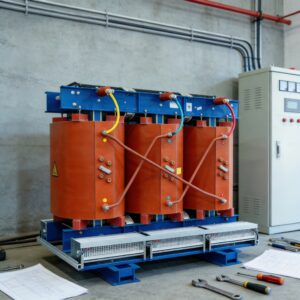
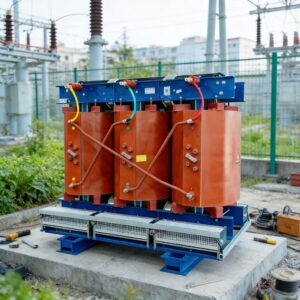
En el corazón de todo transformador eléctrico reside la ley de inducción electromagnética de Faraday, que rige cómo un flujo magnético variable genera una fuerza electromotriz (FEM) en un conductor. En un transformador básico, dos bobinados —primario y secundario— se enrollan alrededor de un núcleo ferromagnético común. Cuando una corriente alterna fluye a través del bobinado primario, produce un campo magnético variable en el núcleo. Este campo variable, a su vez, induce una tensión en el bobinado secundario proporcional a la relación de espiras.
La relación de espiras —el número de espiras en la bobina primaria con respecto a la secundaria— determina el factor de conversión de voltaje. Si la secundaria tiene más espiras que la primaria, el transformador aumenta el voltaje; si tiene menos, lo disminuye. Es importante destacar que, si bien el voltaje y la corriente varían inversamente según esta relación, la potencia (menos pérdidas menores) permanece prácticamente constante. Por lo tanto, un transformador elevador aumenta el voltaje pero disminuye la corriente, y un transformador reductor hace lo contrario, lo que facilita una transmisión eficiente y un uso seguro.
Los núcleos de los transformadores suelen estar fabricados de acero al silicio laminado, lo que mejora la permeabilidad magnética y reduce las pérdidas por corrientes parásitas. Algunas unidades avanzadas emplean núcleos de metal nanocristalino o amorfo para reducir aún más las pérdidas y mejorar la eficiencia, algo fundamental en grandes centrales eléctricas. La eficiencia del acoplamiento, el diseño del núcleo, la configuración del bobinado y los métodos de refrigeración influyen en la eficacia con la que un transformador convierte la tensión, minimizando así el desperdicio de energía. Estos principios garantizan que, desde la generación hasta el consumo, la electricidad fluya a los niveles adecuados para cada aplicación.
Innovaciones en la tecnología de transformadores
La industria de los transformadores evoluciona constantemente para satisfacer las demandas actuales de mayor eficiencia, compacidad e integración digital. Uno de los avances más prometedores es el transformador de estado sólido (SST), que utiliza dispositivos de conmutación de alta frecuencia y electrónica de potencia en lugar de los núcleos laminados tradicionales. Los SST ofrecen un control de voltaje más preciso, flujo de potencia bidireccional e integración perfecta con fuentes de energía renovables, lo que abre el camino a microrredes más inteligentes e infraestructura de carga para vehículos eléctricos.
Los núcleos metálicos nanocristalinos y amorfos representan un nuevo avance. Estos materiales avanzados presentan pérdidas en el núcleo significativamente menores que las del acero al silicio convencional, lo que aumenta la eficiencia general, especialmente a cargas parciales. La modernización de transformadores convencionales con núcleos amorfos en subestaciones urbanas puede generar ahorros energéticos sustanciales y reducir las emisiones de gases de efecto invernadero a largo plazo.
La monitorización digital y el mantenimiento predictivo también están transformando la gestión de transformadores. Los sensores integrados registran la temperatura, la vibración, la humedad y los gases disueltos en tiempo real, alimentando plataformas de análisis basadas en inteligencia artificial. Este cambio de las inspecciones programadas al mantenimiento predictivo minimiza el tiempo de inactividad, prolonga la vida útil y mejora la fiabilidad de la red. Además, los fluidos aislantes ecológicos, como los ésteres naturales y los biodegradables sintéticos, están sustituyendo al aceite mineral, reduciendo el riesgo de incendio y el impacto ambiental.
Conclusión: El héroe anónimo de la electricidad moderna
Los transformadores eléctricos son los pilares fundamentales de nuestra infraestructura energética. Desde los experimentos pioneros de Michael Faraday hasta las innovaciones actuales en redes inteligentes, estos dispositivos han evolucionado para satisfacer las crecientes necesidades energéticas de la humanidad con una eficiencia y fiabilidad cada vez mayores.
Comprender qué es un transformador eléctrico y cómo funciona no solo resalta su importancia histórica, sino que también subraya su papel fundamental en la construcción de un futuro sostenible y electrificado. A medida que adoptamos las energías renovables, la movilidad eléctrica y las redes digitales, los transformadores seguirán siendo los héroes anónimos que garantizan que la energía que generamos llegue a todos los rincones del planeta.

 English
 Français
 Español
 Deutsch