

Electrical transformers are essential components in modern power systems. They transfer electrical energy between circuits while changing voltage and current levels to meet the requirements of power transmission, distribution, industrial equipment, and electrical applications.
There are many types of electrical transformers, and each type is designed for a specific voltage level, application, construction method, or operating environment.
This guide explains the most common transformer types, their functions, applications, advantages, and key differences to help you understand how to choose the right electrical transformer for your system.
Did you know that the world as we know it would come to a standstill without the unsung heroes residing in substations, factories, and even the electric boxes of our homes? These unsung heroes, known as electrical transformers, are more than mere devices; they are the backbone of our modern electrical grid, ensuring that power flows seamlessly and safely from generation points to your living space. As the energy demand continues to surge, understanding the various types of electrical transformers becomes crucial—not just for industry professionals but for anyone interested in how our day-to-day power needs are met.
Imagine trying to charge your smartphone, power your computer, or even keep your refrigerator running without a reliable electricity supply. Whether it’s stepping up the voltage for long-distance transmission or stepping it down for residential use, each type of transformer plays a unique and significant role. This complete guide will delve into the essential types of electrical transformers, unraveling their specific functions, distinct characteristics, and critical importance in our daily lives. Prepare to embark on a journey that unveils the intricacies behind one of the most integral components of our electrical infrastructure.
How Are Electrical Transformers Classified?
Electrical transformers can be classified according to their application, voltage transformation, construction, phase, winding configuration, and cooling method. A single transformer may belong to more than one category. For example, a transformer can be a three-phase, oil-immersed, step-down distribution transformer.
Understanding the Fundamentals of Electrical Transformers
Electrical transformers are core components in power systems, designed to transfer electrical energy between circuits through electromagnetic induction. At their essence, they consist of a magnetic core and two sets of windings: the primary winding, which receives the input voltage, and the secondary winding, which delivers the transformed output voltage. The ratio of turns between these windings determines whether the transformer will step voltage up or step it down, allowing for precise control of power levels across different segments of the grid. In addition to core and windings, insulation materials and cooling systems ensure safe and efficient operation under varying loads.
When discussing the various types of electrical transformers, it’s important to note their categorization by function, phase configuration, and application environment. Key classifications include power transformers, distribution transformers, instrument transformers (such as current and potential transformers), and specialized units like auto-transformers. Each category serves a distinct purpose: power transformers handle bulk transmission, distribution transformers serve end-users, and instrument transformers facilitate accurate measurement and protection within substations. These different types of electrical transformers collectively uphold the stability and reliability of the entire power network.
Efficiency is a critical consideration in transformer design, as losses due to hysteresis, eddy currents, and copper resistance can impact overall grid performance. Modern transformers employ laminated silicon steel cores, advanced insulation, and optimized winding techniques to minimize these losses. Voltage regulation—measuring how much output voltage changes under load—also plays a vital role in maintaining consistent power quality. By understanding these fundamentals—core construction, winding configurations, efficiency factors, and regulation metrics—professionals and enthusiasts alike can appreciate why transformers are indispensable in electrification worldwide.
Transformer Types Comparison
| Transformer Type | Main Function | Common Applications |
|---|---|---|
| Power Transformer | High-voltage power transmission | Power plants, substations |
| Distribution Transformer | Voltage distribution | Commercial & residential power |
| Step-Up Transformer | Increases voltage | Power generation & transmission |
| Step-Down Transformer | Reduces voltage | Industrial & commercial systems |
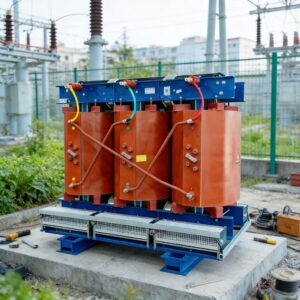
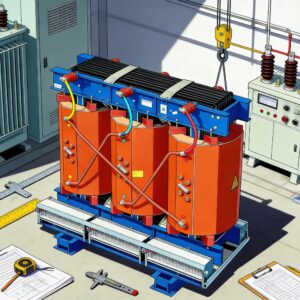
| Dry-Type Transformer | Air-cooled power conversion | Indoor & industrial applications |
| Oil-Immersed Transformer | Insulation and cooling | Utility and outdoor substations |
| Isolation Transformer | Electrical isolation | Safety-sensitive equipment |
| Instrument Transformer | Measurement and protection | Electrical monitoring systems |
| Single-Phase Transformer | Single-phase voltage conversion | Residential and light commercial |
| Three-Phase Transformer | Three-phase power conversion | Industrial power systems |
Power Transformers: The Backbone of Electrical Distribution
Power transformers are large units located at generating stations and major substations, designed to operate at high voltages ranging from tens to hundreds of kilovolts. Their primary role is to step up the voltage produced by generators for efficient long-distance transmission and then step it down when electricity nears load centers. By minimizing current at high voltages, power transformers reduce I²R losses in transmission lines, enabling utilities to transport vast amounts of energy over hundreds or thousands of miles with greater efficiency and lower operational costs.
Constructed with robust cores and high-capacity windings, power transformers often require sophisticated cooling systems, such as oil or gas insulation and forced-air circulation, to dissipate heat generated during heavy load conditions. Their design also incorporates on-load tap changers—mechanisms that adjust the winding ratio under load—to maintain a stable output voltage despite fluctuations in demand. Reliability is paramount; therefore, power transformers undergo rigorous testing for dielectric strength, short-circuit withstand capabilities, and thermal performance before entering service.
Given their central role in bulk power transfer, power transformers command substantial capital investment and careful maintenance planning. Routine diagnostics—like dissolved gas analysis in insulating oil, infrared thermography, and vibration monitoring—help detect early signs of degradation or faults. By ensuring that these critical machines remain in optimal condition, utilities can prevent costly outages, safeguard grid stability, and meet ever-growing demand. In sum, power transformers truly form the backbone of any electrical distribution network.
Three-Phase Transformers: Balancing Power in Industrial Settings

Three-phase transformers are specifically engineered to handle three-phase power systems, which are ubiquitous in industrial and large commercial environments due to their efficiency in transmitting and distributing large amounts of electricity. Unlike single-phase units, a three-phase transformer comprises three sets of primary and secondary windings, either assembled on a common core (three-limb core design) or on separate core limbs (five-limb or core-form designs). This configuration ensures balanced voltage and current across all three phases, minimizing neutral currents and improving overall system stability.
In industrial settings—such as factories, manufacturing plants, and large data centers—three-phase power delivers smoother torque in motors, better power factor performance, and reduced conductor material compared to equivalent single-phase systems. These transformers often feature oil or dry-type insulation, with ratings that can span from a few kilovolt-amperes (kVA) to several hundred MVA. Their ability to efficiently distribute balanced loads makes them indispensable for heavy machinery, HVAC systems, and process controls where continuous, reliable power is crucial.
Maintenance of three-phase transformers involves monitoring each phase for insulation integrity, thermal excursions, and magnetic flux symmetry. Field tests, including turn ratio verification, winding resistance measurement, and power factor testing, help detect issues such as inter-turn shorts or core imbalances. Upgrades like digital monitoring, on-load tap changers, and advanced cooling systems further extend service life and adapt to variable load demands. With proper installation and upkeep, three-phase transformers ensure industrial facilities operate at peak efficiency and safety.
Power Transformer vs Distribution Transformer
Power transformers and distribution transformers both transfer electrical energy between voltage levels, but they are designed for different stages of the electrical power system.
A power transformer is generally used in high-voltage transmission and substation applications, while a distribution transformer is used closer to consumers to provide usable distribution voltages.
The main differences involve operating conditions, load requirements, voltage levels, efficiency requirements, and installation location.
Dry-Type vs Oil-Immersed Transformer
The main difference between dry-type and oil-immersed transformers is their insulation and cooling method.
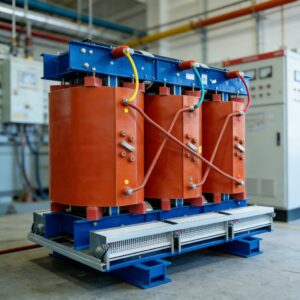
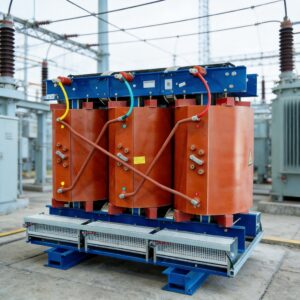
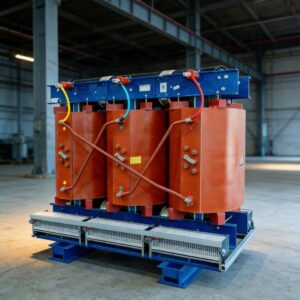
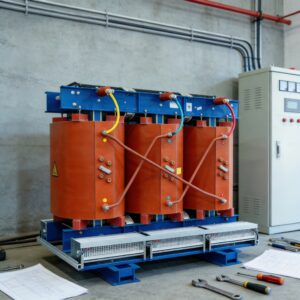
A dry-type transformer uses air and solid insulation, making it suitable for many indoor installations. An oil-immersed transformer uses insulating liquid for cooling and insulation and is commonly used in outdoor substations and higher-capacity applications.
The right choice depends on installation environment, capacity, safety requirements, maintenance requirements, and project specifications.
Single-Phase vs Three-Phase Transformer
Single-phase transformers are designed for single-phase electrical systems and are commonly used for lower-power applications.
Three-phase transformers are designed for three-phase systems and are widely used in industrial, commercial, and utility applications where larger amounts of electrical power must be transmitted or distributed efficiently.
Step-Up vs Step-Down Transformer
The primary difference is the direction of voltage conversion.
A step-up transformer increases voltage from the primary side to the secondary side, while a step-down transformer decreases voltage.
Step-up transformers are commonly associated with power transmission, while step-down transformers are widely used in distribution and electrical equipment.
Applications of Electrical Transformers
Electrical transformers are used throughout modern electrical infrastructure.
Common applications include:
- Power generation
- Electrical transmission
- Power distribution
- Industrial manufacturing
- Commercial buildings
- Renewable energy systems
- Data centers
- Transportation infrastructure
- Electrical substations
- Control and protection systems
The appropriate transformer type depends on voltage requirements, load capacity, frequency, installation environment, cooling method, and required protection.
How to Choose the Right Electrical Transformer?
Choosing the right transformer requires evaluating several technical factors.
1. Determine the Required Voltage
Identify the primary input voltage and required secondary voltage. This determines whether a step-up, step-down, or other voltage transformation is required.
2. Calculate the Required Capacity
Transformer capacity should be selected according to the expected electrical load and operating conditions.
3. Choose the Correct Phase
Determine whether the system requires a single-phase or three-phase transformer.
4. Consider the Installation Environment
For indoor applications, dry-type transformers may be appropriate. Outdoor and high-capacity installations may require oil-immersed transformer designs.
5. Evaluate Cooling and Insulation
Cooling and insulation requirements depend on transformer capacity, operating conditions, ambient temperature, and installation requirements.
6. Consider Efficiency and Reliability
For continuous-duty applications, transformer efficiency, thermal performance, service life, maintenance requirements, and reliability should all be considered.
7. Work With the Transformer Manufacturer
For customized or industrial transformer applications, discuss the required voltage, capacity, frequency, phase, insulation, cooling method, dimensions, and operating environment with the manufacturer before selecting a final design.
Frequently Asked Questions About Electrical Transformer Types
What are the main types of electrical transformers?
The main types include power transformers, distribution transformers, step-up transformers, step-down transformers, dry-type transformers, oil-immersed transformers, isolation transformers, instrument transformers, autotransformers, single-phase transformers, and three-phase transformers.
What are the three main types of transformers?
Transformers can be classified in several ways, so there is no single universal set of three types. Common classifications include power and distribution transformers by application, step-up and step-down transformers by voltage transformation, and dry-type and oil-immersed transformers by construction and cooling method.
What is the difference between a power transformer and a distribution transformer?
Power transformers are primarily used in high-voltage transmission and substation applications, while distribution transformers are used in distribution networks to supply electricity at usable voltage levels to consumers.
What is the difference between a dry-type and oil-immersed transformer?
Dry-type transformers use air and solid insulation instead of liquid insulation. Oil-immersed transformers use insulating liquid for cooling and insulation and are commonly used in outdoor and higher-capacity applications.
What is the difference between a step-up and step-down transformer?
A step-up transformer increases voltage, while a step-down transformer decreases voltage.
Are three-phase transformers better than single-phase transformers?
Neither type is universally better. The appropriate choice depends on the electrical system, required capacity, application, installation conditions, and project requirements.
Which transformer is best for industrial applications?
The best transformer depends on the industrial load, voltage, capacity, environment, cooling requirements, and operating conditions. Three-phase, dry-type, and oil-immersed transformers are all used in different industrial applications.
How do I choose the right electrical transformer?
Start by determining the required input and output voltage, transformer capacity, phase, frequency, installation environment, cooling method, insulation requirements, and applicable electrical standards.
Conclusion
Understanding the different types of electrical transformers is essential when designing, upgrading, or maintaining an electrical power system.
Power transformers, distribution transformers, dry-type transformers, oil-immersed transformers, step-up transformers, step-down transformers, isolation transformers, and three-phase transformers each serve different purposes.
The right transformer should be selected according to voltage, capacity, phase, application, installation environment, cooling requirements, and long-term operating conditions. For specialized or industrial projects, working directly with an experienced transformer manufacturer can help ensure the final transformer meets the required technical specifications.
Conclusion: The Indispensable Role of Electrical Transformers
From massive power transformers that shuttle energy across continents to compact distribution units that light up our homes, the various types of electrical transformers underpin every facet of modern life. Understanding their construction, function, and application helps us appreciate how they enable efficient, reliable, and safe power delivery at every voltage level.
As we continue to innovate in renewable energy integration, electric transportation, and smart grids, transformers will evolve alongside these technologies, maintaining their status as indispensable components of our electrical infrastructure. Whether you’re an industry professional or simply a curious consumer, knowing about these vital machines fosters a deeper respect for the engineering that powers our world.

 English
 Français
 Español
 Deutsch