Transformer standards and certifications are the rulebook that turns a custom-built electrical machine into a product a utility, insurer, or building inspector will accept. For buyers sourcing across borders, the rulebook can feel like a maze: IEC publications in Europe, IEEE and ANSI in North America, UL or CSA safety listing, DOE efficiency rules, CE marking, and environmental directives such as RoHS and REACH. This guide organizes those requirements into a clear framework, explains what each standard actually covers, and shows how to specify a compliant transformer without over- or under-specifying.
Points clés à retenir
- IEC 60076 and IEEE C57 are the two dominant transformer standard families; most regional rules build on one of them.
- A standard defines how a transformer is designed and tested, while a certification or marking is third-party or supplier evidence of conformity.
- North America typically adds UL or CSA safety listing and DOE efficiency compliance; Europe adds CE marking and ErP efficiency tiers.
- RoHS and REACH restrict hazardous substances and chemicals in materials, coatings, and insulating fluids.
- Confirm the exact standards edition, test package, and documentation at contract stage — not at factory acceptance testing.
Why Transformer Standards and Certifications Matter
Transformer standards and certifications exist for four practical reasons: safety, interoperability, verifiable performance, and legal market access. A standard such as IEC 60076 or IEEE C57 defines how a transformer must be designed, rated, tested, and marked. A certification or marking — UL listing, CE marking, or a declaration of conformity — provides evidence that a specific product meets those requirements.
For the purchaser, the value is predictability. A transformer built to a recognized standard has known temperature-rise limits, insulation levels, short-circuit withstand capability, and test procedures. That makes bids comparable and allows engineers to integrate the unit into a larger system with confidence. Without a stated standard, “equivalent” products from different factories may not be genuinely equivalent at all.
Ignoring compliance has real consequences. Equipment may be rejected at customs, fail inspection, be denied connection by the utility, or create liability problems after an incident. In efficiency-regulated markets, non-compliant units cannot legally be placed on the market. Standards are therefore not paperwork — they are part of the product specification.
IEC 60076 vs IEEE C57: The Two Core Standard Families
Most transformer requirements worldwide trace back to one of two families. Understanding which family applies is the first decision in any export or compliance project.
The IEC 60076 Series
IEC 60076 is the international standard series published by the International Electrotechnical Commission. It is the reference framework for most of Europe, Asia, Africa, and many other markets. The series is organized by subject, and the most commonly cited parts include:
- Part 1: general requirements and rating rules.
- Part 2: temperature rise for liquid-immersed and dry-type transformers.
- Part 3: insulation levels, dielectric tests, and clearances.
- Part 5: ability to withstand short circuit.
- Part 10: determination of sound levels.
- Part 11: dry-type transformers specifically.
When a specification says “built to IEC 60076,” it is normally referring to this set of documents plus any national adoption such as EN or BS variants. Buyers should confirm the edition year, because requirements evolve.
The IEEE C57 Series
In North America, the IEEE C57 series is the central reference, published by the Institute of Electrical and Electronics Engineers and often paired with ANSI voltage standards. Frequently used documents include C57.12.00 for general requirements, C57.12.10 for liquid-immersed distribution and power transformers, C57.12.90 for test procedures, and C57.104 for interpretation of dissolved-gas analysis in oil. NEMA publications and ANSI C84.1 voltage ratings complete the framework.
Key Differences at a Glance
| Aspect | IEC 60076 family | IEEE C57 family |
|---|---|---|
| Main regions | Europe, Asia, Africa, much of the world | North America and markets following U.S. practice |
| Nominal frequency context | Mostly 50 Hz | Mostly 60 Hz |
| Structure | Multi-part series by technical subject | Individual standards by product and topic |
| Voltage convention | IEC preferred voltage series | ANSI C84.1 preferred ratings |
| Typical certification layer | CE marking, ErP, RoHS/REACH | UL / CSA listing, DOE efficiency |
These families are broadly aligned in engineering principles but differ in details such as temperature-rise limits, test tolerances, and terminology. This is why a transformer cannot simply be “converted” from one standard to the other at the documentation stage. Choosing between them belongs at the design stage, together with the voltage and frequency decisions discussed in our guide to voltage and frequency standards for export.
UL and CSA Listing in North America
UL and CSA are North American safety certification bodies. UL (Underwriters Laboratories) and CSA (Canadian Standards Association) test products against recognized safety standards and authorize the use of their marks on compliant equipment. For transformers, this usually means evaluation against standards such as UL 1561 for dry-type transformers and the applicable CSA C22.2 requirements.
Listing is most often required for dry-type and padmount transformers installed in commercial buildings, where electrical codes and insurers demand listed equipment. Oil-immersed utility units may follow a different approval path set by the utility. Whether listing is mandatory depends on the installation, the local electrical code, and the authority having jurisdiction — so it must be confirmed per project.
Buyers should be precise about the distinction: a product “built to UL standards” is not the same as a product “UL listed.” The listing requires evaluation by the certification body and ongoing follow-up service. Marketing language should never blur that line.
DOE Efficiency Requirements and Efficiency Tiers
In the United States, the Department of Energy regulates the energy efficiency of distribution transformers under federal rules (10 CFR Part 431). These rules set minimum efficiency levels that must be met for units placed on the market, and they have been tightened in successive rulemakings over time. Compliance is measured through standardized test procedures that quantify no-load and load losses at defined reference conditions.
The practical implication for buyers is that efficiency is not optional in the U.S. distribution transformer market. Loss values on the nameplate and in the bid must satisfy the applicable federal requirement for the specific transformer category. Because the rules distinguish between product classes, the correct classification must be identified early.
CE Marking and the ErP Directive in Europe
CE marking indicates that a manufacturer declares the product conforms to applicable European Union legislation. For transformers, the relevant framework commonly includes the Eco-design Directive and its implementing regulation for transformers, often referred to as the ErP requirements. Unlike a third-party certification, CE is generally a self-declaration supported by a technical file and a declaration of conformity.
The ErP framework establishes efficiency tiers for power and distribution transformers. These tiers are introduced in stages, with each stage tightening the maximum permitted losses. Buyers sourcing for the European market should confirm which tier applies at the intended date of placing the product on the market, since obligations change over time.
It is important to keep CE marking distinct from quality certification. CE addresses legal conformity with EU rules; it is not a statement about overall manufacturing quality. A supplier’s quality system is a separate matter, documented through factory processes and test records.
RoHS and REACH: Environmental Compliance
RoHS and REACH are European regulatory frameworks that affect the materials used in transformers and their components.
- RoHS restricts the use of certain hazardous substances in electrical and electronic equipment. For transformers this can affect items such as lead in solders or coatings, and certain flame retardants in insulation components. Compliance requires material declarations and sometimes laboratory verification.
- REACH governs the registration, evaluation, authorization, and restriction of chemicals. It places obligations on substances of very high concern that may appear in materials, coatings, or insulating fluids. Suppliers may need to communicate the presence of listed substances above threshold levels.
For oil-immersed equipment, the fluid deserves particular attention. Mineral, silicone, and vegetable-based insulating oils have different regulatory profiles, and the chosen fluid must satisfy both performance and environmental requirements. Buyers can review the broader design context in our overview of transformateurs à huile when evaluating fluid and material choices.
Efficiency Tiers Explained
Efficiency tiers are staged minimum-efficiency requirements that become stricter over time. They exist in both North American and European markets, though the frameworks and measurement methods differ. Understanding the concept helps buyers ask the right questions without getting lost in regulation.
| Region | Efficiency framework | What is regulated | Buyer action |
|---|---|---|---|
| États-Unis | DOE rules under 10 CFR Part 431 | Minimum efficiency by product class, based on no-load and load losses | Identify the product class and confirm current minimum |
| European Union | ErP Eco-design implementing regulation | Maximum losses by transformer category, introduced in tiers | Confirm the applicable tier and compliance date |
| Other markets | Varies; often referenced to IEC or local energy rules | Loss limits or efficiency labels | Verify local requirements with the utility or regulator |
Efficiency requirements interact directly with design choices. Core material, winding conductor, and geometry determine no-load and load losses. Buyers who want to understand the engineering levers behind compliance can read our companion article on energy-efficient and sustainable transformers, which covers loss reduction and total cost of ownership.
Test Reports and Documentation
Compliance is demonstrated through testing and paperwork. A well-defined documentation package avoids disputes at delivery and speeds up approval. The typical layers are:
- Routine tests: performed on every unit, such as ratio and polarity, winding resistance, insulation resistance, dielectric tests, and no-load loss measurement.
- Type tests: performed on a representative design to verify temperature rise, dielectric strength, and short-circuit withstand capability.
- Special tests: agreed case by case, such as partial discharge, sound level, or harmonic withstand.
- Conformity documents: declarations of conformity, CE technical files, listing evidence where applicable, and material compliance statements for RoHS and REACH.
The exact list should be written into the purchase contract, including which tests are witnessed by the buyer or a third party. Our article on performance and qualification provides more context on how test evidence is organized.
Choosing the Right Standards Package by Market
The decision table below is a practical starting point. It is intentionally general — local codes and utility rules always take precedence.
| Destination | Core standard | Safety / marking | Efficacité | Environmental |
|---|---|---|---|---|
| États-Unis | IEEE C57, ANSI | UL listing (common for dry-type/padmount) | DOE minimum efficiency | Project-specific |
| Canada | IEEE C57 / CSA standards | CSA certification | Applicable Canadian efficiency rules | Project-specific |
| European Union | IEC 60076 / EN | CE marking | ErP efficiency tiers | RoHS, REACH |
| Other IEC markets | CEI 60076 | Varies by country | Varies by country | Varies by country |
How Daqo Addresses Standards and Qualification
Daqo Group has more than 30 years of experience in the transformer industry, serving over 2,000 customers in more than 40 countries through six production bases and four research institutes. The company’s transformers are built to IEEE, IEC, and ANSI standards, with main product lines in dry-type, oil-immersed, and padmount equipment. You can learn more about Daqo and its engineering background.
Confirm the specific standards editions, UL/CSA listing status, CE declarations, DOE/ErP efficiency documentation and RoHS/REACH statements currently maintained for each product series.
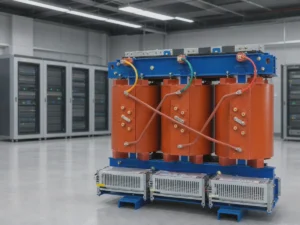
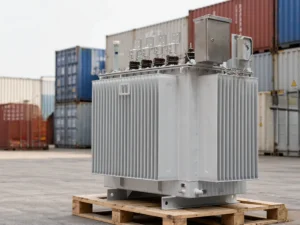
For projects in the European market, transformateurs à sec are frequently specified where fire safety and indoor installation matter. For utility and outdoor distribution, transformateurs à huile are the common choice. In both cases, the compliance package should be agreed before production begins.
Conclusion
Transformer standards and certifications are not optional accessories to a technical specification — they define the rules by which a transformer is designed, tested, and accepted. IEC 60076 and IEEE C57 form the two core engineering frameworks. Around them sit regional layers: UL and CSA listing plus DOE efficiency rules in North America, and CE marking, ErP efficiency tiers, and RoHS/REACH environmental compliance in Europe. Identify the destination market first, confirm the standard family and edition, agree the certification and test package, and record everything in one contract. Do that, and compliance becomes a predictable part of the project rather than a last-minute obstacle. To discuss the standards package for your market, contact our team before placing an order.
Foire aux questions
What is the difference between a standard and a certification?
A standard defines how a product must be designed, rated, and tested. A certification or marking is evidence — usually from a third party or a formal declaration — that a specific product conforms to those requirements.
What is IEC 60076?
IEC 60076 is the international series of standards for power transformers, organized by subject. It covers general requirements, temperature rise, insulation levels, short-circuit withstand, sound levels, and dry-type transformers.
How does IEEE C57 differ from IEC 60076?
IEEE C57 is the North American standard family, closely tied to ANSI voltage ratings and 60 Hz practice. IEC 60076 is the international family used mainly in 50 Hz markets. Their principles align, but requirements and terminology differ in detail.
Do all transformers need UL or CSA listing?
No. Listing is most often required for dry-type and padmount transformers in commercial and building installations where codes and insurers demand it. Utility oil-immersed units often follow a utility-specific approval path. Confirm the requirement with the authority having jurisdiction.
What are efficiency tiers?
Efficiency tiers are staged minimum-efficiency or maximum-loss requirements that tighten over time. In the U.S. they are set by DOE rules; in the EU they come from the ErP Eco-design framework. The applicable tier depends on product class and compliance date.
What is CE marking for transformers?
CE marking is a manufacturer’s declaration that a product conforms to applicable EU legislation. For transformers this commonly involves the Eco-design framework and supporting technical documentation. It is not, by itself, a quality certification.
How do RoHS and REACH affect transformers?
RoHS restricts certain hazardous substances in electrical equipment, affecting materials such as solders, coatings, and flame retardants. REACH controls chemicals of high concern and may require disclosure of listed substances in materials and insulating fluids.
What documents should I request from a transformer supplier?
Request routine and type test reports, a declaration of conformity or listing evidence where applicable, efficiency compliance documentation, material compliance statements, and the exact standards editions used. Agree the full package in the contract.
Need help defining a compliant specification for your destination market? Contact Daqo’s engineering team with your standards and certification requirements.