

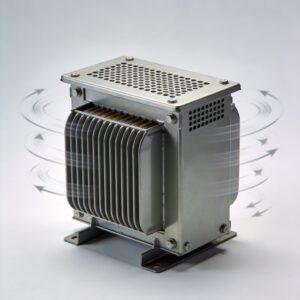
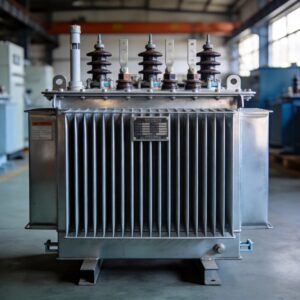
Un type sec refroidi par air Le transformateur à air est un transformateur électrique qui utilise l'air comme principal fluide de refroidissement, au lieu d'un liquide (comme l'huile). Cette conception élimine le besoin de liquides inflammables ou dangereux, ce qui en fait une solution plus sûre et plus respectueuse de l'environnement.
Table des matières
ToggleCes transformateurs sont généralement enfermés dans un boîtier ventilé, permettant une circulation d'air naturelle ou forcée pour refroidir les composants internes. Grâce à leur conception propre et à faible risque, ils sont largement utilisés dans bâtiments commerciaux, hôpitaux, centres de données et installations industrielles.

Conception de base des transformateurs à sec
Système de refroidissement par air
Contrairement aux unités remplies d'huile, un transformateur sec repose sur Refroidissement par air naturel (AN) ou Refroidissement par air pulsé (AF). La circulation d'air naturelle est suffisante pour les opérations standard, tandis que le refroidissement forcé est utilisé pour les charges plus élevées afin de maintenir des performances stables.
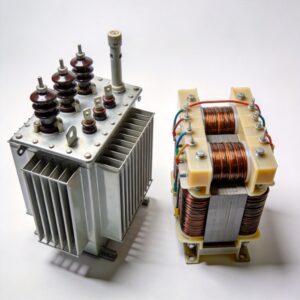
Assemblage du noyau et de la bobine
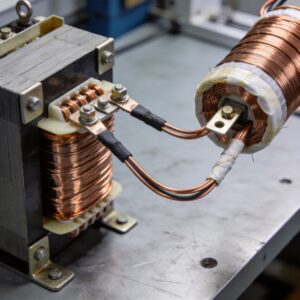
Le système de noyau et d'enroulement Il est isolé avec des matériaux résistants aux hautes températures. Cela garantit que le transformateur peut fonctionner sous de fortes charges sans dégradation. L'isolation avancée améliore stabilité thermique, performances électriques et longue durée de vie.
Enceinte ventilée
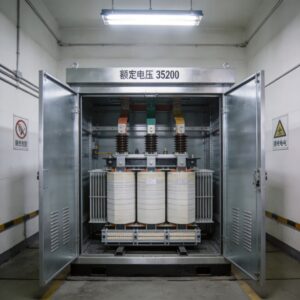
A enceinte ventilée Il permet une circulation d'air continue à travers les composants internes. Il protège également le transformateur de la poussière, de l'humidité et des contaminants environnementaux, ce qui le rend adapté aux installations intérieures et semi-extérieures.
Technologie de résine coulée
Dans un transformateur en résine coulée, Les enroulements sont encapsulés dans de la résine époxy. Ceci offre une protection supplémentaire contre l'humidité, les produits chimiques et les contraintes mécaniques, ce qui le rend idéal pour les environnements difficiles tels que les sites industriels et les zones côtières.
Principaux avantages des transformateurs secs refroidis par air

Sécurité renforcée
L'un des plus grands avantages d'un transformateur sec refroidi par air La sécurité est primordiale. Sans huile inflammable, le risque d'incendie ou d'explosion est considérablement réduit. Cela en fait une solution idéale pour installations de transformateurs intérieurs dans les zones à fort trafic ou sensibles.
Écologique et durable
Ces transformateurs sont considérés transformateurs écologiques car elles éliminent les risques de fuites d'hydrocarbures et réduisent la pollution environnementale. Elles s'inscrivent dans les objectifs de développement durable actuels et sont largement utilisées dans projets de bâtiments écologiques et d'énergies renouvelables.
Peu d'entretien
A transformateur à sec Ils nécessitent un entretien minimal comparé aux transformateurs à bain d'huile. L'absence de contrôle et de remplacement de l'huile réduit les coûts d'exploitation et les temps d'arrêt. Cela les rend particulièrement adaptés à… installations distantes ou difficiles d'accès.
Efficacité élevée et économies d'énergie
Les transformateurs refroidis par air sont conçus pour distribution d'énergie écoénergétique. Leur système de refroidissement optimisé réduit les pertes d'énergie, garantissant des performances stables et des coûts d'exploitation réduits sur le long terme.
Applications flexibles et polyvalentes
Ces transformateurs peuvent être utilisé dans de nombreux secteurs d'activité, y compris:
- Bâtiments commerciaux et résidentiels
- usines de fabrication et industrielles
- Systèmes de transport
- Énergies renouvelables (énergie solaire et éolienne)
- Centres de données et infrastructure informatique
Leur adaptabilité en fait un atout fiable solution de transformateur de distribution d'énergie.
Types de transformateurs secs refroidis par air
Transformateur en résine coulée
A transformateur en résine coulée Il est doté d'enroulements encapsulés dans de la résine époxy qui offrent une excellente protection contre l'humidité, la poussière et la corrosion. Il est largement utilisé dans les environnements difficiles et les infrastructures critiques.
Transformateur à sec ventilé
A transformateur ventilé Il utilise une conception à flux d'air ouvert pour un refroidissement efficace. Il convient aux environnements où une ventilation adéquate peut être maintenue, tels que les sous-stations et les installations industrielles.
Éléments clés à prendre en compte lors du choix d'un transformateur sec
Capacité de charge
Sélectionnez un transformateur en fonction de votre exigences de charge électrique pour assurer un fonctionnement efficace et stable.
Environnement d'installation
Déterminez si le transformateur sera installé à l'intérieur ou à l'extérieur. Des facteurs tels que niveaux d'humidité, de température et de poussière influencera le choix du boîtier et du niveau de protection.
Coût du budget et du cycle de vie
Bien que l'investissement initial puisse être plus élevé, un transformateur à sec offre des coûts d'entretien réduits et une durée de vie plus longue, offrant ainsi une meilleure valeur à long terme.
Classements d'efficacité énergétique
Vérifiez les normes d'efficacité pour garantir la conformité aux réglementations énergétiques et réduire les coûts d'exploitation. Les transformateurs à haut rendement contribuent à gestion durable de l'énergie.
FAQ : Transformateur sec refroidi par air
1. Quelle est la différence entre les transformateurs secs et les transformateurs remplis d'huile ?
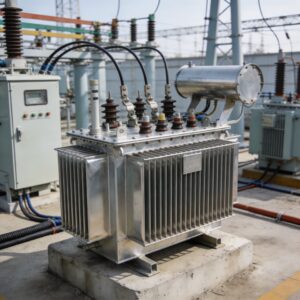
Les transformateurs secs utilisent l'air pour leur refroidissement, tandis que les transformateurs immergés utilisent de l'huile isolante. Les transformateurs secs sont plus sûrs, plus respectueux de l'environnement et nécessitent moins d'entretien.
2. Où utilise-t-on les transformateurs secs refroidis par air ?
Ils sont couramment utilisés dans hôpitaux, écoles, bâtiments commerciaux, usines et systèmes d'énergie renouvelable.
3. Les transformateurs secs conviennent-ils à une utilisation en extérieur ?
Oui, mais elles nécessitent des abris adaptés pour les protéger des intempéries.
4. Quels sont les avantages des transformateurs en résine coulée ?
Transformateurs en résine coulée Elles offrent une protection supérieure contre l'humidité, la poussière et les produits chimiques, ce qui les rend idéales pour les environnements difficiles.
5. Les transformateurs secs nécessitent-ils un entretien ?
Ils nécessitent un entretien minimal par rapport aux transformateurs à bain d'huile, consistant principalement en une inspection et un nettoyage périodiques.
Conclusion
Les transformateurs secs refroidis par air offrent une solution sûre, efficace et respectueuse de l'environnement pour systèmes de distribution d'énergie modernes. Grâce à leurs avantages tels que la faible maintenance, le rendement élevé et la polyvalence des applications, ils remplacent de plus en plus les transformateurs traditionnels à bain d'huile.
En choisissant le type de transformateur adapté (à résine coulée ou ventilé) et en tenant compte de facteurs tels que la charge, l'environnement et l'efficacité, les entreprises peuvent améliorer la fiabilité de leurs opérations et réduire leurs coûts à long terme. Face à la croissance de la demande énergétique, ces transformateurs continueront de jouer un rôle essentiel dans une infrastructure électrique durable et performante.

 English
 Français
 Español
 Deutsch