
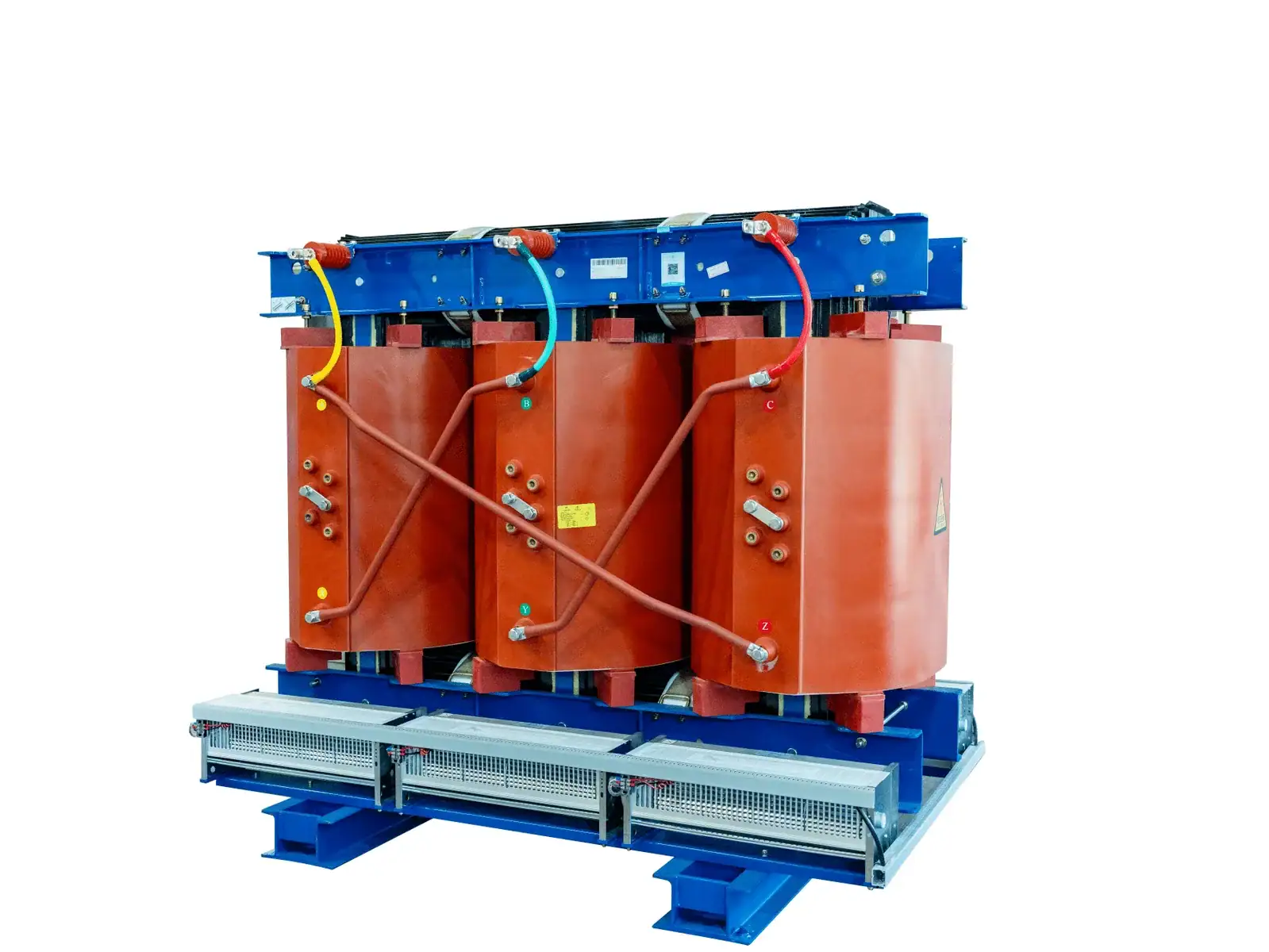
La puissance nominale d'un transformateur est un facteur crucial pour déterminer la charge électrique maximale qu'il peut supporter en toute sécurité. Généralement exprimée en kilovoltampères (kVA), cette puissance reflète la capacité du transformateur à fournir efficacement tension et courant sans risque de surcharge. Un calcul précis et une bonne compréhension de cette puissance garantissent des performances optimales et une longue durée de vie au transformateur, évitant ainsi le sous-dimensionnement et le surdimensionnement, qui pourraient entraîner une baisse d'efficacité, des coûts plus élevés ou une panne.
Table des matières
ToggleImportance d'un calcul précis de la capacité du transformateur
Choisir la bonne taille de transformateur est essentiel pour éviter la surchauffe et les pannes. Un sous-dimensionnement peut entraîner une surchauffe, tandis qu'un surdimensionnement peut engendrer des dépenses inutiles et un gaspillage d'énergie. Un dimensionnement adéquat garantit un fonctionnement efficace du transformateur, prolongeant sa durée de vie et réduisant les coûts d'exploitation.
Facteurs clés influençant la capacité du transformateur
Plusieurs facteurs doivent être pris en compte pour déterminer capacité de puissance du transformateur:
Type de charge:
Charges résistives: Consomme directement de l'énergie (par exemple, l'éclairage et le chauffage).
Charges inductives: Inclure des composants réactifs, comme des moteurs et des transformateurs, compliquent le dimensionnement.
Charges capacitives: Fréquemment présentes dans les appareils électroniques, ces charges affectent le facteur de puissance et le dimensionnement du transformateur.
Rendement et facteur de puissance:
Les transformateurs à faible facteur de puissance nécessitent une puissance apparente (kVA) plus élevée pour alimenter la même charge, ce qui augmente leur taille et leur coût. La correction du facteur de puissance est essentielle pour éviter les surcharges.
Formule de calcul du kVA:
La formule de base pour déterminer le kVA est :
kVA=Tension (V)×Courant (A)/1000
Cela permet de déterminer la capacité minimale requise afin d'éviter le sous-dimensionnement ou le surdimensionnement du transformateur.
Déterminer la capacité appropriée du transformateur
Lors du choix d'un transformateur, tenez compte des éléments suivants :
Exigences en matière de charge:
Évaluer tous les appareils connectés et leurs puissances nominales, en tenant compte des pics de charge. Le transformateur doit supporter la charge maximale prévue, avec une marge de sécurité.Expansion future:
Anticipez les futures augmentations de charge afin d'éviter une mise à niveau prématurée du transformateur. Cette prévoyance permet d'éviter des remplacements coûteux et garantit le bon fonctionnement du transformateur tout au long de son cycle de vie.Facteurs environnementaux:
TempératureDes températures ambiantes plus élevées augmentent la résistance, réduisant ainsi l'efficacité et la capacité.
AltitudeÀ plus haute altitude, la densité de l'air est plus faible, ce qui a un impact sur… efficacité de refroidissement. Les transformateurs peuvent nécessiter une réduction de puissance pour une utilisation en haute altitude afin d'éviter la surchauffe.
Transformateurs à sec et leurs avantages
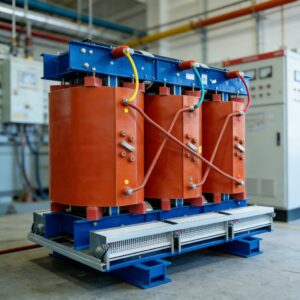
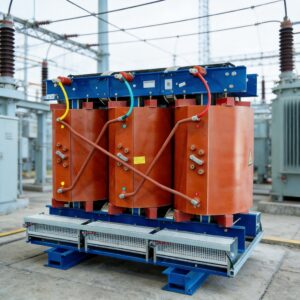
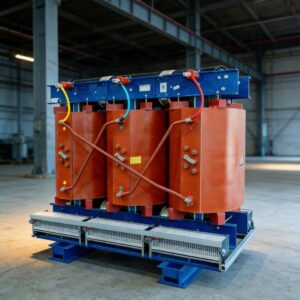
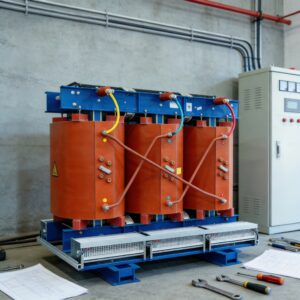
Les transformateurs secs, qui utilisent l'air au lieu de l'huile pour le refroidissement, gagnent en popularité grâce à leur sécurité, leurs avantages environnementaux et leurs besoins de maintenance réduits. Parmi leurs principaux atouts :
SécuritéL'absence d'huile élimine tout risque de fuites d'huile ou d'incendies, ce qui rend les transformateurs secs idéaux pour une utilisation en intérieur et dans les environnements sensibles.
Impact environnementalExempts de matières dangereuses, ils sont écologiques et peuvent être utilisés dans des installations où les systèmes à base d'huile ne conviennent pas.
FiabilitéLeur construction robuste garantit des performances élevées, même dans des environnements difficiles.
Types de transformateurs à sec
Transformateurs en résine moulée
Encapsulés dans de la résine époxy pour une isolation et une résistance au feu élevées, ces transformateurs sont idéaux pour les environnements humides et poussiéreux.Transformateurs VPI
L'imprégnation sous vide améliore l'isolation et la durabilité, ce qui les rend adaptés aux applications industrielles et offshore.Transformateurs en résine époxy
Offrant une résistance mécanique et une stabilité thermique supérieures, elles sont parfaites pour les applications d'énergies renouvelables comme les parcs éoliens et solaires.Transformateurs étanches à sec
Entièrement encapsulés pour les protéger de l'humidité, de la poussière et des substances corrosives, ces transformateurs sont idéaux pour les environnements difficiles comme les usines chimiques.Transformateurs secs basse tension
Compactes et économiques, elles sont utilisées dans les applications résidentielles, commerciales et industrielles à petite échelle, assurant distribution d'énergie fiable.Transformateurs secs haute tension
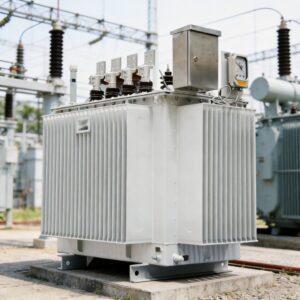
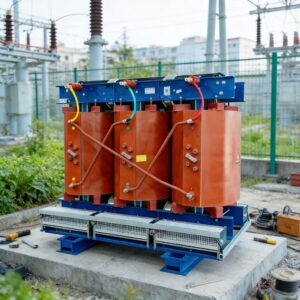
Conçu pour supporter des charges électriques plus élevées dans les processus industriels et les sous-stations électriques, assurant une transmission d'énergie efficace.Transformateurs extérieurs de type sec
Grâce à leur construction résistante aux intempéries, ils sont parfaits pour la distribution d'énergie en extérieur, les projets d'énergies renouvelables et les installations isolées.
Garantir l'efficacité et la longévité du transformateur
En choisissant la taille de transformateur appropriée et en tenant compte de facteurs tels que les conditions environnementales, le type de charge et la croissance future, les entreprises peuvent garantir un fonctionnement efficace et sûr du transformateur. Les transformateurs correctement dimensionnés offrent de nombreux avantages :
Rapport coût-efficacitéMinimiser les coûts d'investissement initiaux et les coûts opérationnels.
SécuritéRéduire les risques liés à la surcharge ou à la sous-performance.
FiabilitéAssurer une longue durée de vie avec un minimum d'entretien.
Conclusion
Comprendre la capacité de puissance d'un transformateur et choisir la puissance apparente (kVA) appropriée est essentiel pour garantir des performances optimales et une sécurité maximale. Les transformateurs secs, en particulier, offrent de nombreux avantages, notamment en matière de sécurité, de respect de l'environnement et de fiabilité, ce qui en fait un choix privilégié pour de nombreuses applications. Une évaluation minutieuse de vos besoins en énergie, des facteurs environnementaux et de vos projets d'expansion futurs vous permettra de faire le choix le plus éclairé, garantissant ainsi une efficacité à long terme et des économies substantielles.

 English
 Français
 Español
 Deutsch