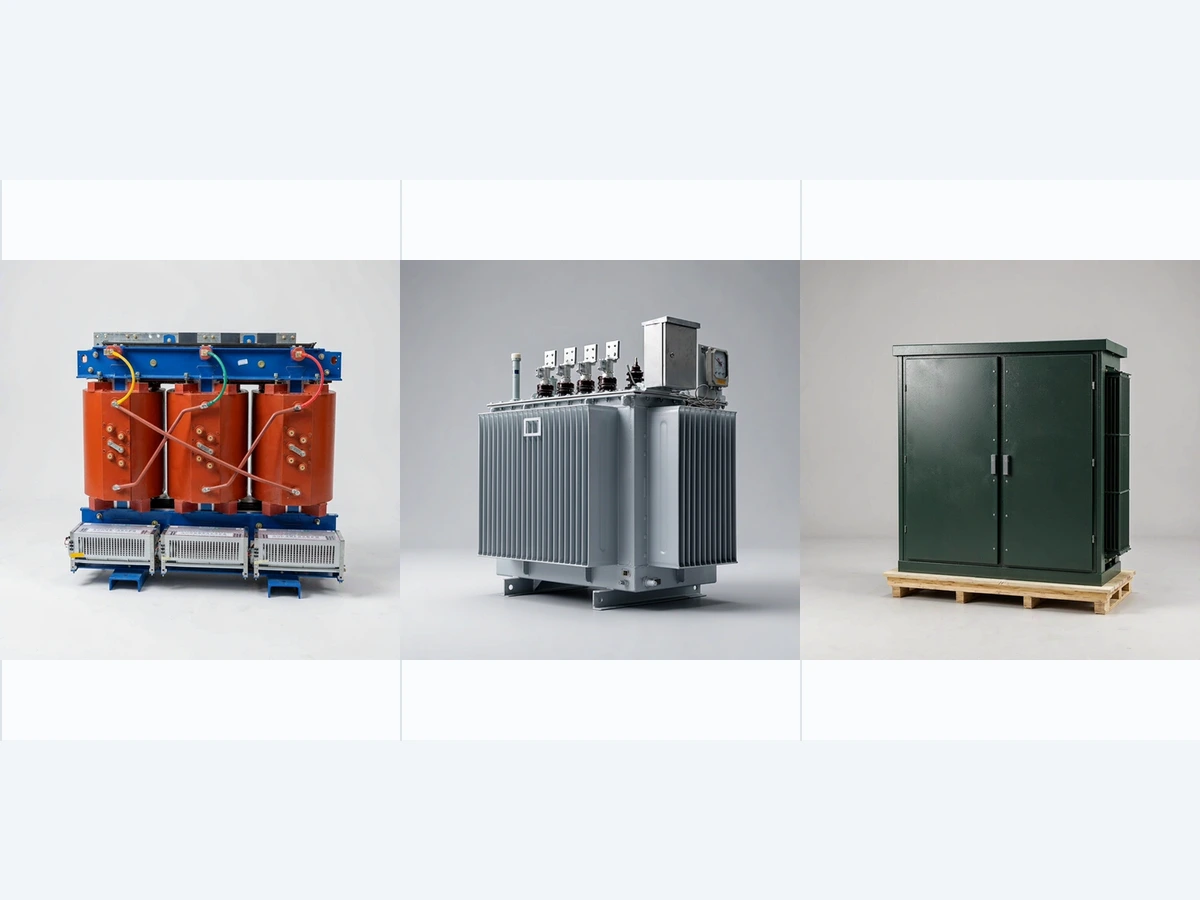
Choosing the right transformer is one of the most consequential decisions in any electrical distribution project. If you are comparing a dry type vs oil immersed transformer, you are really weighing three distinct technologies: dry-type units, liquid-filled (oil-immersed) units, and padmount units that are a specialized form of liquid-filled equipment. The answer you reach affects fire safety, installation cost, maintenance workload, efficiency, and the long-term reliability of the power system you are building. This guide walks through how each type works, where each one excels, and how to match a transformer to your application. Daqo Group, a transformer manufacturer with more than 30 years in the industry, produces all three main lines — transformateurs à sec, transformateurs à huile, et padmount transformers — built to IEEE, IEC, and ANSI standards.
Points clés à retenir
- The essential difference between dry-type and oil-immersed transformers is the cooling and insulating medium: air and solid resin versus insulating oil.
- Dry-type transformers are preferred indoors where fire safety, low maintenance, and clean operation matter most.
- Oil-immersed transformers offer excellent cooling and high overload capability, making them the default for outdoor and high-power applications.
- A padmount transformer is a liquid-filled unit in a locked, walk-in-safe steel enclosure for ground-level outdoor installation.
- Selection should start with the installation environment, then load profile, then standards and budget.
- Cooling method, temperature rise, and loading directly determine service life — see our guide to transformer cooling methods for related detail.
Transformer Basics: The Essential Types of Electrical Transformer
Before comparing types, it helps to understand what all power transformers do. A transformer transfers electrical energy from one circuit to another through electromagnetic induction, stepping voltage up or down without changing frequency. Every unit shares the same core components: a laminated magnetic core, primary and secondary windings, insulation, a tank or enclosure, bushings or terminals, and a cooling system. What differs between families is how the core and windings are insulated and cooled.
When engineers talk about the essential types of electrical transformer, they usually group them by construction and cooling medium. The broad families are dry-type transformers, liquid-immersed transformers (most often oil-filled), and specialized variants such as padmount, pole-mounted, and gas-filled units. Within dry-type construction you will find cast resin and vacuum pressure impregnated (VPI) designs. Within liquid-filled construction you will find mineral oil, silicone, and vegetable oil options. This article focuses on the three families most often specified in commercial and industrial projects: dry-type, oil-immersed, and padmount.
A broader overview of transformer categories is available for readers who want the full taxonomy, including instrument transformers and autotransformers. For the purposes of selection, the practical question is almost always dry type vs oil immersed transformer, with padmount entering the picture when the equipment must sit outdoors at ground level.
Dry-Type vs Oil-Immersed Transformer: The Core Difference
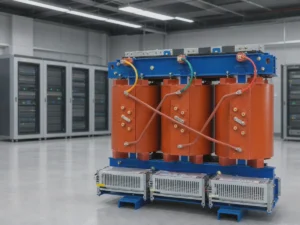
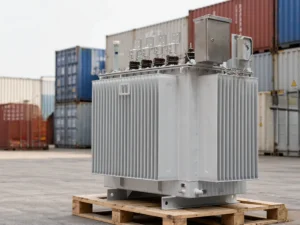
The phrase “dry type vs oil immersed transformer” points to a single defining distinction. In a dry-type transformer, the core and windings are not immersed in a liquid. Heat is removed by air moving over the windings, either naturally by convection or with forced fans. Insulation is provided by solid materials such as epoxy resin in cast coils or varnish and paper systems in VPI coils. In an oil-immersed transformer, the core and windings sit inside a sealed tank filled with insulating oil. The oil performs two jobs at once: it provides electrical insulation and it carries heat from the windings to radiators or coolers on the tank exterior.
That single design choice cascades into every other difference. Oil is a far more effective coolant than air, so liquid-filled units can handle higher power densities and tolerate short-term overloads better. But oil is combustible, which creates fire and environmental concerns indoors. Air cooling is clean and safe but less efficient at removing heat, so dry-type units are generally used at lower to medium power ratings and in locations where ventilation can be managed. You can read a dedicated comparison of the difference between dry and oil type transformers, or a more detailed comparison of dry-type and liquid-filled transformers for deeper technical background.
Fonctionnement de chaque type
Transformateurs à sec
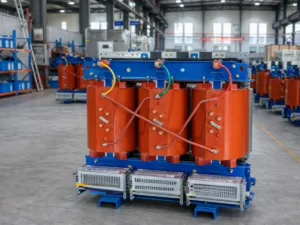
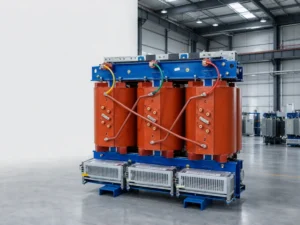
In a cast resin dry-type transformer, the windings are encapsulated in epoxy resin under vacuum. This makes the coils mechanically robust, moisture-resistant, and self-extinguishing. Heat moves from the conductor into the resin and then into the surrounding air. Cooling is classified as AN (air natural) when convection alone is used, or AF (air forced) when fans boost airflow. Many units are rated AN/AF, meaning they can carry a higher output when fans are running. Cast resin designs are common in buildings, data centers, hospitals, and commercial campuses.
Transformateurs immergés dans l'huile
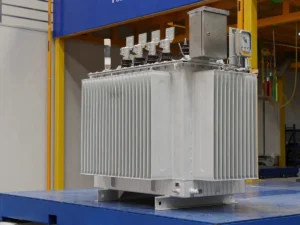
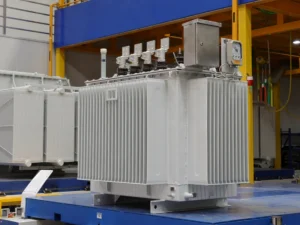
In an oil-immersed unit, the windings transfer heat to the oil, which circulates by natural convection to external radiators. Larger units may use forced oil circulation and fans, designated ONAN, ONAF, or OFAF. The tank is sealed and fitted with a conservator or expansion tank, and bushings carry the conductors through the tank wall. Because oil insulates and cools so effectively, these transformers dominate outdoor substations, utility distribution, and industrial plants. The way oil circulation and radiator design remove heat explains the cooling physics in more detail.
Transformateurs sur socle
A padmount transformer is essentially an oil-immersed distribution transformer housed in a tamper-resistant steel cabinet and installed on a concrete pad at ground level. All live parts are enclosed and accessible only through locked doors, with separate high-voltage and low-voltage compartments. This makes padmount units safe for locations accessible to the public, such as residential developments, shopping centers, and business parks. They eliminate overhead lines and provide a tidy, secure solution for underground distribution systems. The basics of padmount transformers cover compartment layout and typical ratings.
Side-by-Side Comparison
| Attribute | Dry-Type | Oil-Immersed | Padmount |
|---|---|---|---|
| milieu de refroidissement | Air (naturel ou forcé) | Huile isolante | Insulating oil in sealed tank |
| Isolation | Epoxy resin / VPI varnish | Oil plus paper/pressboard | Oil plus paper/pressboard |
| Typical location | Indoors | Outdoors / substations | Outdoors at ground level |
| Risque d'incendie | Very low; self-extinguishing | Moderate; oil is combustible | Moderate; contained in cabinet |
| Overload capability | Limited | Good | Good |
| Entretien | Low; visual and cleaning | Moderate; oil testing | Moderate; oil testing |
| Power range | Low to medium | Medium to very high | Low to medium distribution |
| Environmental concern | Minimal | Oil containment required | Oil containment required |
Dry-Type Transformers: Strengths and Limits
Dry-type transformers earn their place indoors primarily through safety. Because they contain no flammable liquid, they pose almost no fire load and are widely used in schools, hospitals, office towers, and tunnels. Cast resin coils resist moisture and contamination, and they require little more than periodic inspection and cleaning. They are also quieter than many liquid-filled units of similar rating, which matters in occupied buildings.
The trade-off is cooling capacity. Air is a poor heat-transfer medium compared with oil, so dry-type units are usually specified at lower power levels, and their overload margin is limited. They need good room ventilation, and ambient temperature has a strong influence on how much load they can carry. In hot environments or tightly enclosed spaces, forced-air cooling or derating becomes necessary. Maintaining the correct operating temperature for dry-type transformers is therefore central to a long service life.
Oil-Immersed Transformers: Strengths and Limits
Oil-immersed transformers are the workhorses of power distribution. Excellent cooling allows a compact, robust design with strong short-term overload capability, and the sealed tank protects the insulation from moisture and oxygen when properly maintained. They cover the widest power range of any type, from small distribution units to large generator step-up transformers. For outdoor and utility service, they are usually the default choice.
Their weakness is the oil itself. Mineral oil is combustible, so fire barriers, containment bunds, and careful siting may be required. Oil can degrade over time and must be sampled and tested periodically. Leaks are a possible maintenance issue, and spilled oil creates an environmental cleanup obligation. These factors make oil-filled units less attractive inside buildings unless fire-resistant oils or special vaults are used. A disciplined maintenance program helps recognize overheating, oil leaks, and insulation problems early.
Padmount Transformers: Strengths and Limits
Padmount transformers combine the cooling benefits of oil with a secure, outdoor-ready enclosure. They are the standard interface between an underground distribution network and a customer’s service entrance in many North American commercial and residential projects. The locked cabinet keeps the public safe, and the low profile fits landscaping and site plans. Factory-assembled and tested, they simplify installation and reduce on-site work.
On the downside, padmount units are heavier and require a concrete pad, adequate clearance, and drainage. The oil inside still needs containment and periodic testing. They are generally limited to distribution-class ratings, so they are not a substitute for large substation transformers. Access for maintenance must be planned into the site layout, with doors that can open fully and space for oil sampling. For readers weighing padmount against dry-type equipment in sensitive locations, the fire-safety discussion in our data center transformer guide offers additional context.
How to Select the Right Transformer for Your Application
A disciplined selection process avoids most costly mistakes. Rather than starting with price or brand, start with the operating environment and work toward the electrical details.
- Define the installation environment. Indoor, outdoor, or buried-adjacent? Occupied building or restricted substation? Fire sensitivity and ambient temperature are the first filters.
- Establish the load profile. Determine kVA demand, load growth, harmonic content, and expected daily and seasonal variation. This drives the rating and cooling class.
- Set voltage and connection requirements. Confirm primary and secondary voltages, vector group, tap changer range, and system frequency.
- Check efficiency targets. No-load and load losses determine operating cost over the transformer’s life, and may be regulated by efficiency standards.
- Confirm standards and approvals. IEEE, IEC, ANSI, and any local utility specifications must be met.
- Evaluate total installed cost. Include the transformer, enclosure, civil works, fire protection, and maintenance — not just the purchase price.
Working through these steps usually makes the dry type vs oil immersed transformer decision straightforward. Indoor, fire-sensitive, low-to-medium power applications favor dry-type. Outdoor, high-power, or overload-prone applications favor oil-immersed. Ground-level outdoor distribution with public access favors padmount. A deeper treatment of nameplate parameters and selection data can help you specify the unit precisely once the family is chosen.
Application Decision Table
| Application | Recommended Type | Primary Reason |
|---|---|---|
| Office tower, hospital, school | Dry-type (cast resin) | Fire safety, low maintenance, quiet operation |
| centre de données | Dry-type or oil with vault | Fire safety and reliability requirements |
| Outdoor utility substation | Oil-immersed | High power, cooling efficiency, overload margin |
| Industrial plant, outdoor yard | Oil-immersed | Robustness and load capability |
| Residential or commercial campus | Padmount | Public-safe enclosure, underground distribution |
| Renewable or EV site | Padmount or oil-immersed | Outdoor duty and variable loading |
Common Selection Mistakes
One frequent error is choosing a transformer purely on purchase price, ignoring losses that accumulate over decades of operation. A slightly more efficient unit can pay for itself many times over. Another mistake is underestimating ambient temperature or ventilation, which leads to chronic overheating and premature insulation aging. Specifying a dry-type unit for an outdoor, unenclosed location without a weatherproof enclosure is another classic problem. Finally, buyers sometimes overlook future load growth, selecting a unit that is adequate on day one but overloaded within a few years. Careful attention to the selection steps above avoids all of these outcomes.
Foire aux questions
1. What is the main difference between a dry-type and an oil-immersed transformer?
The insulating and cooling medium. Dry-type units use air and solid insulation such as epoxy resin; oil-immersed units use insulating oil that both insulates and carries heat to external radiators.
2. Which transformer type is safer for indoor installation?
Dry-type transformers are generally preferred indoors because they contain no flammable oil, present a very low fire load, and need minimal maintenance.
3. Is a padmount transformer a dry-type or oil-immersed transformer?
A padmount transformer is normally an oil-immersed unit placed inside a locked, ground-level steel cabinet. The enclosure changes the installation, not the cooling principle.
4. Can a dry-type transformer replace an oil-immersed one?
It can in many indoor, low-to-medium power applications, provided ventilation and temperature rise are managed. For high-power outdoor duty, oil-immersed units remain the practical choice.
5. Which type has better overload capability?
Oil-immersed transformers generally tolerate short-term overload better because oil removes heat more effectively than air.
6. How does cooling method affect transformer selection?
Cooling class sets how much load a unit can carry at a given temperature rise. Dry-type units use AN or AF; oil-filled units use ONAN, ONAF, or OFAF. Match the cooling method to your ambient conditions and load profile.
7. Do padmount transformers require oil containment?
Yes. Because they contain insulating oil, most installations require some form of containment or drainage planning to manage a potential leak.
8. What standards should a transformer meet?
Common standards include IEEE C57 series, IEC 60076, and ANSI requirements, along with any local utility or building-code specifications. Confirm the applicable standard for your region before ordering.
Conclusion
The dry type vs oil immersed transformer decision does not have a single winner — it has a right answer for each application. Dry-type units lead on indoor fire safety and low maintenance. Oil-immersed units lead on cooling efficiency, power density, and overload capability. Padmount units bring the benefits of oil cooling into a secure, outdoor, ground-level package. By working through environment, load, voltage, efficiency, and standards in order, you can select a transformer that performs reliably for decades. If you would like help matching a transformer to your project, the engineering team at Daqo Group can review your requirements — please contact us to discuss your specification.