
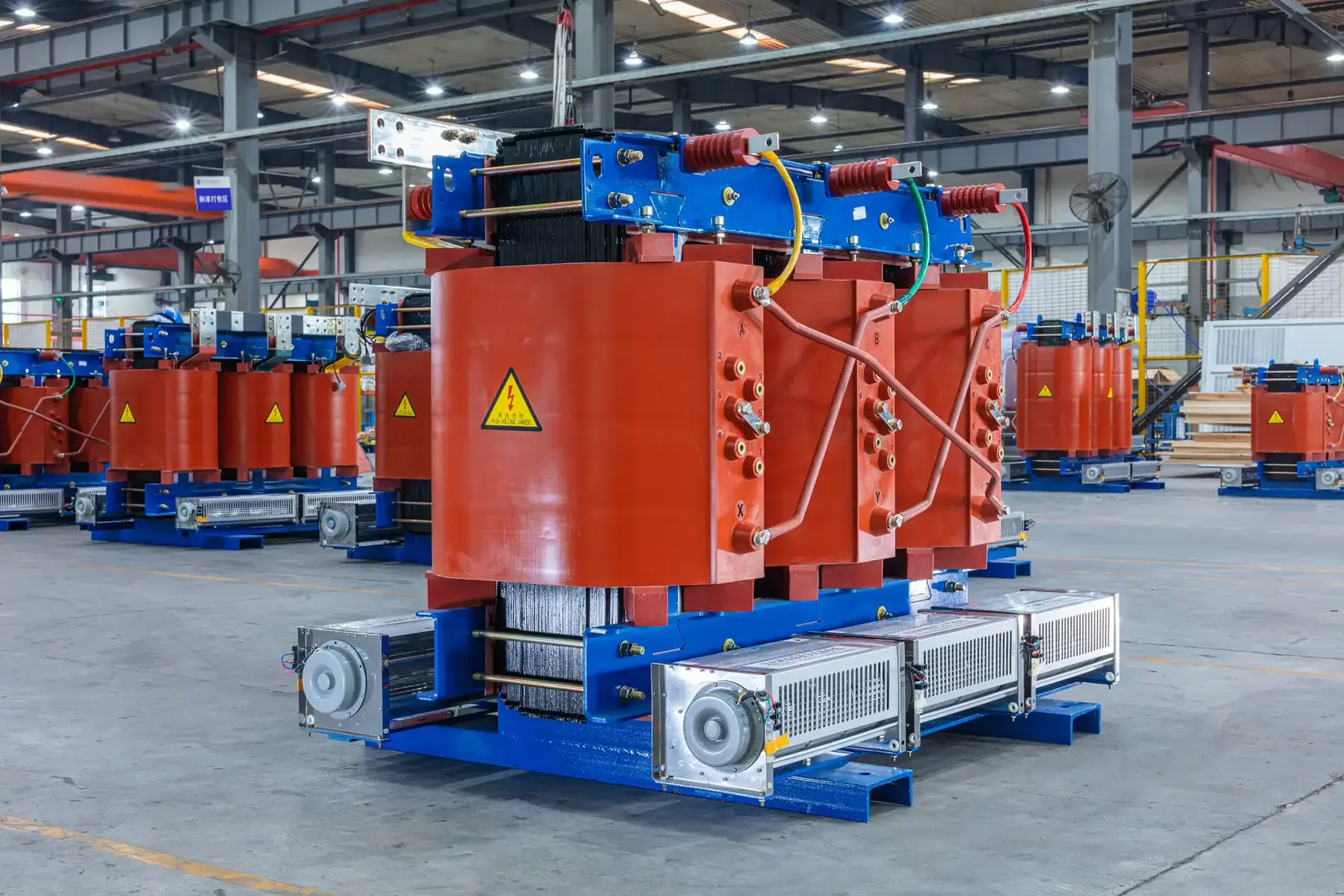
Choosing the right dry type transformer requires more than simply selecting a kVA rating. Engineers and project managers need to evaluate rated voltage, frequency, insulation class, temperature rise, impedance, cooling method, efficiency, insulation level, enclosure protection and applicable standards.
Table of Contents
ToggleThis guide explains the most important dry type transformer specifications and shows how each parameter affects transformer selection, performance and application.
Quick specifications checklist:
- Rated power: kVA
- Primary and secondary voltage
- Frequency: 50 Hz / 60 Hz
- Insulation class: F / H
- Temperature rise
- Impedance
- Cooling method: AN / AF
- Insulation level / BIL
- Vector group
- No-load and load losses
- Enclosure protection
- Applicable standards
If you already know your required voltage, capacity and installation conditions, contact Daqo for a customized dry type transformer specification and quotation.

What Is a Dry Type Transformer?
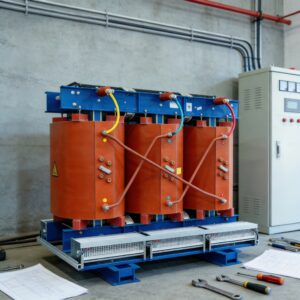
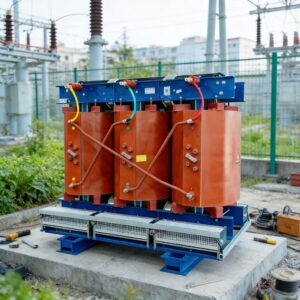
A dry type transformer is an electrical device that transfers electrical energy between circuits through electromagnetic induction while using solid insulation and air cooling instead of liquid insulating oil. Common designs include cast resin dry type transformers and vacuum pressure impregnated (VPI) transformers.
These transformers are designed to operate safely in indoor environments where fire safety and environmental protection are important. Their compact design, high reliability, and stable performance make them suitable for medium voltage transformer systems and low voltage power distribution networks.
Key Specifications of Dry Type Transformers
Selecting the right transformer requires careful evaluation of several technical parameters. The most important dry type transformer specifications include voltage rating, kVA capacity, insulation class, impedance, and cooling method.
Voltage Rating
The voltage rating defines the maximum voltage level the transformer can handle safely. Dry type transformers are commonly used in medium voltage to low voltage power distribution systems, such as 10 kV/0.4 kV or 20 kV/0.4 kV configurations.
Choosing the correct voltage rating ensures proper integration with the electrical network and prevents equipment damage caused by overvoltage conditions.
kVA Rating
The kVA rating represents the transformer’s load-handling capacity. It indicates the maximum apparent power the transformer can safely supply without overheating.
Typical ratings for dry type distribution transformers include:
100 kVA
250 kVA
500 kVA
1000 kVA
2000 kVA and above
Selecting the correct kVA dry type transformer ensures stable operation under expected load conditions and helps prevent efficiency losses or thermal stress.
Insulation Class
Dry type transformers rely on high-performance insulation materials to protect windings and ensure electrical safety. The insulation class determines the maximum allowable operating temperature.
Common insulation classes include:
Class A (105°C)
Class B (130°C)
Class F (155°C)
Class H (180°C)
Modern cast resin transformers typically use Class F or Class H insulation to achieve better thermal performance and longer service life.
Transformer Impedance
Impedance is an important parameter that affects voltage regulation and short-circuit current levels in the power system. Higher impedance reduces short-circuit current but may slightly affect voltage stability.
Proper impedance selection helps ensure compatibility with protection systems and overall electrical network stability.
Cooling Methods

Dry type transformers use air cooling instead of oil cooling. The most common cooling methods include:
AN (Air Natural): Natural airflow provides cooling without additional equipment.
AF (Air Forced): Cooling fans increase airflow to improve heat dissipation and allow higher load capacity.
Forced air cooling is commonly used in large capacity dry type power transformers installed in industrial environments or high-load applications.
Dry Type Transformer Specifications at a Glance
| Specification | Typical / Available Options |
|---|---|
| Transformer Type | Cast Resin / VPI / Dry-Type Distribution |
| Rated Capacity | 30–5000 kVA and customized ratings |
| Rated HV | 6 kV–35 kV |
| Rated LV | 0.38 kV–0.72 kV and customized |
| Frequency | 50 Hz / 60 Hz |
| Insulation Class | Class F / Class H |
| Cooling | AN / AF |
| Impedance | Typically 4%–10%, depending on rating and design |
| Vector Group | Dyn11 / Yyn0 / Yd11 |
| Insulation Level | According to rated voltage and applicable standard |
| Enclosure | Optional protection enclosure |
| Standards | IEC 60076, EN 50588, UL, CE and applicable project standards |
| Installation | Indoor / application-specific |
| Customization | Voltage, capacity, enclosure and other parameters can be customized |
Note: Actual specifications depend on transformer capacity, voltage class, application, cooling configuration and applicable standards. Always confirm the final technical specification with the transformer manufacturer before ordering.
Temperature Rise of Dry Type Transformers
Temperature rise is the increase in transformer winding temperature above the specified ambient temperature when the transformer operates under its rated load.
Temperature rise should not be confused with insulation class. For example, a transformer may use Class F insulation while having a specified winding temperature rise selected according to its design and applicable standard.
When selecting a dry type transformer, engineers should consider:
- Ambient temperature
- Rated load
- Cooling method
- Insulation system
- Installation altitude
- Ventilation conditions
- Required overload capability
For projects with high ambient temperatures, limited ventilation or demanding load profiles, the transformer thermal design should be reviewed carefully with the manufacturer.
Key Features and Advantages of Dry Type Transformers
Dry type transformers offer several important benefits compared with oil-filled transformers, making them suitable for modern electrical infrastructure.
High Safety Performance
One of the biggest advantages of dry type transformers is their excellent fire safety. Since they do not contain flammable insulating oil, the risk of fire, explosion, or oil leakage is significantly reduced.
This makes them ideal for installation in locations such as:
Commercial buildings
Hospitals
Schools and universities
Data centers
Underground facilities
Low Maintenance Requirements
Unlike oil-filled transformers, dry type transformers do not require oil sampling, oil filtration, or periodic oil replacement. This greatly reduces maintenance costs and simplifies operation.
Routine maintenance usually includes simple inspections, cleaning of ventilation paths, and checking electrical connections.
Environmentally Friendly Design
Dry type transformers are considered an environmentally friendly transformer solution. Without insulating oil, they eliminate the possibility of soil or groundwater contamination caused by oil leakage.
They also produce no harmful gases and comply with modern environmental protection standards, making them suitable for green building projects and sustainable infrastructure.
High Efficiency and Energy Savings
Modern dry type transformers are designed with high-quality magnetic cores and advanced winding technology. These features reduce no-load losses and load losses, resulting in improved energy efficiency.
Lower energy loss means reduced operating costs and better performance in long-term power distribution systems.
Applications of Dry Type Transformers
Thanks to their safety, reliability, and flexibility, dry type transformers are widely used across multiple industries.
Commercial Buildings
Large commercial complexes rely on stable power distribution systems. Dry type transformers are commonly installed in:
Office buildings
Shopping malls
Hospitals
Airports
Their compact design and fire-resistant properties make them ideal for indoor transformer installations.
Industrial Facilities
Manufacturing plants require transformers capable of handling heavy loads and operating in demanding environments. Dry type transformers provide reliable power for:
Industrial machinery
Production lines
Automation equipment
Factory power distribution systems
Renewable Energy Systems
Dry type transformers play an important role in solar power plants and wind energy projects. They are used for voltage conversion and grid connection in renewable energy systems.
Their ability to operate in diverse environmental conditions makes them suitable for outdoor and indoor renewable installations.
Residential Power Distribution
In residential areas, dry type transformers are often used in local substations or building power distribution rooms. Their quiet operation and safety characteristics make them suitable for residential neighborhoods.
Installation and Maintenance Guidelines
Proper installation and maintenance are essential for ensuring optimal performance and extending transformer service life.
Installation Considerations
Ensure adequate ventilation for effective air cooling
Install the transformer on a stable, level surface
Maintain proper clearance around the transformer for airflow
Follow manufacturer installation guidelines and electrical codes
Maintenance Practices
Although dry type transformers require minimal maintenance, periodic inspection is still recommended.
Maintenance activities include:
Checking for dust accumulation and cleaning ventilation channels
Inspecting insulation and electrical connections
Monitoring temperature and load conditions
Ensuring cooling fans operate properly in forced-air systems
Regular maintenance helps ensure long-term reliability and efficient transformer performance.
Conclusion
Dry type transformers have become a key component in modern electrical power distribution systems. Their air-cooled design eliminates the risks associated with oil-filled transformers while providing excellent safety, efficiency, and environmental protection.
With advantages such as low maintenance, fire resistance, high efficiency, and reliable operation, dry type transformers are widely used in commercial buildings, industrial facilities, renewable energy systems, and residential power networks.
Need a Customized Dry Type Transformer Specification?
Every project has different requirements for voltage, capacity, impedance, insulation level, cooling, enclosure and installation conditions.
Daqo provides customized dry type transformer solutions for commercial, industrial, renewable energy, data center and infrastructure projects.
Send us your project requirements, including:
- Required kVA capacity
- Primary voltage
- Secondary voltage
- Frequency
- Installation location
- Cooling requirements
- Applicable standards
- Quantity
Our engineering team can recommend a suitable transformer configuration and provide a customized technical specification and quotation.
Contact Daqo today to discuss your dry type transformer project.
FAQ About Dry Type Transformer Specifications
1. What are the main dry type transformer specifications?
Key specifications include kVA rating, primary and secondary voltage, frequency, insulation class, temperature rise, impedance, cooling method, insulation level, vector group, losses, enclosure and applicable standards.
2. What kVA ratings are available for dry type transformers?
Dry type transformers are available in a wide range of kVA ratings, from small distribution transformers to large industrial units. Common ratings include 50, 75, 100, 150, 225, 300, 500, 750 and 1000 kVA, with customized ratings also available.
3. What voltage ratings are available for dry type transformers?
Dry type transformers can be designed for various voltage levels according to the electrical system. Common medium-voltage ratings include 6 kV, 10 kV, 11 kV, 13.8 kV and 35 kV. Primary and secondary voltages can be customized for specific projects.
4. What is the difference between insulation class and temperature rise?
Insulation class indicates the thermal capability of the transformer insulation system, while temperature rise indicates the increase in winding temperature during operation. They are different specifications and should be evaluated together when selecting a transformer.
5. What is the typical impedance of a dry type transformer?
Typical impedance varies according to transformer capacity, voltage and design. Many dry type transformers use impedance values of approximately 4%–10%. The required impedance should be confirmed based on short-circuit current, voltage regulation and system requirements.
6. What is AN and AF cooling?
AN means Air Natural cooling, where heat is dissipated through natural air circulation. AF means Air Forced cooling, where fans increase airflow and cooling capacity. The appropriate cooling method depends on the transformer load and operating conditions.
7. What standards apply to dry type transformers?
Depending on the project and market, dry type transformers may be designed according to standards such as IEC 60076, IEC 60076-11, EN 50588, UL and applicable IEEE or local requirements.
8. How do I select the right dry type transformer?
Consider the required kVA capacity, primary and secondary voltage, frequency, insulation class, temperature rise, impedance, cooling method, installation environment and applicable standards. Daqo can help recommend a suitable configuration based on your project requirements.

 English
 Français
 Español
 Deutsch