
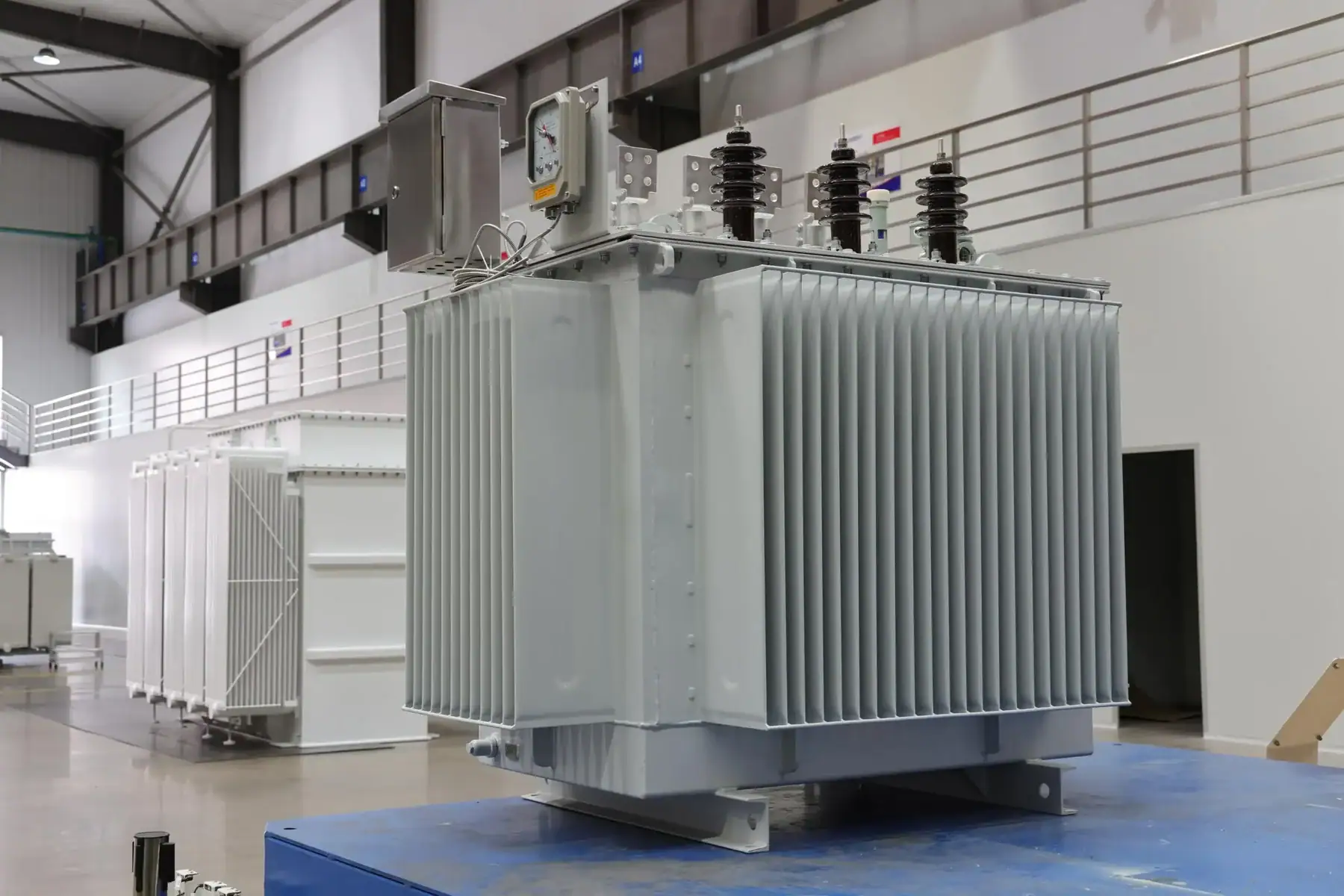
In the vast and intricate world of electrical engineering, few components hold as much significance as the high voltage transformer. Often regarded as the backbone of efficient power distribution, these silent giants have quietly transformed the landscapes of industries across the globe. Yet, their impact goes far beyond merely lighting up our homes and cities. They are pivotal in shaping the modern world’s capability to harness and distribute energy across vast distances, powering everything from urban metropolises to remote rural communities.
Imagine a world plunged into darkness without the hum of electricity—a vivid reality without the high voltage transformer. As energy demands soar with rapid technological advancements and urban expansion, these transformers have become indispensable. From sustaining the seamless operation of critical infrastructures to enabling renewable energy sources to meet our planet’s growing energy needs, the high voltage transformer is nothing short of revolutionary. Join us as we delve into the profound effects these transformers have had, redefining what’s possible in the realm of global power systems.
Evolution of High Voltage Transformers
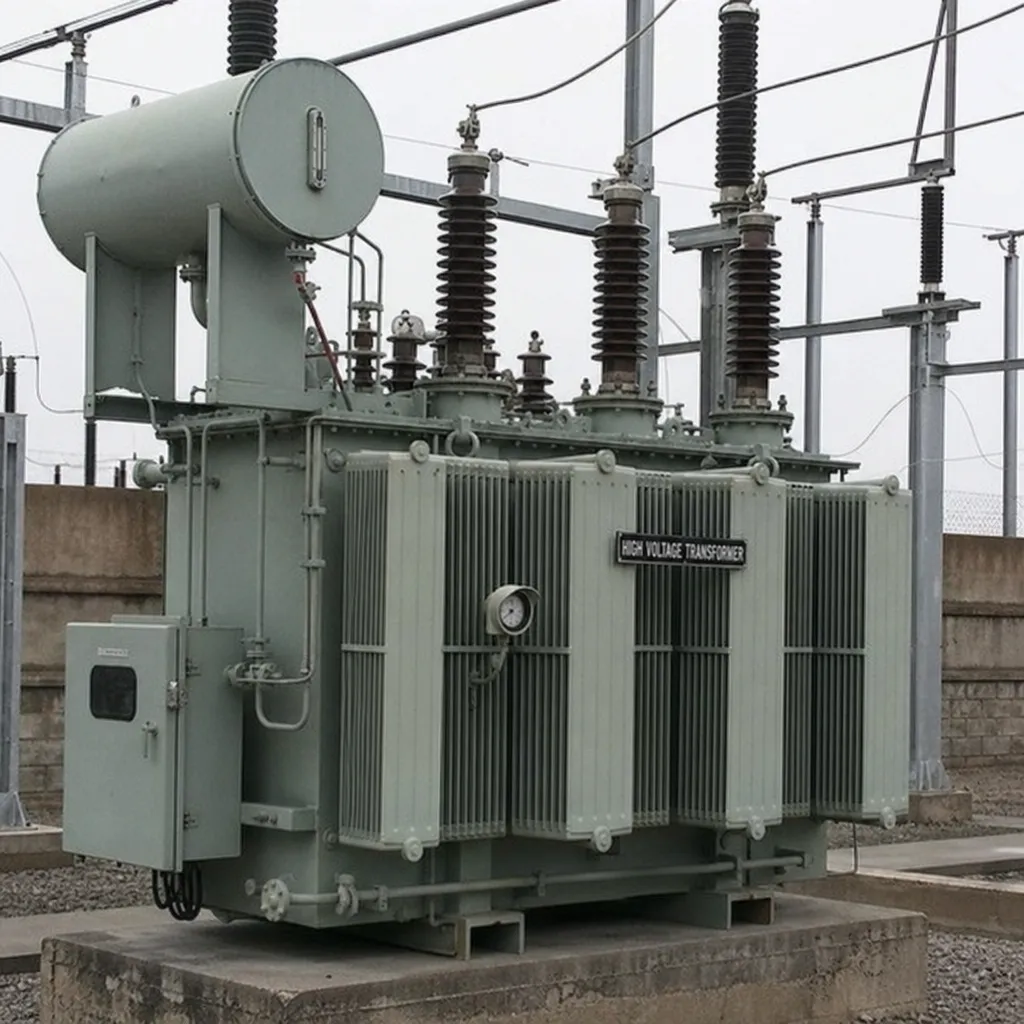
The journey of the high voltage transformer began in the mid-19th century with Michael Faraday’s groundbreaking discovery of electromagnetic induction. Early prototypes operated at low voltages, primarily serving laboratory experiments. It wasn’t until the late 1880s that inventors like Ottó Bláthy, Miksa Déri, and Károly Zipernowsky in Hungary developed more practical designs, paving the way for commercial power distribution. These first-generation transformers employed laminated iron cores to reduce eddy current losses and basic insulating materials to contain the increasing voltages. As industrialization accelerated, the need to transmit power over longer distances drove inventors to push voltage levels higher—and with that, transformer technology evolved in leaps and bounds.
Throughout the 20th century, innovations in dielectric fluids, magnetic core materials, and cooling methods revolutionized high voltage transformer design. Oil-immersed transformers with conservator tanks became standard, allowing for reliable operation at ever-increasing voltage ratings. High-quality grain-oriented electrical steel reduced core losses, while improved resin and polymer insulation offered safer, more compact units. Post-1980 saw the advent of gas-insulated transformers using sulfur hexafluoride (SF₆), enabling installations in space-constrained urban environments. Today’s high voltage transformer incorporates digital sensors, diagnostics, and automated tap changers, delivering unparalleled precision, efficiency, and reliability. From Faraday’s early coils to modern smart grids, the evolution of these devices underscores their critical role in powering our world.
Role of High Voltage Transformers in Industrial Applications
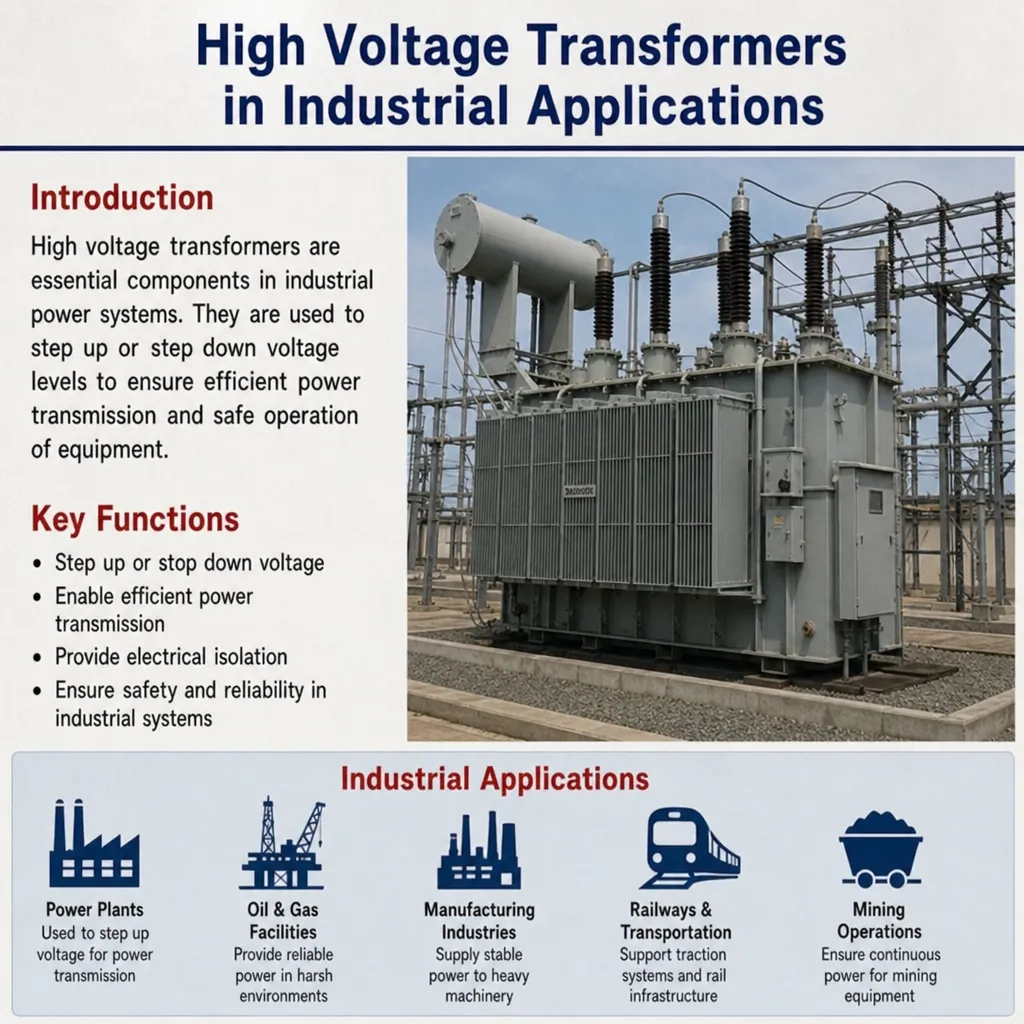
In heavy industries, from steel mills to oil refineries, the high voltage transformer is an unsung hero. It steps up the voltage produced by power plants to transmission levels—commonly 110 kV and above—then steps it down to the levels required by industrial machinery. In steel manufacturing, for example, electric arc furnaces demand precise voltage control to maintain stable arcs that melt scrap metal efficiently. High voltage transformers ensure that power delivery remains consistent, minimizing production downtime and reducing operational costs. Similarly, petrochemical plants rely on robust transformer installations to drive high-torque motors and compressors that process raw materials into fuels, plastics, and chemicals.
Beyond basic power conversion, transformer technology has adapted to specialized industrial demands. In mining operations, where remote sites often lack grid access, portable high voltage transformers paired with mobile substations bring reliable power to excavators and crushers. Rail and metro systems depend on dedicated traction transformers to convert grid voltage into the lower, stable voltages needed by electric trains. Data centers, another critical application, utilize large transformers with redundancy features and voltage regulation to support servers operating 24/7. The integration of digital monitoring and predictive maintenance platforms has further enhanced transformer reliability, allowing industries to anticipate faults before they escalate and schedule maintenance around production schedules.
Impact of High Voltage Transformers on Urban Infrastructure
Urban centers thrive on a stable and efficient power supply, and high voltage transformers are at the heart of that network. They step down bulk transmission voltages—often in the range of 220 kV to 765 kV—to distribution levels suitable for neighborhoods, commercial complexes, and high-rise buildings. Strategically placed substations minimize line losses and voltage drops, ensuring that homes receive flicker-free lighting and businesses operate without interruption. Compact, oil-filled, or gas-insulated high voltage transformers have even enabled the use of underground distribution systems, preserving city aesthetics by removing bulkier overhead lines.
Modern cities also face the challenge of fluctuating peak demands—think summer air conditioning surges or winter heating spikes. Advanced high voltage transformers equipped with on-load tap changers automatically adjust voltage ratios to stabilize the grid without manual intervention. This dynamic regulation enhances power quality and prevents equipment damage from voltage sags or surges. Furthermore, urban transport systems such as electric trams, subways, and electric vehicle charging stations rely on transformers to deliver precise voltages. By underpinning urban power networks with resilient transformer setups, cities can maintain growth, improve energy efficiency, and reduce their environmental footprint.
High Voltage Transformers and Renewable Energy Integration
The global push toward sustainable energy has placed the high voltage transformer in the spotlight once more. Wind farms and solar parks, often located far from load centers, generate power at medium voltages that must be stepped up to transmission levels—typically between 132 kV and 400 kV—to reach distant urban or industrial users. High voltage transformers engineered for fluctuating input from renewables ensure seamless voltage transformation, compensating for the intermittent nature of wind and solar. Many modern units incorporate reactive power support and grid stabilization features, helping maintain frequency and voltage standards even when renewable output varies.
As microgrids and battery storage systems proliferate, high voltage transformers facilitate bi-directional energy flows. They connect large-scale lithium-ion or flow battery installations to the main grid, allowing excess renewable generation to be stored during off-peak hours and dispatched during peak demand. In emerging green hydrogen projects, electrolyzers require consistent high-voltage feed, made possible by custom transformer designs. The rise of HVDC (high-voltage direct current) links for long-distance green energy transport also relies on transformers at converter stations to bridge AC and DC systems. By unlocking the full potential of renewable sources, high voltage transformers drive the transition to a cleaner, more resilient energy future.
Global Significance of High Voltage Transformers
The influence of high voltage transformers extends across borders, underpinning international power exchanges and fostering economic cooperation. Large interconnection projects—such as the European super grid or the Asia-Pacific HVDC corridors—depend on transformers to manage voltage conversions and reactive power compensation at each link. These cross-border networks enhance energy security by allowing surplus power to flow from regions with excess generation to those experiencing shortages, balancing supply and demand on a continental scale. Major hydroelectric facilities like Itaipu Dam in South America and Three Gorges in China harness powerhouse transformers to transfer gigawatts of clean energy across thousands of kilometers.
In developing nations, the deployment of high voltage transformers has been instrumental in rural electrification and industrial growth. Governments invest in high-voltage transmission lines and substations to bring lighting, clean water, and education to remote villages, catalyzing socioeconomic development. Standardization of transformer designs and modular manufacturing has lowered costs, enabling faster installation and maintenance in challenging environments. As emerging economies continue to urbanize, high voltage transformers will remain critical assets, ensuring reliable power delivery that fuels innovation, healthcare, and improved quality of life worldwide.
FAQ
1. What is a high-voltage transformer?
A high-voltage transformer is an electrical device designed to transfer electrical energy between circuits while increasing or decreasing voltage levels in high-voltage power systems. It plays an important role in power transmission and distribution networks.
2. How does a high-voltage transformer work?
A high-voltage transformer works through electromagnetic induction. The primary winding receives electrical energy, creating a magnetic field in the core, which transfers energy to the secondary winding at a different voltage level.
3. What are the main components of a high-voltage transformer?
Typical components include:
- Magnetic core
- High-voltage windings
- Low-voltage windings
- Insulation system
- Transformer tank
- Bushings
- Cooling system
- Protection devices
4. What types of high-voltage transformers are available?
Common types include:
- Power transformers
- Distribution transformers
- Oil immersed transformers
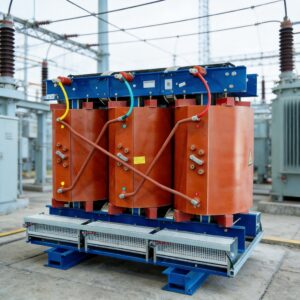
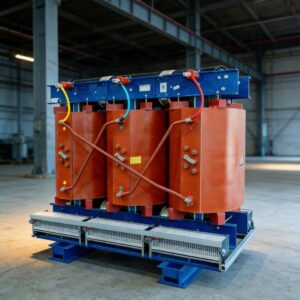
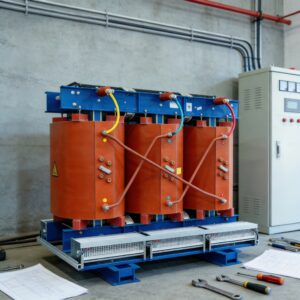
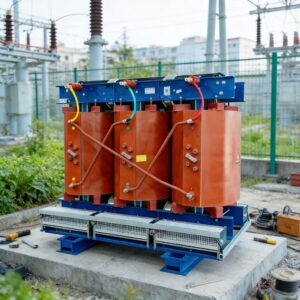
- Dry type high-voltage transformers
- Step-up transformers
- Step-down transformers
Conclusion: The Enduring Legacy of High Voltage Transformers
The high voltage transformer stands as a testament to human ingenuity, evolving from simple induction coils into sophisticated assets that power every facet of modern life. From industrial production lines to sprawling urban centers and renewable energy harvests, these devices ensure that electrical power is transformed, transported, and regulated with precision.
As we look to the future, ongoing advancements in materials, digital monitoring, and grid integration will further enhance transformer efficiency and resilience. Their enduring legacy will not only illuminate our cities but also drive the transition toward a more sustainable, interconnected world.

 English
 Français
 Español
 Deutsch