
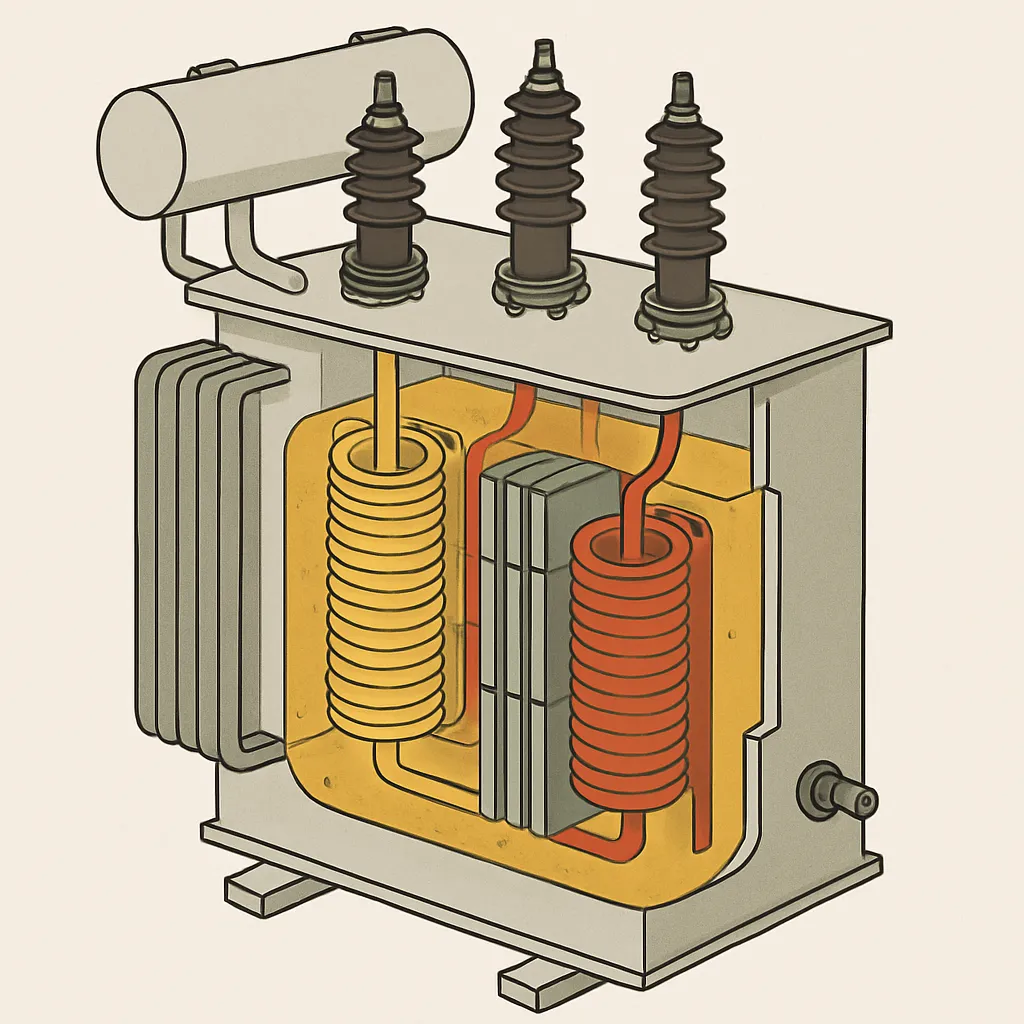
Imagine a world where our lives seamlessly intertwine with technology, yet beneath this web of innovation lies the often-overlooked backbone of power systems: the electrical transformer. This unassuming hero ensures that electricity flows efficiently from power plants to the devices we rely on daily. But how well do we truly understand these vital components? Exploring the essential electrical transformer parts becomes crucial when considering the role they play in maintaining seamless energy transmission and distribution.
Every journey into the depths of technology requires a map of understanding, and electrical transformers are no different. These complex devices are a gateway to optimal performance, each part playing a critical role that cannot be ignored. From core materials that minimize energy loss to the cooling systems that prevent overheating, the intricacies of transformer parts hold the key to extending their lifespan and boosting efficiency. Join us as we delve into the critical components of electrical transformers, uncovering the secrets that power our modern lifestyle.

Understanding the Transformer Core
The transformer core stands as the very backbone of any device designed to transfer electrical energy between circuits. Made primarily from high-grade, grain-oriented silicon steel laminations, this core channelizes magnetic flux and ensures efficient energy coupling between windings. By stacking thin steel sheets with insulating varnish between them, designers minimize eddy current losses that would otherwise convert valuable electrical energy into unwanted heat. The core’s geometry—whether in the classic “E-I” or toroidal shape—plays an equally critical role in dictating magnetic performance, noise levels, and overall efficiency.
In the context of electrical transformer parts, the core’s material composition and assembly precision directly affect voltage regulation and thermal stability. Grain orientation in the steel enhances magnetic permeability along preferred directions, thereby offering low hysteresis losses and smoother flux distribution. Advanced cores may employ amorphous metal alloys or nanocrystalline materials for even greater performance, especially in transformers destined for high-frequency or specialized applications. Ultimately, the core’s design harmonizes with winding configuration and insulation strategy to form an integrated system that drives reliable power delivery in homes, industries, and grid infrastructures worldwide.
Delving into Insulation Materials
Insulation within a transformer is the silent guardian that prevents electrical faults and ensures safe operation under high voltages. Among the most common dielectric media are mineral oil, pressboard, cellulose paper, and specialized polymeric materials. Mineral oil not only offers excellent dielectric strength but also acts as a heat transfer medium, carrying thermal energy away from hot spots. Cellulose-based papers, often treated with additives, provide mechanical support and electrical separation between windings, while advanced polymers deliver high breakdown strength and resistance to moisture intrusion.
Choosing the right insulation mix among electrical transformer parts requires careful balancing of dielectric requirements, thermal stability, and longevity. Moisture is the nemesis of dielectric systems: even trace water content can significantly reduce breakdown voltage and accelerate aging. To counteract this, transformers undergo rigorous drying and degassing processes before and during service. In gas-insulated transformers (GITs), sulfur hexafluoride (SF6) replaces oil, offering exceptional dielectric properties at compact sizes. Whether in outdoor power transformers or instrument transformers in substations, the insulation strategy dictates maintenance schedules, temperature ratings, and life expectancy.
Exploring High-Voltage Bushings
High-voltage bushings serve as vital passageways that allow energized conductors to safely pass through grounded transformer tanks without compromising dielectric integrity. Available in porcelain, epoxy resin, or composite configurations, these bushings are meticulously engineered to withstand the electrical stresses of high-voltage AC or DC applications. Internally, concentric layers of mica paper and insulating oil or epoxy encapsulate the central conductor, creating a graded stress profile that prevents corona discharge and partial breakdown.
Among electrical transformer parts, bushings demand precise manufacturing and thorough testing, since any defect can lead to catastrophic failures. Tests for capacitance, tan delta (dissipation factor), and partial discharge at rated voltages ensure that each unit maintains its insulation properties over years of service. Composite bushings, reinforced with fiberglass rods and polymeric housings, offer improved mechanical resilience and reduced weight, making them popular in modern installations. Furthermore, online monitoring devices can track temperature and partial discharge activity within bushings, enabling predictive maintenance that minimizes downtime and enhances transformer reliability.
Investigating Cooling Systems
Heat management is a critical concern in power transformers, as prolonged high temperatures accelerate insulation aging and reduce service life. Cooling systems range from simple natural oil and air cooling (ONAN) to more sophisticated forced oil-air (OFAF) and forced oil-water (OFWF) setups. In ONAN arrangements, transformer oil circulates through radiators by natural convection, shedding heat to the surrounding air. For higher load demands, OFAF employs pumps and fans to boost oil circulation and airflow, while OFWF substitutes water-cooled heat exchangers for greater thermal capacity.
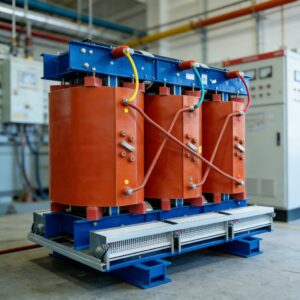
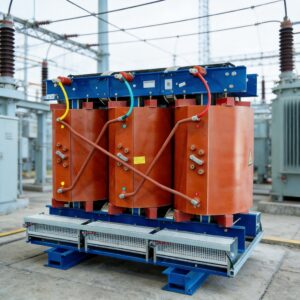
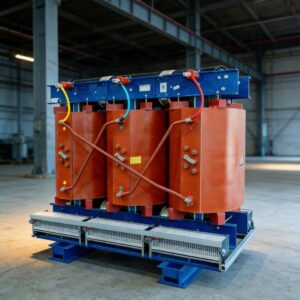
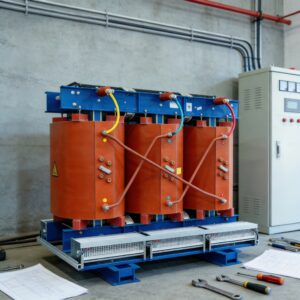
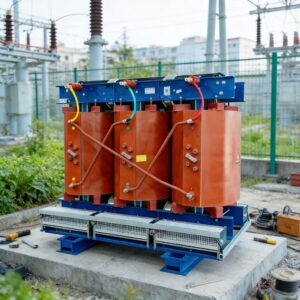
Beyond oil-based strategies, dry-type transformers utilize cast resin or vacuum pressure impregnated (VPI) windings cooled directly by air or inert gases. Although compact and environmentally friendly, these designs are typically reserved for lower power ratings due to limited heat dissipation. In every scenario, the cooling method is integral among the ensemble of electrical transformer parts, dictating continuous load capacity, temperature rise limits, and site selection. Proper design and maintenance of radiators, fans, pumps, and fluid purity ensure that the cooling system sustains optimal thermal conditions, preventing hotspots and extending transformer longevity.
Conclusion: Importance of Regular Maintenance for Transformer Longevity
Regular inspection and maintenance of electrical transformer parts are indispensable for ensuring reliable performance and avoiding unexpected failures. By routinely analyzing oil quality, testing insulation resistance, and monitoring thermal profiles, operators can detect emerging issues before they escalate into costly breakdowns.
Adopting condition-based maintenance, including partial discharge monitoring and infrared thermography, further refines asset management. When proactive care is combined with sound design and high-quality components, transformers can achieve decades of trouble-free service, reinforcing the backbone of our power infrastructure.

 English
 Français
 Español
 Deutsch