

Imagine a world where energy efficiency isn’t just an option but a necessity, driving industries to rethink their power solutions. This is the reality we’re moving towards, and at the heart of this transformation lies the burgeoning field of dry type transformers. As global demands for safer and more environmentally friendly power solutions surge, understanding the Dry Type Transformer Market Trends becomes not just beneficial but essential for industry stakeholders. These transformers, known for their robustness and minimal maintenance requirements, are setting new standards in energy distribution across diverse sectors.
But what does the future hold for this pivotal technology? With rapid advancements in materials and design innovations, the dry type transformer market is poised for significant growth and evolution. From enhancing energy efficiency to incorporating renewable energy sources, these transformers are at the forefront of technological innovation. Join us as we delve into the emerging trends shaping this dynamic market landscape, shedding light on the insights and innovations that promise to redefine how we think about power distribution in the years to come.

Evolution of Dry Type Transformers: A Historical Overview
The story of dry type transformers begins in the early 20th century, when industrial safety concerns around oil-filled transformers spurred researchers to seek alternatives. Pioneering designs employed air as the primary cooling medium, with coils wrapped in basic insulating materials that limited both load capacity and operational lifespan. As electrical grids expanded and commercial buildings rose taller, these initial models struggled to meet growing performance standards. However, they laid the groundwork for what would become a fast-evolving segment of the electrical equipment market.
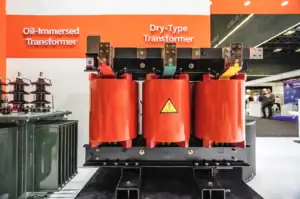
By the 1960s and 1970s, improvements in resin formulations and winding technologies led to the first commercially viable transformateurs en résine coulée. These units offered enhanced fire safety and reduced environmental risk, making them attractive for indoor installations and hazardous environments. Over subsequent decades, regulatory pressures and rising power demands accelerated innovation. Compliance standards like IEC 60076-11 and NEMA TP-1 transformed design benchmarks, driving manufacturers to refine insulation systems, optimize core geometries, and adopt vacuum-pressure impregnation processes. The ongoing Dry Type Transformer Market Trends reflect this heritage of continuous improvement, as historical lessons shape modern solutions that balance performance, safety, and sustainability.
Advancements in Materials for Dry Type Transformers
Material science breakthroughs are at the core of today’s high-performance dry type transformers. Early models relied on basic epoxy resins with limited thermal ratings, constraining power density and service life. Modern formulations now incorporate thermally enhanced, flame-retardant resins that withstand higher operating temperatures, increasing overload capacity and reducing size and weight.
In parallel, innovations in conductor and core materials have elevated efficiency and reduced losses. Advanced copper alloys and high-purity silicon steel laminations enhance conductivity and minimize hysteresis losses. Nanocomposite insulation systems further bolster dielectric strength and moisture resistance. Together, these materials advancements align with Dry Type Transformer Market Trends, enabling transformers to meet stringent energy efficiency targets while supporting compact, modular designs for diverse industrial, commercial, and renewable energy applications.
Design Innovations Revolutionizing Transformer Technology
Transformer designers are reimagining traditional architectures to meet modern performance and sustainability criteria. Enhanced cooling strategies—such as optimized air ducting, radial fins, and forced-air systems—improve heat dissipation, allowing higher load factors without compromising reliability. Moreover, the adoption of amorphous metal cores and high-frequency winding techniques reduces core losses, making these transformers ideal for frequency-converting applications in renewables and microgrids.
Modularity is another key trend: plug-and-play transformer modules enable rapid deployment and easy scalability. 3D electromagnetic modeling and computational fluid dynamics (CFD) guide engineers in refining stray flux management and airflow paths, resulting in lower noise levels and improved thermal performance. These design breakthroughs underscore the Dry Type Transformer Market Trends toward leaner, greener, and more versatile power distribution solutions.
Impact of IoT and Smart Technology on Dry Type Transformers
Smart sensors and connectivity have transformed dry type transformers from passive equipment into proactive network assets. Embedded temperature, humidity, and partial discharge sensors provide continuous data streams, enabling real-time condition monitoring. This digital insight helps operators detect hotspots, moisture ingress, and insulation degradation before failures occur, reducing downtime and maintenance costs.
Integration with IoT platforms and cloud analytics facilitates predictive maintenance and asset management. Digital twins replicate transformer behavior under varying loads, supporting scenario simulations and capacity planning. As smart grids evolve, these connected transformers play a critical role in balancing supply and demand, ensuring grid stability, and accelerating the adoption of renewable energy. Such advancements embody the core of Dry Type Transformer Market Trends, illustrating how intelligence and connectivity are reshaping the future of power distribution.
Emerging Trends in Maintenance and Lifecycle Management
Maintenance strategies for dry type transformers are shifting from reactive repairs to predictive, condition-based approaches. Advanced analytics and machine learning algorithms analyze sensor data to forecast component wear and recommend service intervals. This proactive maintenance model extends transformer lifespan, minimizes unplanned outages, and optimizes total cost of ownership.
Meanwhile, sustainability considerations are driving lifecycle management innovations. End-of-life transformer refurbishment, resin recycling, and circular economy practices reduce environmental impact and material waste. Digital documentation and blockchain-based traceability ensure transparent records of manufacturing, maintenance, and disposal. By aligning with evolving Dry Type Transformer Market Trends, these practices help utilities and industrial operators achieve both performance excellence and ecological responsibility.
Conclusion: Shaping the Future of Power Distribution
Dry type transformers have come a long way—from early air-cooled prototypes to sophisticated, digitally enabled power assets. Today’s innovations in materials, design, and smart technologies are propelling the Dry Type Transformer Market Trends toward ever-increasing efficiency, safety, and environmental stewardship.
As industries embrace renewable energy, smart grids, and tighter regulatory standards, dry type transformers will remain central to resilient and sustainable power infrastructure. Stakeholders who stay informed and invest in these emerging trends will help shape the next generation of efficient, intelligent, and eco-friendly power distribution solutions.


 English
 Français
 Español
 Deutsch