

Les transformateurs électriques sont des composants essentiels des réseaux électriques modernes. Ils transfèrent l'énergie électrique entre les circuits en modifiant les niveaux de tension et de courant afin de répondre aux exigences du transport, de la distribution, des équipements industriels et des applications électriques.
Il y en a beaucoup types de transformateurs électriques, et chaque type est conçu pour un niveau de tension, une application, une méthode de construction ou un environnement d'exploitation spécifique.
Ce guide explique les plus courants types de transformateurs, leurs fonctions, leurs applications, leurs avantages et leurs principales différences afin de vous aider à comprendre comment choisir le transformateur électrique adapté à votre système.
Saviez-vous que le monde tel que nous le connaissons s'arrêterait de tourner sans ces héros méconnus qui se trouvent dans les postes électriques, les usines et même les coffrets électriques de nos maisons ? Ces héros méconnus, appelés « transformateurs électriques », sont bien plus que de simples appareils : ils constituent la colonne vertébrale de notre réseau électrique moderne, garantissant une distribution fluide et sûre de l’électricité depuis les sites de production jusqu’à votre domicile. Alors que la demande en énergie ne cesse d’augmenter, il devient essentiel de comprendre les différents types de transformateurs électriques, non seulement pour les professionnels du secteur, mais aussi pour toute personne s’intéressant à la manière dont nos besoins quotidiens en électricité sont satisfaits.
Imaginez que vous deviez recharger votre smartphone, alimenter votre ordinateur ou même faire fonctionner votre réfrigérateur sans source d’électricité fiable. Qu’il s’agisse d’augmenter la tension pour le transport à longue distance ou de la réduire pour un usage domestique, chaque type de transformateur joue un rôle unique et essentiel. Ce guide complet se penchera sur les principaux types de transformateurs électriques, en dévoilant leurs fonctions spécifiques, leurs caractéristiques distinctives et leur importance cruciale dans notre vie quotidienne. Préparez-vous à embarquer pour un voyage qui vous fera découvrir les subtilités de l’un des composants les plus essentiels de notre infrastructure électrique.
Comment les transformateurs électriques sont-ils classés ?
Les transformateurs électriques peuvent être classés selon leur application, transformation de tension, construction, phase, configuration d'enroulement et méthode de refroidissement. Un même transformateur peut appartenir à plusieurs catégories. Par exemple, un transformateur peut être un transformateur de distribution triphasé immergé dans l'huile et abaisseur de tension.
Comprendre les principes fondamentaux des transformateurs électriques
Les transformateurs électriques sont des composants essentiels des réseaux électriques, conçus pour transférer l'énergie électrique entre les circuits par induction électromagnétique. Ils se composent essentiellement d'un noyau magnétique et de deux ensembles d'enroulements : l'enroulement primaire, qui reçoit la tension d'entrée, et l'enroulement secondaire, qui délivre la tension de sortie transformée. Le rapport entre le nombre de spires de ces enroulements détermine si le transformateur va augmenter ou réduire la tension, ce qui permet un contrôle précis des niveaux de puissance sur les différents segments du réseau. Outre le noyau et les enroulements, les matériaux isolants et les systèmes de refroidissement garantissent un fonctionnement sûr et efficace sous des charges variables.
Lorsqu'on aborde les différents types de transformateurs électriques, il est important de noter leur classification selon leur fonction, leur configuration de phase et leur environnement d'application. Les principales classifications sont les suivantes : transformateurs de puissance, les transformateurs de distribution, les transformateurs de mesure (tels que les transformateurs de courant et de potentiel) et les unités spécialisées comme les autotransformateurs. Chaque catégorie remplit une fonction distincte : les transformateurs de puissance gèrent le transport d’énergie en grande quantité, transformateurs de distribution Les transformateurs de mesure alimentent les utilisateurs finaux et assurent des mesures précises ainsi qu'une protection optimale au sein des sous-stations. Ensemble, ces différents types de transformateurs électriques garantissent la stabilité et la fiabilité de l'ensemble du réseau électrique.
Le rendement est un critère essentiel dans la conception des transformateurs, car les pertes dues à l’hystérésis, aux courants de Foucault et à la résistance du cuivre peuvent affecter les performances globales du réseau. Les transformateurs modernes utilisent des noyaux en acier au silicium laminé, une isolation de pointe et des techniques d’enroulement optimisées pour minimiser ces pertes. La régulation de tension — qui mesure l’amplitude des variations de la tension de sortie sous charge — joue également un rôle essentiel dans le maintien d’une qualité d’énergie constante. En comprenant ces principes fondamentaux — construction du noyau, configurations d’enroulement, facteurs de rendement et indicateurs de régulation —, les professionnels comme les passionnés peuvent mieux apprécier pourquoi les transformateurs sont indispensables à l’électrification à l’échelle mondiale.
Comparaison des types de transformateurs
| Type de transformateur | Fonction principale | Applications courantes |
|---|---|---|
| Transformateur de puissance | Transmission d'énergie à haute tension | centrales électriques, sous-stations |
| Transformateur de distribution | Distribution de tension | Énergie commerciale et résidentielle |
| Transformateur élévateur | Augmente la tension | Production et transport d'électricité |
| Transformateur abaisseur | Réduit la tension | Systèmes industriels et commerciaux |
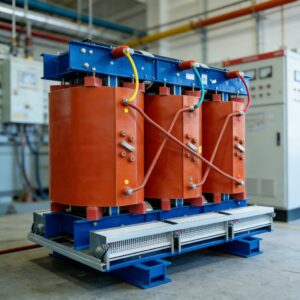
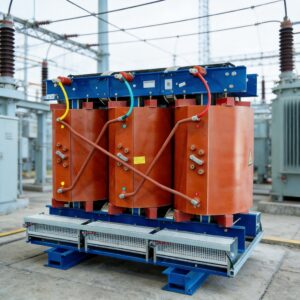
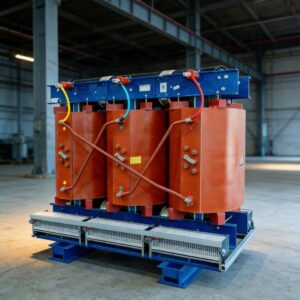
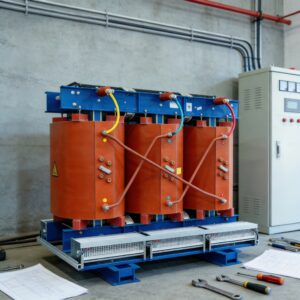
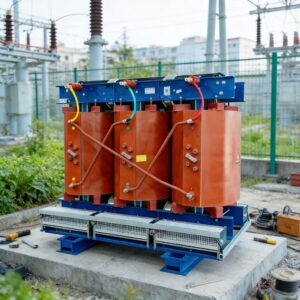
| Transformateur à sec | Conversion de puissance par refroidissement par air | Applications intérieures et industrielles |
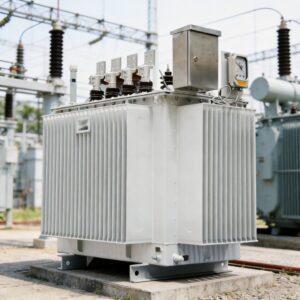
| Transformateur immergé dans l'huile | Isolation et refroidissement | Sous-stations électriques et extérieures |
| Transformateur d'isolement | Isolation électrique | Équipements sensibles à la sécurité |
| Transformateur d'instrument | Mesure et protection | systèmes de surveillance électrique |
| Transformateur monophasé | Conversion de tension monophasée | Résidentiel et commercial léger |
| Transformateur triphasé | Conversion de puissance triphasée | Systèmes d'alimentation industrielle |
Transformateurs de puissance: L'épine dorsale de la distribution électrique
Les transformateurs de puissance sont de gros équipements installés dans les centrales électriques et les principaux postes de transformation ; ils sont conçus pour fonctionner à des tensions élevées allant de quelques dizaines à plusieurs centaines de kilovolts. Leur rôle principal est d’augmenter la tension produite par les générateurs afin d’assurer un transport efficace sur de longues distances, puis de la réduire lorsque l’électricité approche des centres de consommation. En minimisant le courant aux hautes tensions, les transformateurs de puissance réduisent les pertes I²R dans les lignes de transport, ce qui permet aux réseaux électriques de transporter d’énormes quantités d’énergie sur des centaines ou des milliers de miles avec une plus grande efficacité et à moindre coût d’exploitation.
Conçus avec des noyaux robustes et des enroulements de grande capacité, les transformateurs de puissance nécessitent souvent des systèmes de refroidissement sophistiqués, tels qu’une isolation à l’huile ou au gaz et une circulation d’air forcée, afin de dissiper la chaleur générée en cas de forte charge. Leur conception intègre également des changeurs de prises en charge — des mécanismes qui ajustent le rapport d'enroulement sous charge — afin de maintenir une tension de sortie stable malgré les fluctuations de la demande. La fiabilité est primordiale ; c'est pourquoi les transformateurs de puissance sont soumis à des essais rigoureux portant sur la rigidité diélectrique, la résistance aux courts-circuits et les performances thermiques avant leur mise en service.
Compte tenu de leur rôle central dans le transfert d'énergie en grande quantité, transformateurs de puissance Leur maintenance exige des investissements importants et une planification rigoureuse. Des diagnostics réguliers, tels que l'analyse des gaz dissous dans l'huile isolante, la thermographie infrarouge et la surveillance des vibrations, permettent de détecter les premiers signes de dégradation ou de panne. En garantissant le fonctionnement optimal de ces machines essentielles, les entreprises de services publics peuvent prévenir les pannes coûteuses, préserver la stabilité du réseau et répondre à une demande toujours croissante. En résumé, les transformateurs de puissance constituent véritablement l'épine dorsale de tout réseau de distribution électrique.
Transformateurs triphasés : l'équilibrage de la puissance dans les environnements industriels

Les transformateurs triphasés sont spécialement conçus pour fonctionner avec des réseaux électriques triphasés, très répandus dans les environnements industriels et les grands établissements commerciaux en raison de leur efficacité à transporter et à distribuer d’importantes quantités d’électricité. Contrairement aux transformateurs monophasés, un transformateur triphasé comprend trois jeux d’enroulements primaires et secondaires, assemblés soit sur un noyau commun (conception à trois branches), soit sur des branches de noyau distinctes (conceptions à cinq branches ou en forme de noyau). Cette configuration garantit un équilibre de la tension et du courant sur les trois phases, ce qui minimise les courants de neutre et améliore la stabilité globale du système.
Dans les environnements industriels — tels que les usines, les sites de production et les grands centres de données —, l’alimentation triphasée offre un couple plus régulier dans les moteurs, un meilleur facteur de puissance et une quantité réduite de conducteurs par rapport à des systèmes monophasés équivalents. Ces transformateurs sont souvent dotés d’une isolation à huile ou de type sec, avec des puissances nominales pouvant aller de quelques kilovolt-ampères (kVA) à plusieurs centaines de MVA. Leur capacité à distribuer efficacement des charges équilibrées les rend indispensables pour les machines lourdes, les systèmes de chauffage, de ventilation et de climatisation (CVC) et les commandes de processus, où une alimentation continue et fiable est cruciale.
La maintenance des transformateurs triphasés consiste à surveiller chaque phase afin de vérifier l'intégrité de l'isolation, les variations thermiques et la symétrie du flux magnétique. Les essais sur site, notamment la vérification du rapport de transformation, la mesure de la résistance des enroulements et le contrôle du facteur de puissance, permettent de détecter des problèmes tels que les courts-circuits entre spires ou les déséquilibres du noyau. Des améliorations telles que la surveillance numérique, les changeurs de prises en charge et les systèmes de refroidissement avancés prolongent encore la durée de vie des transformateurs et permettent de s'adapter aux variations de la charge. Grâce à une installation et un entretien appropriés, les transformateurs triphasés garantissent que les installations industrielles fonctionnent avec une efficacité et une sécurité optimales.
Transformateur de puissance contre Transformateur de distribution
Les transformateurs de puissance et les transformateurs de distribution transfèrent tous deux l'énergie électrique entre différents niveaux de tension, mais ils sont conçus pour différentes étapes du système électrique.
A transformateur de puissance est généralement utilisé dans les applications de transport et de sous-station à haute tension, tandis que transformateur de distribution est utilisé plus près des consommateurs pour fournir des tensions de distribution utilisables.
Les principales différences concernent les conditions de fonctionnement, les exigences de charge, les niveaux de tension, les exigences d'efficacité et le lieu d'installation.
Transformateur à sec ou à bain d'huile
La principale différence entre les transformateurs secs et les transformateurs immergés dans l'huile réside dans leur isolation et leur méthode de refroidissement.
A transformateur sec Il utilise une isolation à air et solide, ce qui le rend adapté à de nombreuses installations intérieures. transformateur immergé dans l'huile Utilise un liquide isolant pour le refroidissement et l'isolation et est couramment utilisé dans les sous-stations extérieures et les applications à haute capacité.
Le choix approprié dépend de l'environnement d'installation, de la capacité, des exigences de sécurité, des exigences de maintenance et des spécifications du projet.
Transformateur monophasé vs transformateur triphasé
Les transformateurs monophasés sont conçus pour les systèmes électriques monophasés et sont couramment utilisés pour les applications de faible puissance.
Les transformateurs triphasés sont conçus pour les systèmes triphasés et sont largement utilisés dans les applications industrielles, commerciales et de services publics où de grandes quantités d'énergie électrique doivent être transmises ou distribuées efficacement.
Transformateur élévateur vs transformateur abaisseur
La principale différence réside dans le sens de la conversion de tension.
A transformateur élévateur augmente la tension du côté primaire au côté secondaire, tandis qu'un transformateur abaisseur diminue la tension.
Les transformateurs élévateurs sont généralement associés au transport d'énergie, tandis que les transformateurs abaisseurs sont largement utilisés dans la distribution et les équipements électriques.
Applications des transformateurs électriques
Les transformateurs électriques sont utilisés dans toute l'infrastructure électrique moderne.
Les applications courantes comprennent :
- Production d'énergie
- transmission électrique
- Distribution d'énergie
- fabrication industrielle
- Bâtiments commerciaux
- Systèmes d'énergie renouvelable
- Centres de données
- Infrastructures de transport
- sous-stations électriques
- Systèmes de contrôle et de protection
Le type de transformateur approprié dépend des exigences en matière de tension, de capacité de charge, de fréquence, de l'environnement d'installation, du mode de refroidissement et de la protection requise.
Comment choisir le bon transformateur électrique ?
Choisir le bon transformateur nécessite d'évaluer plusieurs facteurs techniques.
1. Déterminer la tension requise
Identifiez la tension d'entrée principale et la tension secondaire requise. Cela déterminera si une conversion de tension (élévatrice, abaisseuse ou autre) est nécessaire.
2. Calculer la capacité requise
La capacité du transformateur doit être choisie en fonction de la charge électrique prévue et des conditions de fonctionnement.
3. Choisissez la phase correcte
Déterminez si le système nécessite un transformateur monophasé ou triphasé.
4. Tenez compte de l'environnement d'installation
Pour les applications intérieures, les transformateurs secs peuvent convenir. Les installations extérieures et de forte capacité peuvent nécessiter des transformateurs immergés dans l'huile.
5. Évaluer le refroidissement et l'isolation
Les exigences en matière de refroidissement et d'isolation dépendent de la capacité du transformateur, des conditions de fonctionnement, de la température ambiante et des exigences d'installation.
6. Prendre en compte l'efficacité et la fiabilité
Pour les applications à fonctionnement continu, il convient de prendre en compte l'efficacité du transformateur, ses performances thermiques, sa durée de vie, ses exigences de maintenance et sa fiabilité.
7. Collaborer avec le fabricant du transformateur
Pour les applications de transformateurs personnalisés ou industriels, discutez avec le fabricant de la tension, de la capacité, de la fréquence, de la phase, de l'isolation, de la méthode de refroidissement, des dimensions et de l'environnement de fonctionnement requis avant de choisir une conception finale.
Questions fréquentes sur les types de transformateurs électriques
Quels sont les principaux types de transformateurs électriques ?
Les principaux types comprennent les transformateurs de puissance, les transformateurs de distribution, les transformateurs élévateurs, les transformateurs abaisseurs, les transformateurs secs, les transformateurs immergés dans l'huile, les transformateurs d'isolement, les transformateurs de mesure, les autotransformateurs, les transformateurs monophasés et les transformateurs triphasés.
Quels sont les trois principaux types de transformateurs ?
Les transformateurs peuvent être classés de différentes manières ; il n’existe donc pas de classification universelle en trois types. Les classifications courantes comprennent les transformateurs de puissance et de distribution selon leur application, les transformateurs élévateurs et abaisseurs selon la transformation de tension, et les transformateurs secs et immergés dans l’huile selon leur construction et leur mode de refroidissement.
Quelle est la différence entre un transformateur de puissance et un transformateur de distribution ?
Les transformateurs de puissance sont principalement utilisés dans les applications de transport et de sous-station à haute tension, tandis que les transformateurs de distribution sont utilisés dans les réseaux de distribution pour fournir de l'électricité à des niveaux de tension utilisables aux consommateurs.
Quelle est la différence entre un transformateur sec et un transformateur immergé dans l'huile ?
Les transformateurs secs utilisent l'air et une isolation solide au lieu d'une isolation liquide. Les transformateurs immergés dans l'huile utilisent un liquide isolant pour le refroidissement et l'isolation et sont couramment utilisés dans les applications extérieures et de forte puissance.
Quelle est la différence entre un transformateur élévateur et un transformateur abaisseur ?
Un transformateur élévateur augmente la tension, tandis qu'un transformateur abaisseur la diminue.
Les transformateurs triphasés sont-ils meilleurs que les transformateurs monophasés ?
Aucun des deux types n'est universellement meilleur. Le choix approprié dépend du système électrique, de la capacité requise, de l'application, des conditions d'installation et des exigences du projet.
Quel transformateur est le mieux adapté aux applications industrielles ?
Le choix du transformateur le plus adapté dépend de la charge industrielle, de la tension, de la capacité, de l'environnement, des besoins en refroidissement et des conditions de fonctionnement. Les transformateurs triphasés, à sec et immergés dans l'huile sont utilisés dans différentes applications industrielles.
Comment choisir le bon transformateur électrique ?
Commencez par déterminer la tension d'entrée et de sortie requise, la capacité du transformateur, la phase, la fréquence, l'environnement d'installation, la méthode de refroidissement, les exigences d'isolation et les normes électriques applicables.
Conclusion
Comprendre les différentes types de transformateurs électriques est essentiel lors de la conception, de la mise à niveau ou de la maintenance d'un système d'alimentation électrique.
Les transformateurs de puissance, les transformateurs de distribution, les transformateurs secs, les transformateurs immergés dans l'huile, les transformateurs élévateurs, les transformateurs abaisseurs, les transformateurs d'isolement et les transformateurs triphasés ont chacun une fonction différente.
Le choix du transformateur doit se faire en fonction de la tension, de la capacité, du nombre de phases, de l'application, de l'environnement d'installation, des exigences de refroidissement et des conditions de fonctionnement à long terme. Pour les projets spécialisés ou industriels, collaborer directement avec un fabricant de transformateurs expérimenté permet de garantir que le transformateur final réponde aux spécifications techniques requises.
Conclusion : le rôle indispensable des transformateurs électriques
Des transformateurs de puissance géants qui acheminent l'énergie d'un continent à l'autre aux unités de distribution compactes qui éclairent nos foyers, les différents types de transformateurs électriques sont au cœur de tous les aspects de la vie moderne. Comprendre leur conception, leur fonctionnement et leurs applications nous aide à saisir comment ils permettent une distribution d'électricité efficace, fiable et sûre, quel que soit le niveau de tension.
Alors que nous continuons à innover dans les domaines de l'intégration des énergies renouvelables, de la mobilité électrique et des réseaux intelligents, les transformateurs évolueront parallèlement à ces technologies, conservant ainsi leur statut de composants indispensables de notre infrastructure électrique. Que vous soyez un professionnel du secteur ou simplement un consommateur curieux, mieux connaître ces machines essentielles vous permettra d'éprouver un respect encore plus profond pour l'ingénierie qui fait fonctionner notre monde.

 English
 Français
 Español
 Deutsch