
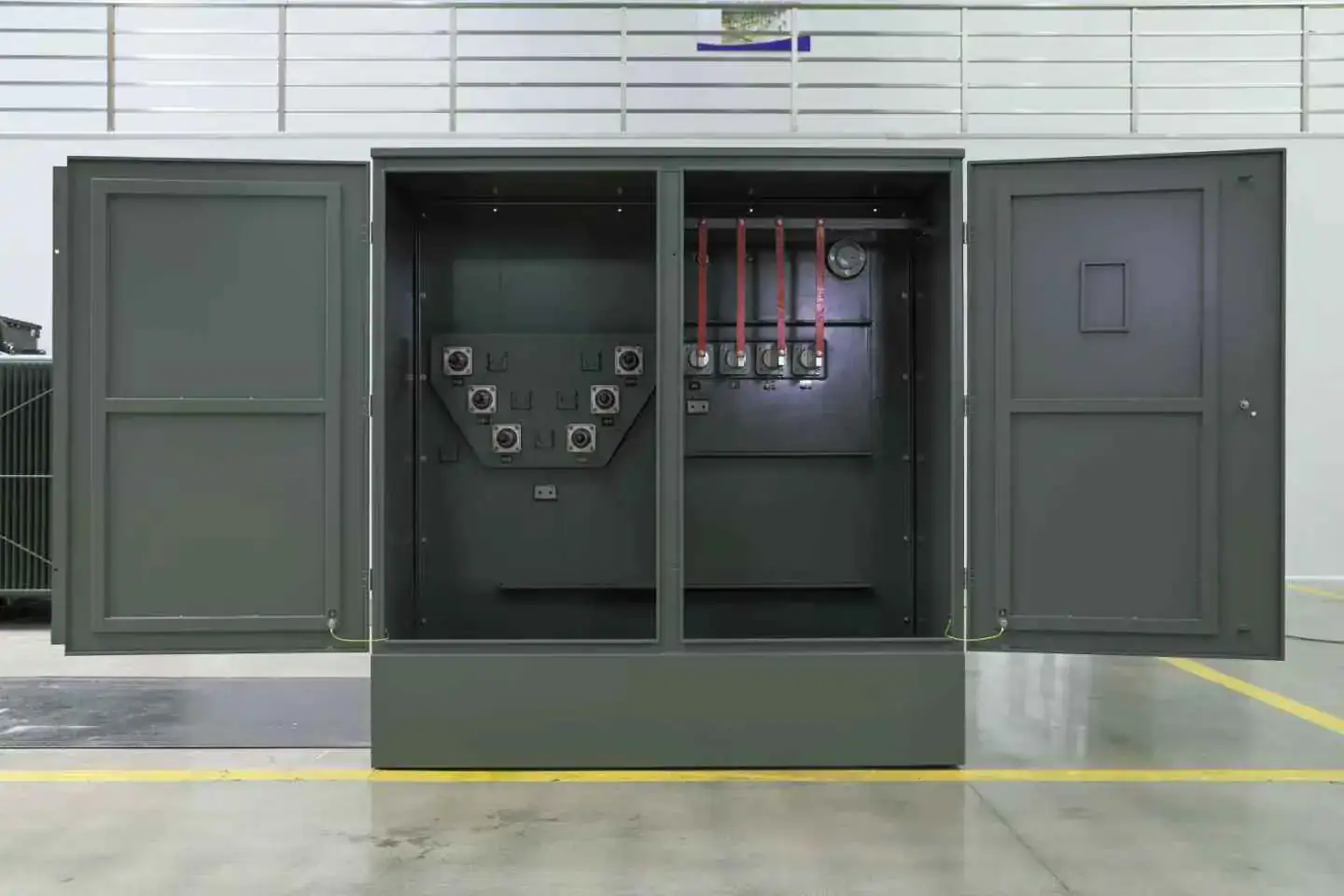
Imaginez entrer dans une pièce et actionner un interrupteur : instantanément, la lumière inonde l’espace. Un geste en apparence simple, mais qui cache une merveille d’ingénierie : le transformateur électrique. Ces appareils, souvent insoupçonnés, jouent un rôle essentiel dans notre consommation et notre distribution d’énergie électrique. Véritables piliers de notre monde moderne, ils garantissent un acheminement efficace de l’électricité des centrales électriques jusqu’à nos foyers. Pourtant, nombreux sont ceux qui ignorent encore leur fonction cruciale et leur fonctionnement.
Comprendre le fonctionnement d'un transformateur électrique ouvre les portes d'un monde fascinant où la physique rencontre la pratique. Véritables sentinelles silencieuses, les transformateurs exploitent les principes fondamentaux de l'électromagnétisme pour ajuster les niveaux de tension et garantir la stabilité des vastes réseaux électriques. Ils permettent la conversion sans interruption de l'électricité à haute tension, indispensable aux voyages longue distance, en tensions plus basses et plus sûres, qui alimentent notre quotidien. Cet article explore la magie transformatrice de ces appareils, révélant la simplicité et la complexité qui caractérisent leur fonctionnement.

Les bases de l'électromagnétisme dans les transformateurs
Au cœur de tout transformateur électrique se trouve le principe de l'induction électromagnétique, découvert par Michael Faraday dans les années 1830. Lorsqu'un courant alternatif traverse une bobine (l'enroulement primaire), il génère un champ magnétique variable autour de celle-ci. Ce flux magnétique fluctuant se propage dans une bobine voisine (l'enroulement secondaire), induisant une tension à ses bornes. La loi fondamentale qui régit ce processus – la loi de Faraday sur l'induction électromagnétique – stipule que la force électromotrice (FEM) induite dans un circuit fermé est égale à la variation du flux magnétique qui le traverse.
Pour visualiser ce phénomène, imaginez deux bobines de fil enroulées autour d'un noyau de fer. Lorsqu'une tension alternative est appliquée à la bobine primaire, le noyau se magnétise et se démagnétise rapidement, transmettant ainsi le champ magnétique à la bobine secondaire. Ce transfert d'énergie sans contact électrique direct met en évidence l'un des aspects les plus ingénieux de la conception des transformateurs : l'isolation galvanique. En convertissant l'énergie électrique par des champs magnétiques plutôt que par des conducteurs physiques, les transformateurs minimisent les pertes, réduisent les interférences et offrent des avantages cruciaux en matière de sécurité. Ainsi, l'électromagnétisme fondamental des transformateurs fournit à la fois le mécanisme et l'efficacité nécessaires à la distribution d'énergie à grande échelle.
Composants principaux d'un transformateur électrique
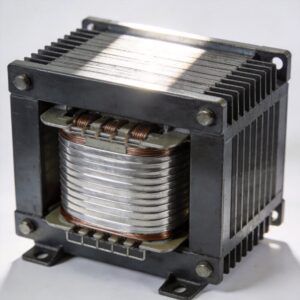
Chaque transformateur comprend trois composants essentiels : le noyau, l’enroulement primaire et l’enroulement secondaire. Le noyau, généralement en acier au silicium feuilleté, concentre et guide le flux magnétique entre les enroulements. Sa conception minimise les courants de Foucault et les pertes par hystérésis, améliorant ainsi le rendement. Les tôles magnétiques sont isolées les unes des autres afin de limiter les courants de circulation qui, autrement, dissiperaient de l’énergie sous forme de chaleur.
Les enroulements sont constitués de fils de cuivre ou d'aluminium isolés, enroulés autour du noyau. L'enroulement primaire est relié à la source de tension d'entrée, tandis que l'enroulement secondaire fournit la tension transformée à la charge. Des matériaux isolants de haute qualité entre les couches empêchent les courts-circuits sous haute tension et en cas de variations de température. De plus, certains transformateurs contiennent de l'huile ou de la résine isolante pour dissiper la chaleur et assurer l'isolation électrique. Ces composants essentiels fonctionnent de concert pour permettre une conversion de tension précise, une gestion thermique efficace et un support mécanique optimal.
Rôle du rapport de transformation dans le fonctionnement d'un transformateur
Le rapport de transformation (nombre de spires du secondaire divisé par le nombre de spires du primaire) détermine directement la tension de sortie. Par définition, Vs/Vp = Ns/Np, où Vs et Vp sont les tensions secondaire et primaire, et Ns et Np les rapports de transformation correspondants. Un rapport de transformation supérieur à un donne un transformateur élévateur (tension de sortie plus élevée), tandis qu'un rapport inférieur à un donne un transformateur abaisseur (tension de sortie plus faible).
Cette relation influe également de manière inverse sur le courant : Ip/Is = Ns/Np. Ainsi, une augmentation de la tension au secondaire réduit le courant proportionnellement, ce qui permet de conserver la puissance (en négligeant les pertes mineures). Le dimensionnement du rapport de transformation implique d'équilibrer les niveaux de tension souhaités, la section des conducteurs (pour supporter le courant) et les dimensions du noyau (pour éviter la saturation). Un comptage précis des spires et des techniques d'enroulement uniformes garantissent que le transformateur répond aux spécifications précises de tension et de courant pour son application prévue, illustrant ainsi le fonctionnement pratique d'un transformateur électrique.
Types de transformateurs électriques et leurs applications
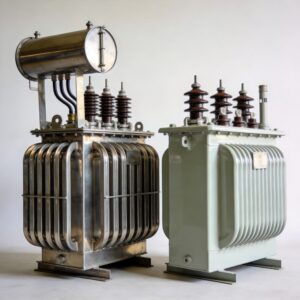
Les transformateurs électriques se déclinent en différentes configurations adaptées à des applications spécifiques. Les transformateurs de puissance, généralement d'une puissance supérieure à 200 MVA, sont installés dans les sous-stations électriques et gèrent les hautes tensions pour le transport sur de longues distances. Les transformateurs de distribution, généralement inférieurs à 200 kVA, abaissent la tension à des niveaux sûrs pour les usages résidentiels et commerciaux. Les transformateurs d'isolement assurent une isolation galvanique, réduisant ainsi les perturbations électriques et protégeant les composants électroniques sensibles. Les autotransformateurs utilisent un seul enroulement à prise pour un réglage de tension compact et économique, mais ne bénéficient pas d'une isolation galvanique complète.
D'autres variantes spécialisées incluent les transformateurs de mesure — transformateurs de courant (TC) et transformateurs de potentiel (TP) — qui fournissent des mesures à échelle réduite pour les compteurs et les relais de protection. Les transformateurs toroïdaux, dotés de noyaux en forme d'anneau, offrent des pertes parasites réduites et un format compact, idéal pour les équipements audio, médicaux et aérospatiaux. Chaque type exploite les mêmes principes électromagnétiques, mais optimise les matériaux, la construction et les techniques d'enroulement pour répondre à des exigences de performance spécifiques, illustrant ainsi le fonctionnement d'un transformateur électrique dans d'innombrables secteurs, de la production d'énergie à l'électronique grand public.
Importance des transformateurs dans les réseaux de distribution d'énergie
Les transformateurs sont des éléments essentiels des réseaux électriques modernes, permettant un transport efficace sur de longues distances et une distribution locale sûre. En élevant la tension à plusieurs dizaines ou centaines de kilovolts sur les sites de production, les transformateurs électriques réduisent l'intensité du courant, minimisant ainsi les pertes par effet Joule (I²R) dans les lignes de transport. Ce transport à haute tension permet de préserver l'énergie sur des centaines de kilomètres avant de l'abaisser à proximité des points de consommation pour les habitations et les entreprises.
Au-delà de la réduction des pertes, les transformateurs contribuent à la flexibilité et à la fiabilité du réseau. Les gestionnaires de réseau peuvent exploiter différents niveaux de tension, gérer l'équilibrage de la charge et isoler rapidement les défauts. Les transformateurs de conception avancée, équipés de changeurs de prises en charge, ajustent la tension en temps réel pour répondre aux fluctuations de la demande ou intégrer les énergies renouvelables. Leur fonctionnement silencieux et leur longue durée de vie – souvent plusieurs décennies – soulignent le rôle essentiel des transformateurs, véritables piliers de la stabilité de notre monde électrifié.
Conclusion : Les héros invisibles des réseaux électriques
Les transformateurs électriques, discrets mais essentiels, sont à la base des vastes réseaux qui alimentent nos vies, convertissant l'électricité à haute tension en formes utilisables avec une remarquable efficacité. Grâce aux principes fondamentaux de l'électromagnétisme et à une ingénierie de précision, ces dispositifs garantissent un approvisionnement énergétique fiable, de la production à la consommation.
Comprendre le fonctionnement d'un transformateur électrique permet non seulement de démystifier une technologie essentielle, mais aussi de mettre en lumière l'ingéniosité qui assure l'éclairage, la recharge de nos appareils et le bon fonctionnement de nos industries. La prochaine fois que vous actionnerez un interrupteur, prenez un instant pour apprécier ces gardiens silencieux du réseau électrique.


 English
 Français
 Español
 Deutsch