
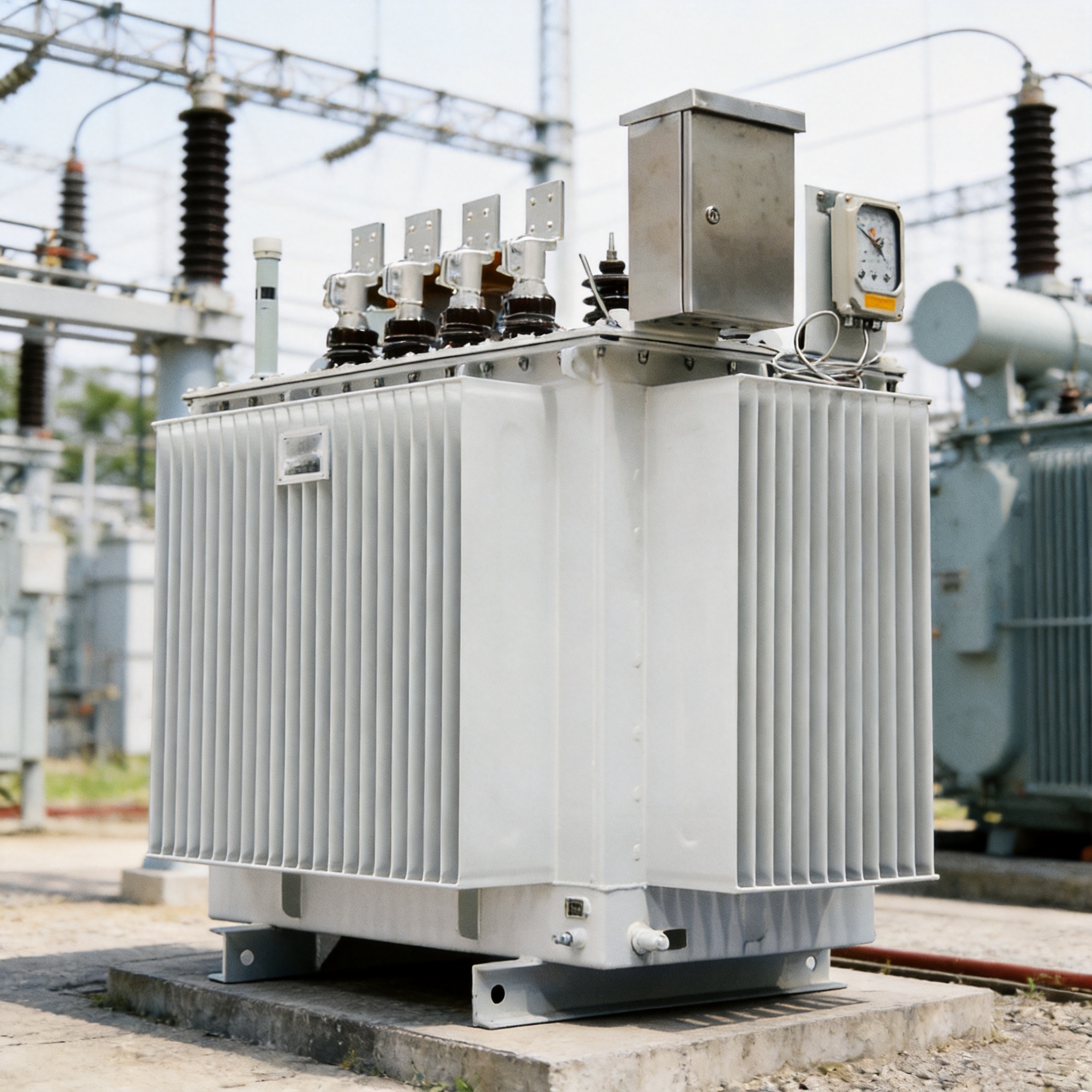
Oil-immersed transformer heat dissipation works through a continuous loop: hot oil rises from the windings and core, flows into radiators where it releases heat to the surrounding air, cools, and sinks back into the tank. The oil circulation rate and radiator surface area together determine how much heat the transformer can shed without exceeding its insulation temperature limit. In this article, you will learn the exact mechanism, how to verify and improve cooling on an installed unit, and the mistakes that cause overheating.
Table des matières
Why It Works: The Oil Circulation Mechanism
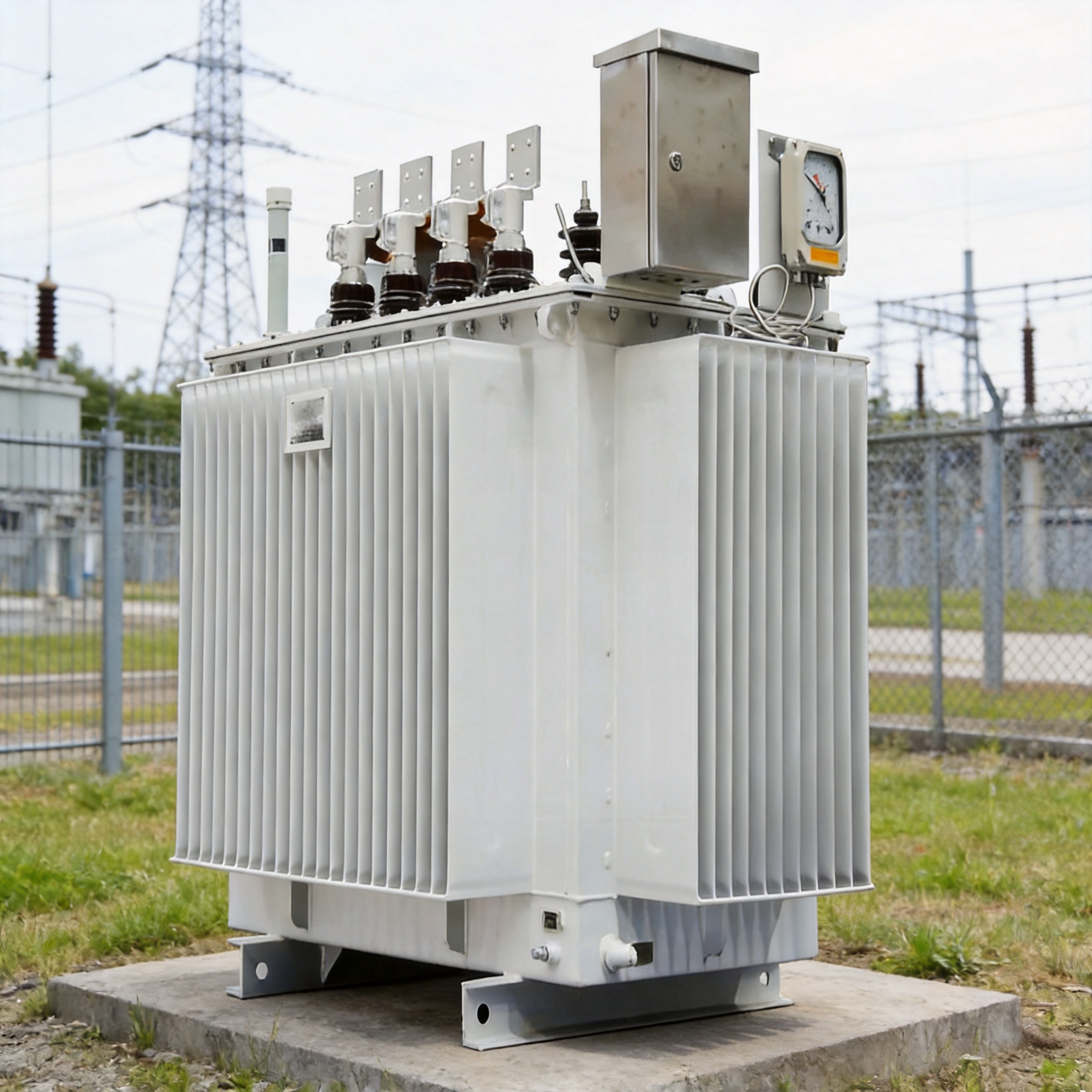
Heat dissipation in an oil-immersed transformer relies on three linked processes: conduction, convection, and radiation. Heat generated by copper losses in the windings and iron losses in the core conducts into the surrounding oil. The oil absorbs this heat, becomes less dense, and rises. This density difference is the entire driving force behind natural oil circulation — no pump is required in the basic design.
The hot oil enters the radiator bank through the top pipe. As it travels down the radiator panels, it transfers heat to the steel surface, which then transfers heat to the ambient air by convection and radiation. Cooled oil exits the bottom pipe and returns to the tank, where it absorbs heat again. This closed loop continues as long as a temperature difference exists between the oil and the ambient air.
Radiator design determines the surface area available for heat rejection. More panels, taller panels, or panels with corrugated fins all increase surface area. The table below summarizes how the main cooling modes compare.
| Cooling Mode | Oil Circulation | Application typique |
|---|---|---|
| ONAN (Oil Natural, Air Natural) | Natural convection only | Small to medium distribution transformers |
| ONAF (Oil Natural, Air Forced) | Natural oil flow, fans on radiators | Medium units needing extra capacity |
| OFAF (Oil Forced, Air Forced) | Pump-driven oil, fans on radiators | Large power transformers |
For the S and SZ series covered in this article, capacity ranges from 30 to 31,500 kVA with rated high voltages from 6 kV up to 38.5 kV and low voltages from 0.38 kV to 0.72 kV. Insulation is Class A, and impedance falls between 4% and 10%. These parameters matter because higher losses per unit volume demand proportionally more radiator surface.
How to Check and Improve Heat Dissipation
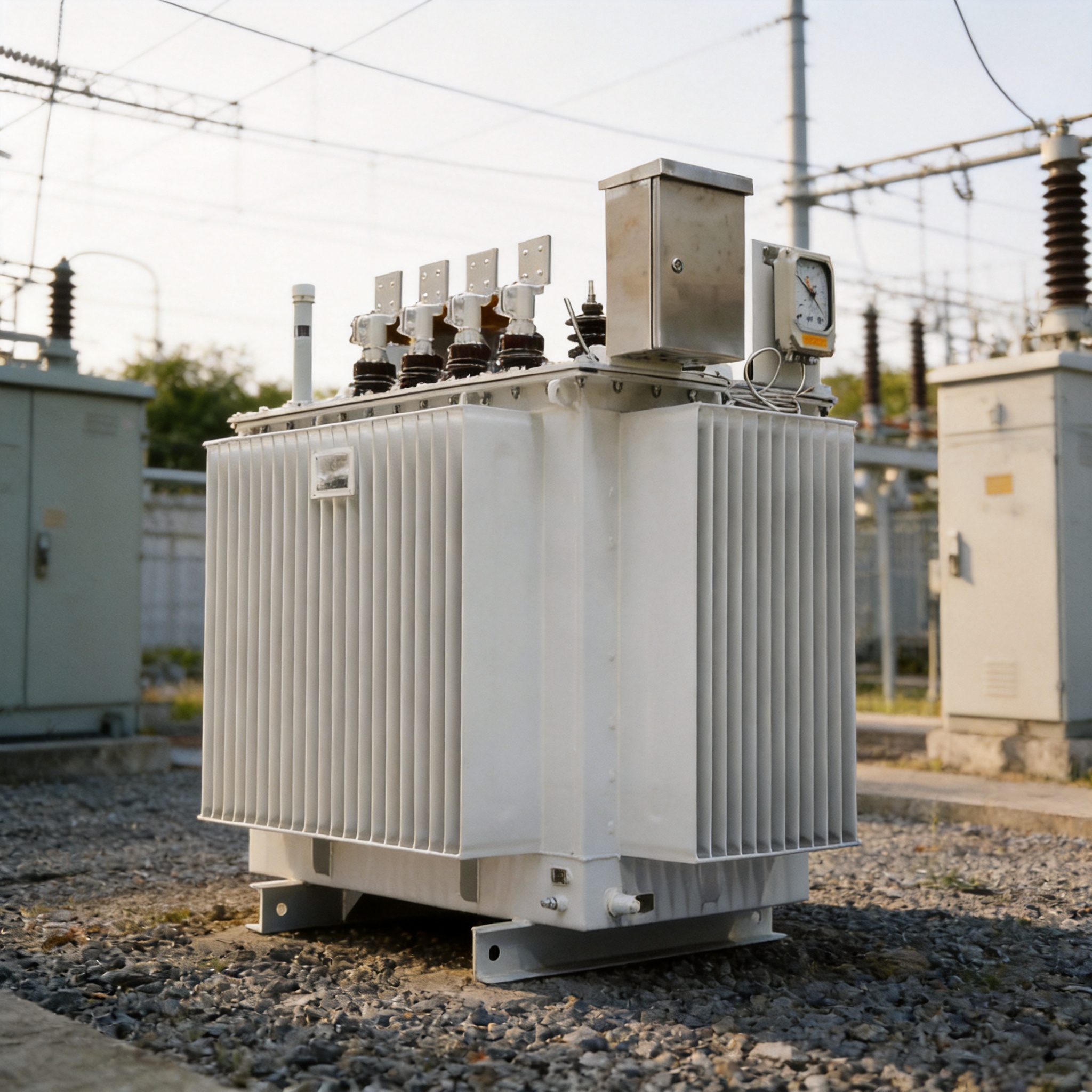
Follow these steps in order. Each step can be completed independently, but the full sequence gives you a complete thermal picture.
- Measure the top-oil temperature. Use a calibrated infrared thermometer or the built-in top-oil temperature gauge. Record the reading after the transformer has run at steady load for at least 3 hours. Class A insulation has a defined temperature limit, so compare your reading against the nameplate limit.
- Measure the ambient air temperature. Take a reading 1–2 meters from the radiator bank, away from direct sunlight. The difference between top-oil and ambient is your temperature rise.
- Check the bottom-oil temperature. If the difference between top-oil and bottom-oil is small (under roughly 3–5 °C), oil circulation may be restricted. A large gradient confirms healthy circulation.
- Inspect radiator surfaces. Look for dust, bird nests, or debris between panels. Blocked airflow between panels reduces effective surface area. Clean with low-pressure air or water.
- Verify valve positions. Confirm that the top and bottom radiator isolation valves are fully open. A partially closed valve throttles oil flow and is a common cause of overheating.
- Check fan operation (if ONAF). Confirm fans spin freely and are wired to the correct control circuit. A failed fan bank can cut effective cooling capacity significantly.
- Calculate required surface area. For a given total loss figure, the required radiator surface area scales with the allowable temperature rise. If measured temperature rise exceeds the design value, add radiator panels or convert to forced-air cooling.
- Document and trend. Record all readings with date, load level, and ambient temperature. Trending over weeks reveals gradual degradation from fouling or oil degradation.
As a concrete example: a 1,000 kVA S-series unit with 4% impedance operating at 60% load in 30 °C ambient. If top-oil reads 75 °C, the rise is 45 °C. After cleaning a blocked radiator section and fully opening a throttled bottom valve, top-oil drops to 62 °C — a 13 °C improvement from two simple corrections. This is reproducible on any unit showing the same symptoms.
Erreurs courantes et comment les corriger
Mistake 1: Assuming all radiators work equally. Symptom: uneven panel temperatures — some panels hot, others cool. Fix: measure each panel with an infrared thermometer. Cool panels indicate blocked oil flow, often from a closed valve or sludge buildup. Flush the affected section and re-test.
Mistake 2: Ignoring ambient temperature in the rating. Symptom: transformer overheats only in summer or during heat waves. Fix: the nameplate rating assumes a specific ambient (commonly 40 °C maximum). If your site regularly exceeds this, you must derate or add cooling capacity. Do not simply reset the alarm threshold.
Mistake 3: Painting radiators with thick coatings. Symptom: gradual temperature rise after a maintenance repaint. Fix: thick paint layers act as insulation on the radiator surface. Use only thin, heat-transfer-compatible coatings, and never apply multiple heavy coats. If already over-painted, consult a qualified professional about safe removal.
Mistake 4: Mixing oil types or topping up with incompatible oil. Symptom: oil darkens quickly, temperature rises, and dissolved gas analysis shows abnormal results. Fix: always use oil matching the original specification. Incompatible oil can form sludge that coats radiator interiors and blocks circulation.
Mistake 5: Blocking airflow with nearby structures. Symptom: normal readings on one side, hot readings on the side facing a wall or fence. Fix: maintain the clearance specified in the installation manual. For outdoor installations, ensure at least 1 meter of unobstructed air path around the radiator bank.
FAQ
Q: How do I know if my transformer’s oil circulation is actually working?
A: Measure top-oil and bottom-oil temperatures. A healthy unit shows a clear gradient — top-oil noticeably hotter than bottom-oil. If both read nearly the same, circulation is likely restricted. You can also feel the radiator pipes: the top pipe should be warmer than the bottom pipe during operation.
Q: Can I add more radiators to an existing transformer?
A: In many cases yes, but it requires engineering review. You must confirm the tank can support the added weight, that the existing pipe connections can handle increased flow, and that the added surface area matches the loss profile. Consult the original manufacturer or a qualified professional before modifying.
Q: What is the difference between ONAN and ONAF cooling?
A: ONAN relies entirely on natural convection of both oil and air. ONAF adds fans that blow air across the radiator panels, increasing the heat transfer coefficient. ONAF units can typically handle higher loads in the same footprint but require fan power and maintenance.
Q: How often should radiators be cleaned?
A: Inspect every 6 months and clean when you see visible dust accumulation or when temperature rise increases by more than 5 °C without a load change. In dusty or industrial environments, inspect quarterly.
Q: Does oil level affect heat dissipation?
A: Yes. Low oil level exposes the top of the windings and reduces the volume of oil available to carry heat to the radiators. Check the oil level gauge against the temperature-corrected mark and top up with the correct oil type if low.
Q: What impedance range should I expect for these transformers?
A: The S and SZ series use impedance between 4% and 10%, depending on rating and voltage class. Higher impedance reduces short-circuit currents but can slightly increase load losses. Always verify against the nameplate before performing thermal calculations.
For further reading on transformer thermal evaluation and loading guides, see the IEEE standards library and the IEC web store, which publish the recognized loading and temperature-rise standards used across the industry.

 English
 Français
 Español
 Deutsch