
Imagine a world where cities never sleep, buzzing with an intricate web of power that lights up our homes, fuels our industries, and energizes our everyday gadgets. At the heart of this silent but mighty network lies one of the most fascinating and pivotal components of modern power systems: the electrical transformer. These often-overlooked devices play a critical role in seamlessly transferring electricity across vast distances, enabling the efficient distribution that powers our contemporary lives.
Yet, despite their ubiquity and importance, electrical transformers remain shrouded in mystery to many of us. How do these devices, seemingly nondescript and scattered across landscapes, manage to step up or step down voltage levels with such precision? As we delve into the intriguing world behind these power grid essentials, we’ll uncover the engineering marvels and technological advancements that make them indispensable. Prepare to embark on a journey revealing the intricate dance of electricity and discover how these hidden giants keep our modern world in motion.

The Fundamentals of Electrical Transformers
An electrical transformer is a static device that transfers electrical energy between two or more circuits through electromagnetic induction. At its core, it operates on the principle that a changing current in one coil of wire induces a voltage across a second coil. This simple yet profound concept allows transformers to “step up” voltage—raising it for efficient long-distance transmission—or “step down” voltage—lowering it for safe distribution to homes and businesses. Regardless of size, from the small adapters powering your laptop to the massive units lining high-voltage substations, the fundamental operation remains the same. These devices are pivotal for minimizing energy loss, ensuring that the electricity generated at power plants can travel hundreds of miles without significant drops in efficiency.
Beyond their operational principle, transformers are essential for maintaining system stability and safety. By adjusting voltage levels, they enable grid operators to balance loads, isolate faults, and protect equipment from surges. Their passive nature—containing no moving parts—contributes to remarkable reliability and long service lives, often exceeding several decades. However, this longevity depends on proper design, maintenance, and cooling strategies to prevent insulation degradation and overheating. As we move toward more complex power networks integrating renewable sources, understanding these fundamentals sheds light on why the humble electrical transformer remains an irreplaceable cornerstone of modern energy infrastructure.
Types of Electrical Transformers Found in Modern Power Systems
Modern power systems employ a variety of transformer types, each tailored to specific roles. Power transformers, with ratings from a few MVA up to thousands of MVA, handle bulk voltage conversion at generation stations and interconnecting high-voltage transmission lines. Distribution transformers, typically rated under 5 MVA, step down transmission voltages (e.g., 11 kV or 33 kV) to service-level voltages (e.g., 230/400 V) for residential and commercial consumers. Instrument transformers—which include current transformers (CTs) and voltage transformers (VTs)—provide scaled-down signals to protection relays and metering equipment, ensuring accurate monitoring and safe fault isolation. Finally, specialty transformers like autotransformers and isolation transformers address unique requirements such as adjustable voltage taps or galvanic isolation to enhance safety and mitigate noise.
Each type plays a critical role in the fabric of the grid. Power transformers maximize efficiency over long distances, minimizing transmission losses. Distribution transformers are strategically located near load centers to ensure voltage consistency and reduce peak load stress. Instrument transformers safeguard personnel and equipment by delivering precise, low-magnitude signals to control systems. Autotransformers, with a single winding shared between primary and secondary circuits, offer cost-effective voltage regulation in applications like rail electrification. Isolation transformers break ground loops and filter interference in sensitive electronics. Together, this diverse transformer family underpins the resilience, flexibility, and scalability of modern electrical networks.
Transformer Design and Construction: Inside the Black Box
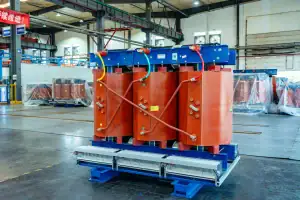
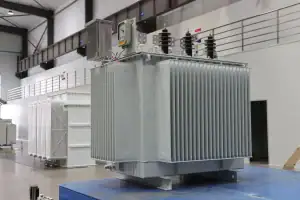
A typical electrical transformer consists of a magnetic core, primary and secondary windings, insulation materials, cooling mechanisms, and an enclosing tank filled with insulating oil or other dielectric fluids. The core—usually laminated silicon steel—provides a low-loss path for magnetic flux. Coils of copper or aluminum windings are precisely wound around the core limbs, with the turn ratio dictating voltage conversion levels. Insulating paper, pressboard, and oil prevent electrical breakdown between windings and ground.
Cooling systems vary from simple natural air convection to sophisticated forced oil circulation and water-cooling loops, designed to remove heat generated by winding and core losses. The entire assembly is housed in a sealed, often stainless-steel tank to protect against moisture, contaminants, and mechanical damage. Bushings allow safe passage of high-voltage conductors through the tank walls. Modern designs may integrate conservator tanks, pressure-relief devices, and Buchholz relays for on-line fault detection, enhancing reliability and safety in live-grid environments.
Advancements in Transformer Technology: Smart Transformers
Smart transformers represent the next frontier in grid modernization, integrating sensors, communication modules, and advanced control algorithms to deliver real-time visibility and adaptive performance. By embedding temperature, vibration, and oil-quality sensors, these units continuously monitor their own health, predicting insulation degradation or winding hot spots before failures occur. Internet-of-Things (IoT) connectivity enables secure, remote data collection and analytics, empowering utilities to optimize load tap changers, balance phases, and coordinate with distributed energy resources like solar inverters or battery storage systems.
Beyond predictive maintenance, smart transformers facilitate dynamic voltage regulation, reacting instantaneously to load fluctuations and voltage sags. Artificial intelligence and machine learning algorithms analyze historical and real-time data streams to forecast demand patterns and adjust settings proactively. This results in improved power quality, reduced downtime, and longer asset lifespans. As electric vehicle charging stations, microgrids, and renewable installations proliferate, smart transformers will become indispensable nodes in a decentralized, resilient, and self-healing grid.
Conclusion: Unveiling the Unsung Heroes of Power Distribution
Electrical transformers may operate quietly in the background, but their impact on modern life is profound. From stepping up voltage for efficient transmission to fine-tuning distribution voltages for end users, these devices ensure that power flows smoothly and reliably across the grid.
As we embrace digital transformation and renewable energy, both traditional and smart transformers will continue to evolve. Illuminating the mysteries of these engineering marvels deepens our appreciation for the hidden giants that keep our cities bright and our industries humming.