

Imagine a world without electricity—a place where the daily hum of appliances, the glow of street lamps, and the conveniences of modern life vanish into shadows. In this scenario, there are no electric transformers to manage the flow of electricity, leaving us stranded in a pre-electrical era. Electric transformers play an indispensable role in our lives, yet they remain one of the least understood components of the electrical system. They quietly ensure that the right amount of voltage reaches our homes and businesses, making them integral to maintaining our electrically powered existence.
But what are electric transformers, really? Often taken for granted, these devices are the silent gatekeepers of electrical energy efficiency, adapting power levels to different needs and ensuring safety across the grid. Without them, the electrical supply would be erratic, the equipment would malfunction, and substantial energy would be wasted. This blog post delves into understanding the essentials of electric transformers, shedding light on their vital function within our electrical network and how they support the smooth operation of our everyday lives.

The Basics of Electric Transformers
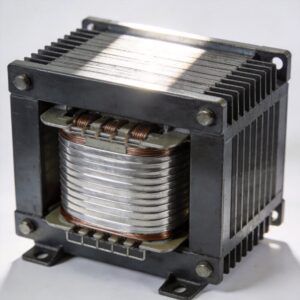
At its core, an electric transformer is a passive electrical device that transfers alternating current (AC) energy from one circuit to another through electromagnetic induction. Relying on Faraday’s law of electromagnetic induction, transformers consist of two or more windings—primary and secondary—wound around a common magnetic core. When AC voltages are applied to the primary winding, it creates a varying magnetic flux in the core, which then induces a voltage in the secondary winding. This mechanism allows transformers to “step up” or “step down” voltage levels while preserving total power (minus minimal losses).
Beyond voltage conversion, transformers provide essential electrical isolation between circuits, helping to protect sensitive equipment from faults and surges. They also maintain system stability by regulating voltage fluctuations across power grids. While the basic operation appears straightforward, real-world transformer design involves considerations such as core materials, winding configurations, cooling methods, and insulation systems. These factors ensure that the transformer meets performance criteria for efficiency, reliability, and safety in applications ranging from small electronics chargers to massive utility-scale power transformers.
Types of Electric Transformers
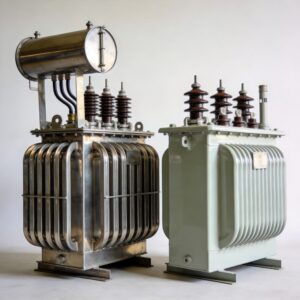
Transformers are classified by their function, construction, and application. The most common categories include step-up and step-down transformers, which respectively increase or decrease voltage levels in power transmission and distribution systems. Each type serves a distinct purpose: step-up units raise generator voltages for efficient long-distance transmission, while step-down units lower voltages for safe delivery to homes and businesses. Aside from these, there are specialized designs tailored for particular tasks.
Another prominent category is isolation transformers, which provide galvanic separation between primary and secondary windings, enhancing safety and reducing noise in sensitive electronic circuits. Autotransformers, with a single winding that acts as both primary and secondary, offer a more compact, cost-effective solution when full isolation is not required. Instrument transformers, including current transformers (CTs) and potential transformers (PTs), step down high currents or voltages to measurable levels for protection relays and metering. Finally, distribution versus power transformers differ in size and capacity: distribution transformers typically handle lower voltages and loads near the point of consumption, whereas power transformers operate at higher voltages in substations and generation facilities.
Common Applications of Electric Transformers
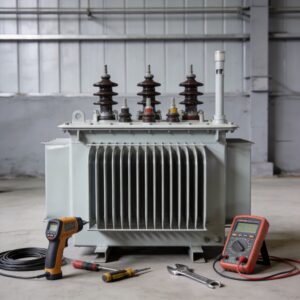
Electric transformers are ubiquitous across modern power systems. In utility grids, high-voltage transformers at generation plants step up voltages to hundreds of kilovolts for efficient transmission. Down the line, substations employ step-down transformers to bring voltages within safe limits (typically 11–33 kV) for distribution networks. Closer to end users, pole-mount or pad-mount transformers further reduce voltage to standard household levels (120/240 V) so that everyday appliances and lighting can operate safely and reliably.
Beyond the mains grid, transformers find roles in industrial settings, medical equipment, and renewable energy installations. Factories rely on specially rated transformers to power heavy machinery, maintain process controls, and isolate sensitive electronics from electrical noise. In solar and wind farms, step-up transformers boost generated voltages for grid integration, while in data centers, isolation transformers protect servers from transients and harmonics. Even small-scale applications—such as laptop chargers, doorbell chimes, and audio amplifiers—incorporate miniature transformers to adapt voltages and maintain isolation between the mains and user circuits.
Factors Influencing the Efficiency of Electric Transformers
Transformer efficiency—often exceeding 98% in large units—depends on minimizing losses in both the magnetic core and windings. Core losses, also known as iron losses, arise from hysteresis (energy dissipated as the magnetic material flips polarity) and eddy currents (circulating currents induced within the core). Selecting high-grade silicon steel laminations and optimizing lamination thickness are essential strategies to reduce these losses. Meanwhile, winding (copper) losses result from resistive heating when current flows through the transformer coils; using larger conductor sizes or specialized alloys can mitigate these losses.
Additional factors include load conditions and cooling methods. Transformers operate most efficiently near their rated load but experience increased resistive losses under over- or under-loading. Proper matching of transformer capacity to expected load profiles is critical. Thermal management—via natural air cooling (AN), forced air cooling (AF), oil immersion (OA), or water cooling—affects both loss reduction and the transformer’s lifespan. Effective insulation and temperature regulation prevent premature aging and breakdown, ensuring that the transformer performs reliably over decades of service.
Conclusion: The Crucial Role of Electric Transformers
From the generation station to your living room, electric transformers are quiet workhorses that enable efficient, safe, and reliable delivery of power. By converting voltages, providing isolation, and regulating flow, they keep the entire electrical grid in balance and protect equipment from damage.
Understanding what electric transformers are and how they operate offers insight into the backbone of our modern energy infrastructure. As we transition to new energy sources and smart grids, mastering transformer essentials will remain key to sustaining a resilient, electrified world.



 English
 Français
 Español
 Deutsch