

Wenn Sie einen Lichtschalter betätigen und Ihr Zimmer in helles Licht getaucht wird oder Sie Ihr Handy zum Aufladen anschließen, denken Sie dann jemals über die unsichtbaren Kräfte nach, die dabei wirken? Elektrische Transformatoren, die zwar offensichtlich sind, spielen eine entscheidende Rolle in unserem Alltag und bleiben doch für viele ein Rätsel. Diese stillen Helden der Elektrizitätswelt sorgen dafür, dass der Strom, der kilometerweit entfernt erzeugt wird, in der richtigen Form bei uns ankommt. Ohne sie wären die modernen Annehmlichkeiten, die wir oft für selbstverständlich halten, nicht möglich.
Stellen Sie sich ein Orchester ohne Dirigenten vor – Chaos wäre vorprogrammiert. Genauso verhält es sich mit dem Stromnetz: Ohne Transformatoren, die den Stromfluss präzise lenken, wäre es ein unkoordiniertes Energiegewirr. Die Frage ist nicht nur, *was* Transformatoren leisten, sondern auch, wie sie unauffällig die Harmonie unseres Alltags formen. Begleiten Sie uns auf unserer Reise in die faszinierende Welt der Transformatoren, entschlüsseln Sie ihre lebenswichtigen Funktionen und entdecken Sie, wie sie uns mit Energie versorgen.

Grundlagen der elektrischen Transformatoren
Elektrische Transformatoren sind grundlegende Komponenten moderner Stromversorgungssysteme. Sie fungieren als passive Geräte, die elektrische Energie mittels elektromagnetischer Induktion zwischen Stromkreisen übertragen. Wenn sich Kunden fragen, was elektrische Transformatoren leisten, liegt die Antwort in ihrer Fähigkeit, die Spannung anzupassen: Sie erhöhen die Spannung für eine effiziente Fernübertragung und reduzieren sie anschließend für den sicheren Einsatz in Haushalten und Unternehmen. Durch die Erhöhung der Spannung auf mehrere hundert Kilovolt minimieren Transformatoren die Widerstandsverluste in den Übertragungsleitungen. In der Nähe der Verbrauchspunkte transformieren sie die Spannung auf die in Wohn- und Gewerbegebäuden üblichen 120–240 V herunter. Diese Spannungsregelung ist entscheidend für die Stabilität, Sicherheit und optimale Leistung aller elektrischen Geräte.
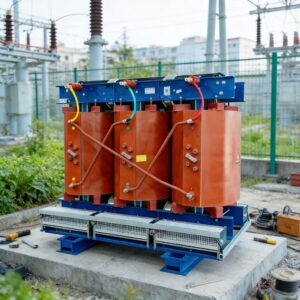
Das Herzstück jedes Transformators bilden zwei oder mehr Spulen aus isoliertem Draht – die sogenannten Wicklungen –, die um einen eng laminierten ferromagnetischen Kern gewickelt sind. Ein Wechselstrom in der Primärwicklung erzeugt einen zeitlich veränderlichen magnetischen Fluss im Kern, der wiederum eine entsprechende Spannung in der Sekundärwicklung induziert. Das Windungsverhältnis zwischen Primär- und Sekundärwicklung bestimmt direkt die Ausgangsspannung. Obwohl Transformatoren die Frequenz des Wechselstroms nicht verändern, können sie ihn ohne bewegliche Teile in ein anderes Spannungs- und Stromverhältnis umwandeln, was einen äußerst zuverlässigen und effizienten Betrieb ermöglicht. Das Verständnis dieser Grundlagen erklärt, warum Transformatoren so wichtig sind. unverzichtbar für die Stromübertragung sicher und effektiv vom Generator zum Endverbraucher.
Verschiedene Arten von elektrischen Transformatoren
Die Welt der Transformatoren umfasst eine Vielzahl von Bauformen, die jeweils auf spezifische Aufgaben in Stromerzeugungs-, -verteilungs- und -nutzungsnetzen zugeschnitten sind. Aufwärtstransformatoren erhöhen die Spannung für Hochspannungsleitungen, während Abwärtstransformatoren die Spannung auf verbraucherfreundliche Werte reduzieren. Trenntransformatoren entkoppeln Stromkreise, um direkte elektrische Verbindungen zu verhindern, die Sicherheit zu erhöhen und Störungen in empfindlichen Geräten zu reduzieren. Spartransformatoren, die über eine einzige Wicklung mit Anzapfungen an verschiedenen Stellen verfügen, bieten eine kompakte und kostengünstige Spannungsregelung für Anwendungen mit moderaten Spannungsschwankungen.
Zu den weiteren Spezialkonfigurationen gehören Messwandler – Stromwandler (CTs) und Spannungswandler (PTs) –, die in Mess- und Schutzsystemen eingesetzt werden, sowie Dreiphasentransformatoren, die für die symmetrische Dreiphasenversorgung in Industrie- und Versorgungsnetzen sorgen. Verteiltransformatoren, Transformatoren, die häufig auf Masten oder ebenerdig auf Fundamenten montiert sind, versorgen Wohngebiete mit der endgültigen geregelten Spannung. Jeder Typ erfüllt spezifische Anforderungen wie Belastbarkeit, Isolationsklasse, Kühlmethode und Umweltaspekte, um sicherzustellen, dass überall dort, wo Strom erzeugt oder verbraucht wird, der passende Transformator zum Einsatz kommt und so Zuverlässigkeit und Effizienz gewährleistet sind.
Transformatorkomponenten und Funktionsprinzipien
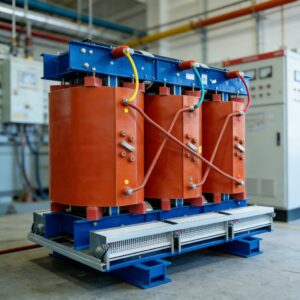
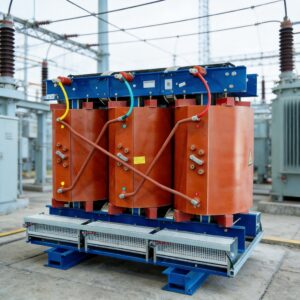
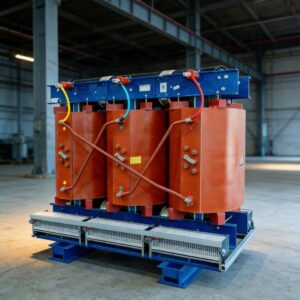
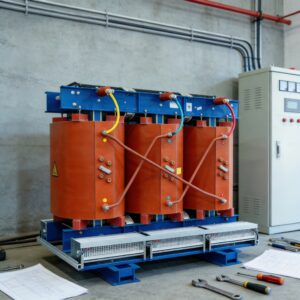
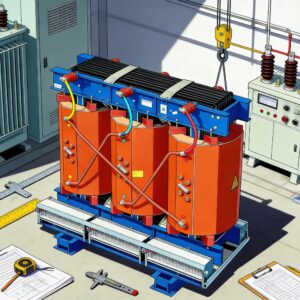
Auf den ersten Blick erscheinen die Primärelemente eines Transformators einfach: ein laminierter Kern, Primär- und Sekundärwicklungen, und Isoliermaterialien. Der Kern, typischerweise aus Silizium-Stahl-Lamellen gefertigt, bietet einen magnetischen Fluss mit geringem magnetischem Widerstand und minimiert so Hysterese- und Wirbelstromverluste. Die Wicklungen bestehen aus isolierten Kupfer- oder Aluminiumleitern, die präzise gewickelt werden, um das gewünschte Windungsverhältnis zu erreichen. Um diese Kernkomponenten herum befinden sich Isolierschichten, Durchführungen, Kühlkanäle und, bei großen Leistungstransformatoren, Öl oder Gas zur Wärmeableitung und dielektrischen Unterstützung.
Transformatoren arbeiten nach dem Faradayschen Induktionsgesetz. Wird an die Primärwicklung eine Wechselspannung angelegt, ändert sich der magnetische Fluss im Kern. Dieser Fluss durchdringt die Sekundärwicklung und induziert eine Spannung, die proportional zum Windungsverhältnis der beiden Wicklungen ist. Die induzierte Spannung bewirkt einen Stromfluss im Sekundärkreis und ermöglicht so die Energieübertragung ohne direkten elektrischen Kontakt. Die Effizienz und Leistungsfähigkeit dieses Energieaustauschs hängen von einer sorgfältigen Auslegung der Kerngeometrie, der Wicklungskonfiguration und des Isolationssystems ab, um Magnetfelder, thermische Belastungen und mechanische Spannungen während der gesamten Lebensdauer des Transformators zu beherrschen.
Wirkungsgrad und Energieverluste im Transformatorenbetrieb
Transformatoren sind bekannt für hohe betriebliche Effizienz, Die Leistung von Transformatoren übersteigt oft 98%, doch kein Transformator ist verlustfrei. Es gibt zwei Hauptverlustmechanismen: Kernverluste (Eisen) und Wicklungsverluste (Kupfer). Zu den Kernverlusten zählen Hystereseverluste – Energieverluste, die durch die Neuausrichtung der magnetischen Domänen im Kernmaterial im Wechselfeld entstehen – und Wirbelstromverluste, die durch in den Kernblechen induzierte Kreisströme verursacht werden. Durch die Verwendung dünner, hochwertiger Siliziumstahlbleche minimieren Ingenieure diese Verluste, indem sie Wirbelstrompfade unterbrechen und die Hysterese reduzieren.
Kupferverluste entstehen, wenn Strom durch die Wicklungen fließt und dabei Wärme proportional zum Quadrat des Stroms (I²R) erzeugt. Um dies zu minimieren, verwenden Transformatoren Leiter mit niedrigem spezifischem Widerstand und Konstruktionen, die den Strom gleichmäßig verteilen. Streuverluste durch Streufluss und strukturelle Dämpfer tragen nur geringfügig zur Energiedissipation bei. Kühlsysteme – Luft-, Öl- oder Zwangsluftkühlung – führen die Wärme ab, um optimale Betriebstemperaturen zu gewährleisten. Ordnungsgemäße Wartung, Lastmanagement und moderne Konstruktionsverbesserungen steigern die Effizienz von Transformatoren zusätzlich und stellen sicher, dass die Frage “Was leisten Transformatoren?” über die Spannungsregelung hinausgeht und auch Energieeinsparung und Systemzuverlässigkeit umfasst.
Fazit: Die unbesungenen Helden der Elektrizität
Elektrische Transformatoren steuern unauffällig den Stromfluss über Kontinente hinweg, indem sie die Spannung für die Übertragung erhöhen und für den täglichen Gebrauch verringern. Ihr einfaches, aber elegantes Design – basierend auf elektromagnetischer Induktion – bildet das Rückgrat zuverlässiger und effizienter Energieversorgungssysteme weltweit.
Da der Strombedarf stetig wächst, werden Innovationen bei Materialien, Kühlung und Design die Bedeutung dieser stillen Helden nur noch verstärken. Wenn Sie das nächste Mal das Licht einschalten oder ein Gerät aufladen, nehmen Sie sich einen Moment Zeit, um die wichtige Arbeit der Transformatoren zu würdigen – der stillen Leiter unserer elektrifizierten Welt.

 English
 Français
 Español
 Deutsch