

H-class insulation is a thermal rating defined by IEC 60085 that allows a dry-type transformer’s hottest spot to reach 180°C continuously without the insulation failing prematurely. It withstands that temperature because every component in the insulation system — enamel, film, impregnating resin, and conductor coating — is built from materials rated for at least 180°C, and the system is tested as a whole, not as separate parts. A transformer rated H-class is not “heat resistant” by accident; it is engineered so that the thermal class of the weakest material sets the limit.
By the end of this article you will be able to read a nameplate, identify whether a transformer is genuinely H-class, calculate its permissible temperature rise, and spot the three mistakes that cause premature insulation failure in the field.
Table of Contents
- 1. What “180°C” Actually Measures
- 2. Why the Materials Survive 180°C
- 3. How to Verify an H-Class Rating in 5 Steps
- 4. Common Mistakes and How to Fix Them
- 5. FAQ
1. What “180°C” Actually Measures
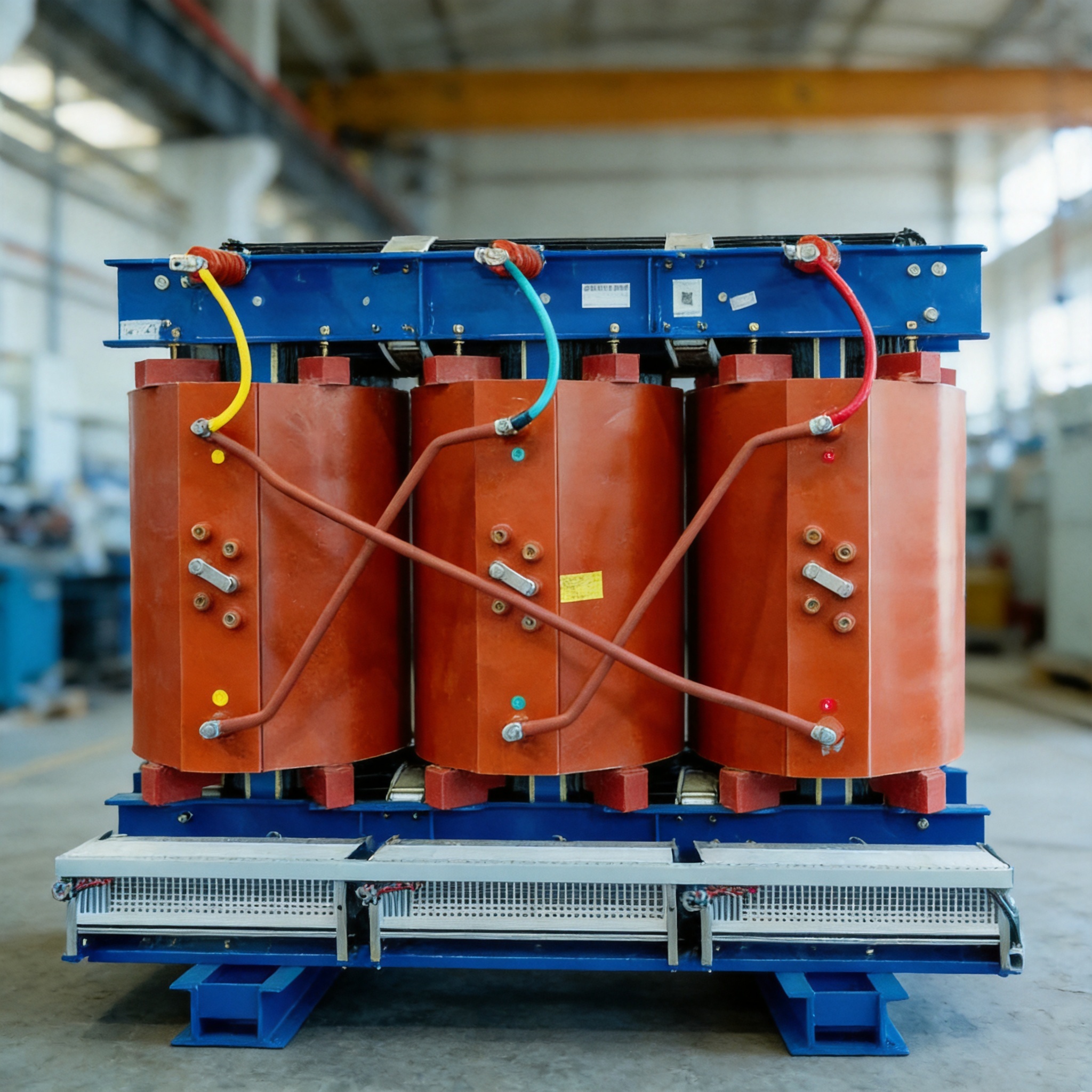
The 180°C figure is not the average winding temperature. It is the maximum allowable hottest-spot temperature of the insulation system. IEC 60085 and the equivalent UL 1446 system assign each thermal class a numerical limit: Class A = 105°C, Class E = 120°C, Class B = 130°C, Class F = 155°C, and Class H = 180°C. The number is the temperature at which the insulation is expected to lose roughly half its mechanical strength after its rated service life — typically 20,000 hours under accelerated aging tests.
In a real transformer, the hottest spot is always hotter than the average winding temperature. That difference is called the temperature gradient. For a typical dry-type unit, the hottest spot runs about 10–20 K above the average winding rise. So an H-class design with a 125 K average rise plus a 40°C ambient plus a 15 K gradient lands at 180°C — exactly at the limit, with no margin left for overload.
This is why the reference specification for a 30–5000 kVA SCB dry-type transformer lists Insulation Class: F, H as a selectable option. Choosing H-class over F-class buys you 25 K of extra thermal headroom. That headroom is what allows the same physical core and winding to carry a higher continuous load, or to survive a short-term overload without permanent insulation damage.
| Thermal Class | Max Hot-Spot (°C) | Typical Use |
|---|---|---|
| A | 105 | Legacy oil-filled units |
| E | 120 | Small control transformers |
| B | 130 | General purpose, low cost |
| F | 155 | Standard dry-type distribution |
| H | 180 | High ambient, overload duty, harsh sites |
2. Why the Materials Survive 180°C
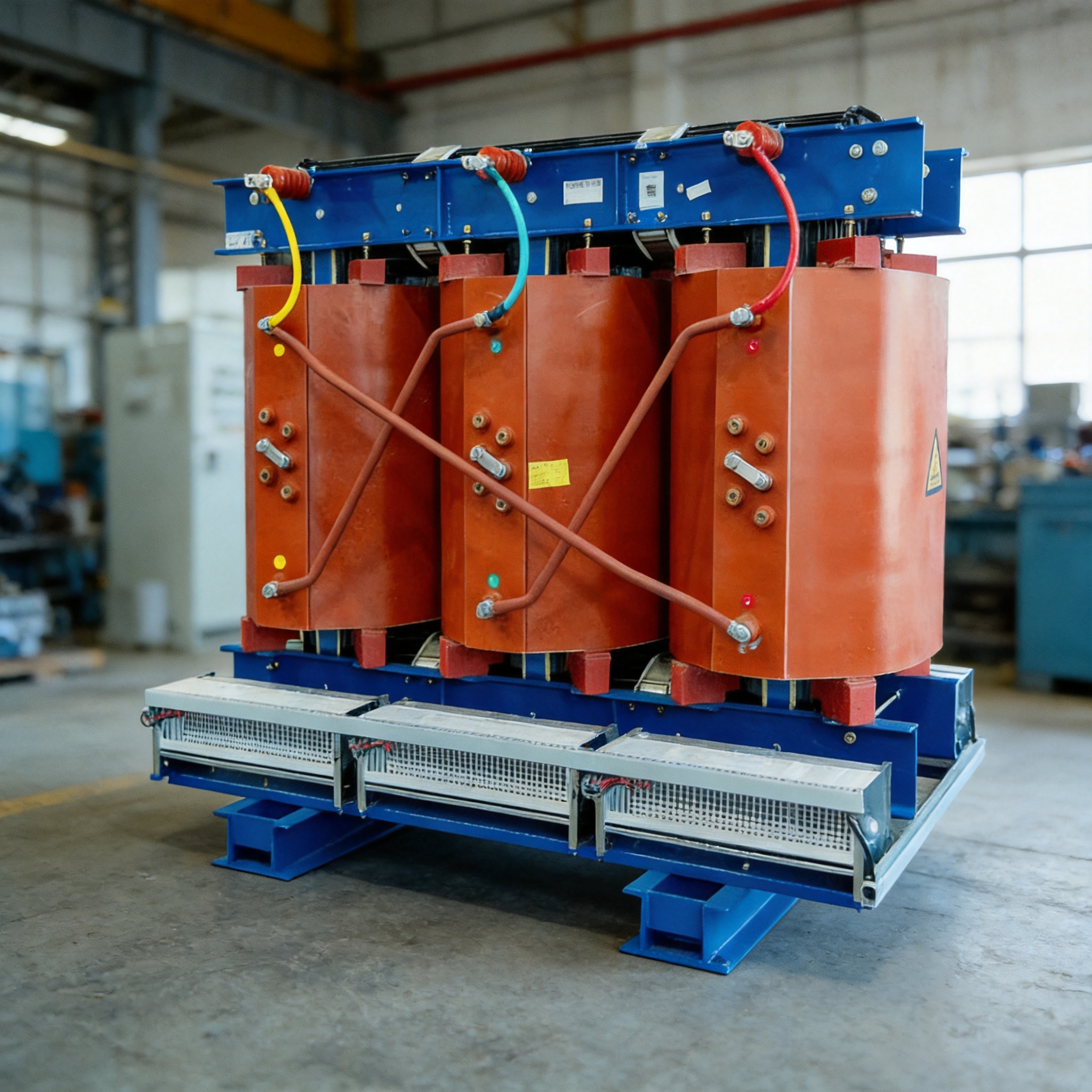
An insulation system is a chain, and the chain fails at its weakest link. H-class construction replaces every link with a material whose continuous service temperature is at or above 180°C.
- Conductor enamel: Polyimide or polyamide-imide magnet wire, rated 200°C or higher, replaces standard polyurethane enamel rated around 130°C.
- Impregnating resin: Solventless polyester or silicone varnish, cured to a Class H rating, replaces Class B alkyd varnish.
- Layer and barrier insulation: Aramid paper (Nomex-type) or glass-cloth laminate replaces cellulose kraft paper.
- Lead and connection insulation: Silicone or cross-linked polyethylene sleeving, not PVC.
The physics behind the rating is the Arrhenius relationship. Insulation degradation roughly doubles for every 8–10 K of additional temperature. That is the “10-degree rule.” Running a Class F system at 180°C instead of 155°C does not shorten life by a small amount — it cuts it by a factor of roughly four to eight. H-class materials are selected precisely because their chemical bonds do not follow that curve at 180°C.
Because the rating applies to the system, you cannot mix one H-class component into a Class F build and call the result H-class. UL 1446 and IEC 60085 both require the complete insulation system to pass a sealed-tube or motorette aging test at the class temperature. If you are specifying a transformer, ask for the insulation system test report, not just a material datasheet.
3. How to Verify an H-Class Rating in 5 Steps
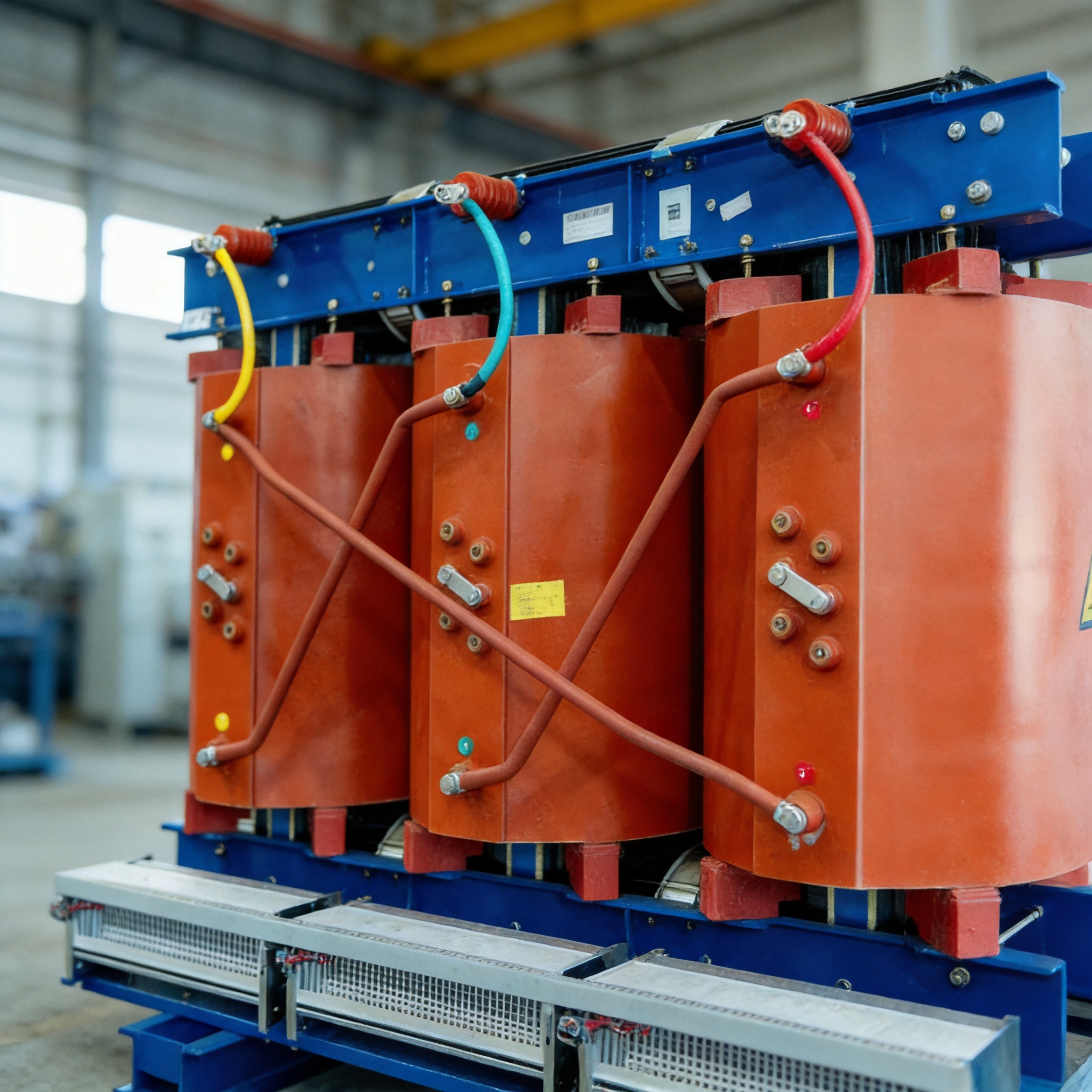
Follow these steps in order. Each one takes only a few minutes and can be done from documentation before the unit is even delivered.
- Read the nameplate insulation class. Look for the field marked “Insulation Class” or “Insul. Class.” It must read “H” or “180°C.” If it reads “F” or “155°C,” stop — the unit is not H-class regardless of what the sales sheet says.
- Check the rated temperature rise. Find the “Temperature Rise” or “Rise” field. An H-class unit commonly carries a 125 K rise, sometimes 150 K. If the rise is 80 K or 100 K on an H-class nameplate, the design is under-utilizing the insulation — verify with the manufacturer why.
- Confirm the ambient rating. Dry-type transformers are usually rated for a 40°C maximum ambient. Add the rise and the hot-spot gradient to confirm the arithmetic: ambient + rise + gradient must not exceed 180°C.
- Request the insulation system certificate. Ask for the UL 1446 or IEC 60085 system approval document. It lists every component and the tested class. This is the only proof that the whole chain is H-rated.
- Verify standards compliance on the datasheet. For an SCB-type unit, confirm the listing against EN 50588, IEC 60077, UL, and CE as applicable to your market. Insulation class claims that are not backed by one of these frameworks should be treated as marketing text.
For the 30–5000 kVA SCB reference unit, the insulation level is stated separately from the insulation class: 10 kV units are LI75 AC35/AC5, 20 kV units are LI125 AC50/AC5, and 35 kV units are LI170 AC70/AC5. Do not confuse insulation level (impulse and power-frequency withstand) with insulation class (thermal). They are independent ratings.
4. Common Mistakes and How to Fix Them
These three errors account for most field failures where the transformer was believed to be H-class but did not survive.
Mistake 1: Confusing insulation class with temperature rise. Symptom: A buyer selects an H-class unit expecting it to run at 180°C continuously and loads it to the nameplate kVA in a 45°C ambient room. The winding overheats within months. Fix: Treat 180°C as the ceiling, not the operating point. Size the transformer so that ambient + rise + gradient stays at least 15–20 K below 180°C for continuous duty.
Mistake 2: Assuming H-class components equal an H-class system. Symptom: A repair shop rewinds a Class F transformer with H-class magnet wire but reuses the original Class B varnish. The unit passes a spot check but fails the sealed-tube aging test. Fix: Replace the entire insulation system or send the unit back to the original manufacturer. Partial upgrades do not change the thermal class.
Mistake 3: Ignoring enclosure and airflow. Symptom: An H-class transformer installed in a sealed, unventilated room trips its thermal protection in summer even at 60% load. Fix: Confirm the indoor installation meets the airflow requirement for the enclosure type. H-class insulation raises the temperature the insulation can take — it does not remove the heat. Ventilation, clearance, and ambient control still govern the actual winding temperature.
5. FAQ
Is H-class insulation the same as 180°C?
Yes. In IEC 60085 and UL 1446, Class H is defined by a 180°C maximum hottest-spot temperature. The two terms are interchangeable on a nameplate.
Can an H-class transformer run at 180°C all day?
It can reach 180°C at its hottest spot without failing immediately, but continuous operation at the limit consumes the insulation’s design life. Practical designs keep the continuous hottest spot below 180°C so the unit lasts its rated 20-plus years.
Is H-class better than F-class for my project?
Choose H-class when the ambient is above 40°C, when the load includes frequent overloads, or when the transformer is hard to replace. Choose F-class when the site is climate-controlled and the load is steady — it costs less and is sufficient.
How do I know the insulation class if the nameplate is missing?
You cannot determine it by inspection alone. Ask the manufacturer for the insulation system certificate, or have a qualified lab run a sealed-tube aging test per IEC 60085. Do not assume a class based on wire color or varnish appearance.
Does H-class insulation change the transformer’s voltage ratings?
No. Thermal class and voltage class are independent. A 10 kV SCB unit keeps its LI75 AC35/AC5 insulation level whether it is built to Class F or Class H.
For authoritative definitions, see the International Electrotechnical Commission for IEC 60085 and the Underwriters Laboratories for UL 1446 system approval requirements.
Disclosure: This article describes generic insulation-system engineering. No specific manufacturer or product is endorsed. Verify all ratings against the delivered nameplate and the manufacturer’s insulation system certificate before commissioning.

 English
 Français
 Español
 Deutsch