
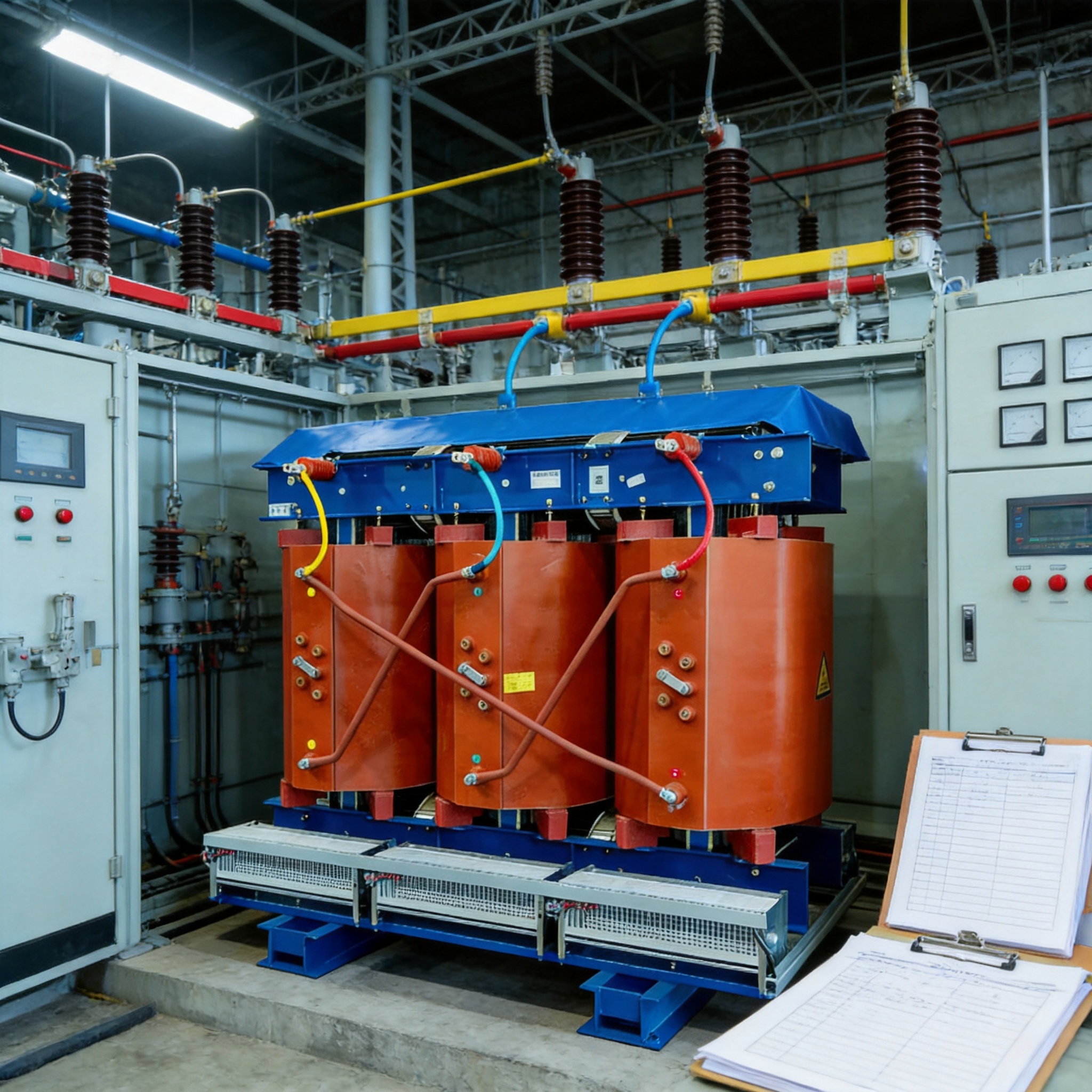
Cast resin transformers embed their windings in solid epoxy, while impregnated dry-type transformers use vacuum-pressure impregnation (VPI) to seal the windings with varnish. Cast resin wins on moisture resistance, fire safety, and short-circuit strength; impregnated units win on upfront cost and repairability. For most indoor commercial projects in the 30–5000 kVA range, cast resin is the safer default unless budget or a humid-free, well-ventilated location pushes you toward VPI.
By the end of this article, you will be able to pick the right type for a specific installation by checking four variables: moisture exposure, fault-current risk, budget, and repair access.
Table of Contents
How Each Type Works
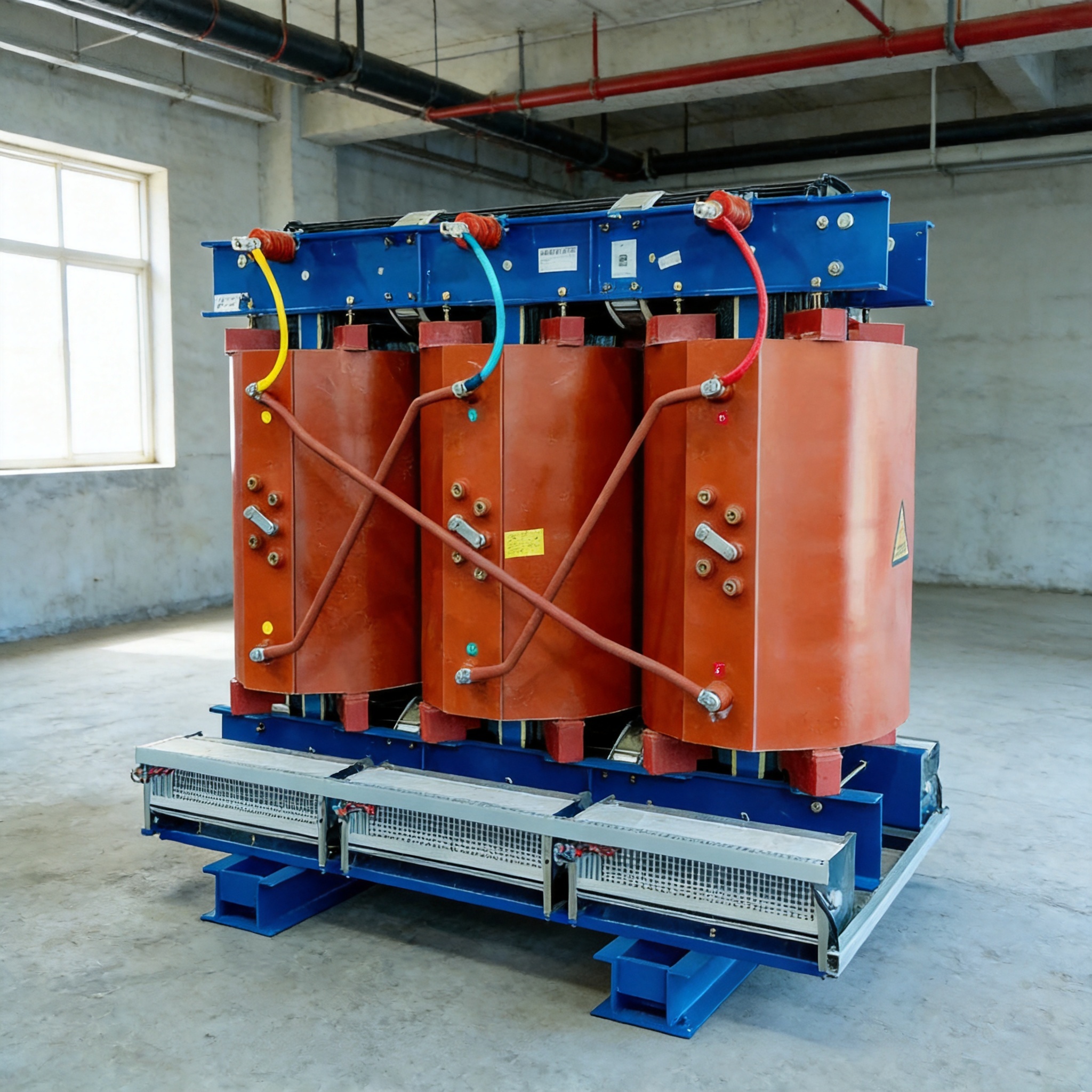
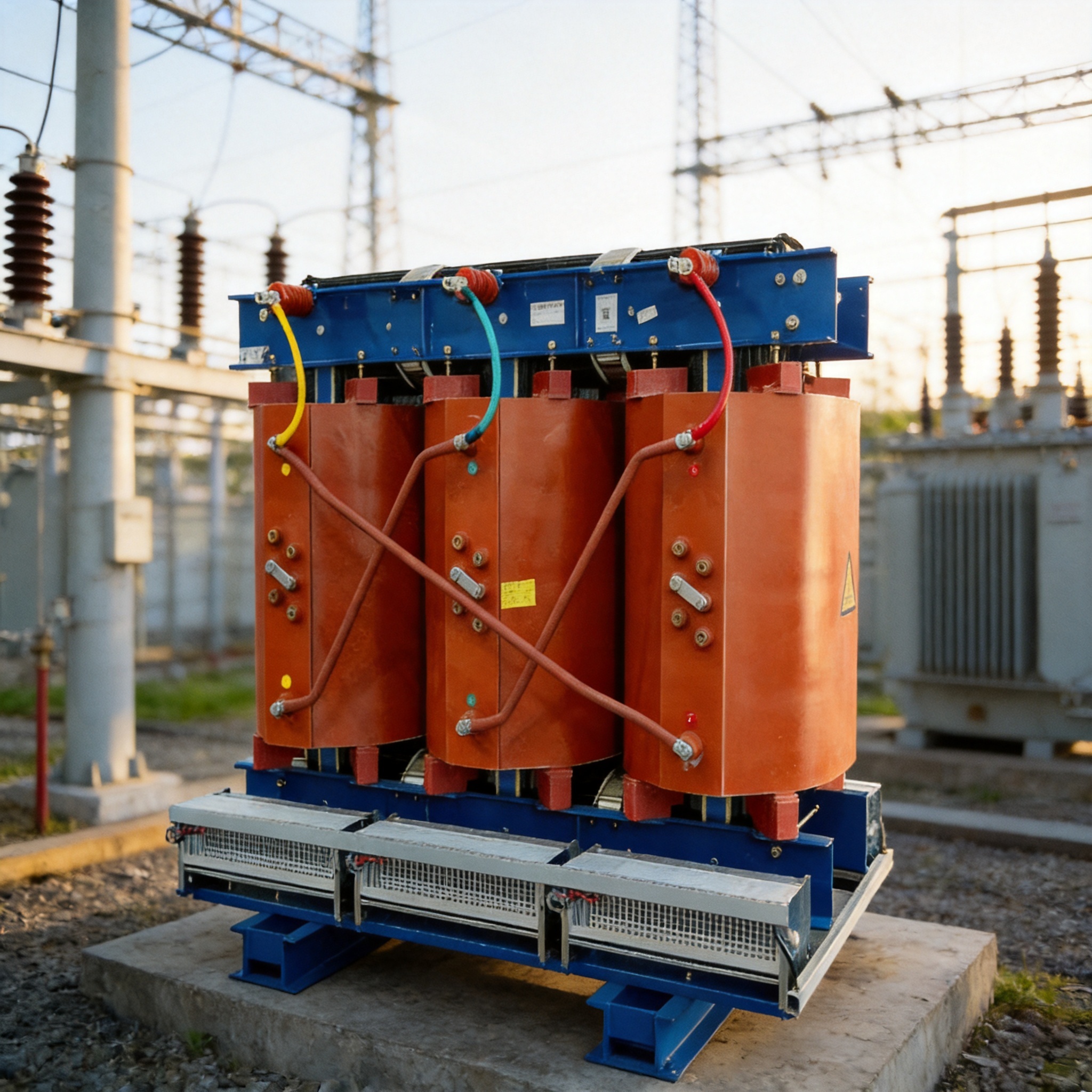
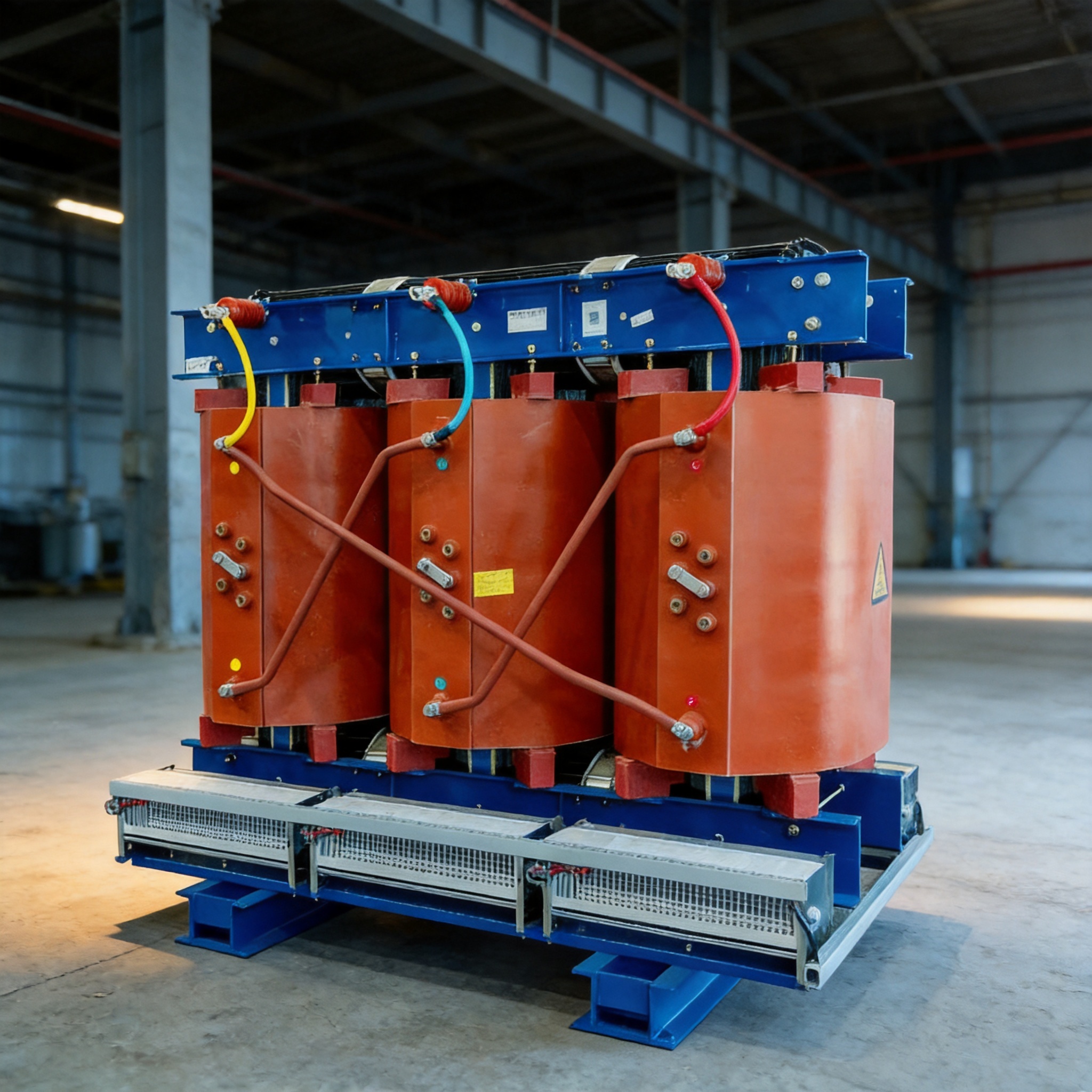
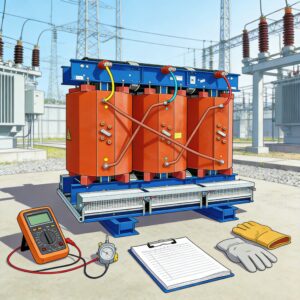
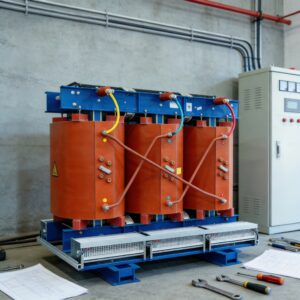
In a cast resin transformer, the high-voltage and low-voltage windings are placed in a mold and encapsulated in epoxy resin under vacuum. The resin cures into a solid shell that blocks moisture, dust, and most contaminants from reaching the copper or aluminum conductors. This solid barrier is why cast resin units tolerate humid, dirty, or coastal environments and why they resist mechanical stress during a short circuit.
In an impregnated dry-type transformer, the windings are pre-dried, then submerged in insulating varnish inside a vacuum chamber. Pressure forces the varnish into the gaps between turns and layers, and heat cures it. The result is a sealed but not fully encapsulated winding — the varnish coats and bonds the conductors, but the assembly still relies on air and insulation barriers for dielectric strength.
Both types are air-cooled and contain no liquid dielectric, which is why both qualify as “dry-type.” The SCB model family covers indoor installation, 30–5000 kVA capacity, high voltages from 6 kV to 35 kV, low voltages from 0.38 kV to 0.72 kV, impedance of 4–10%, insulation class F or H, and connection groups Dyn11 or Yyn0. Insulation levels follow the standard pattern: 10 kV units at LI75 AC35/AC5, 20 kV at LI125 AC50/AC5, and 35 kV at LI170 AC70/AC5, with compliance to EN 50588, IEC 60076, UL, and CE.
The practical difference comes down to one question: does the winding need a solid physical shield, or is a varnish seal enough for the room it sits in?
How to Choose: Step-by-Step
Work through these steps in order. Stop at the first step that gives a clear answer.
- Check the moisture exposure. If the room has humidity above roughly 70% sustained, condensation cycles, washdown, or coastal salt air, choose cast resin. VPI windings can absorb moisture over time and lose dielectric strength.
- Check the fault-current level. If the available short-circuit current is high or the upstream protection is slow, choose cast resin. The solid epoxy shell mechanically restrains winding movement during a fault.
- Check the fire and ventilation requirements. If the unit sits inside a building with limited ventilation or strict fire load limits, cast resin is the safer choice because the epoxy is self-extinguishing and emits less smoke.
- Check the budget and repair plan. If upfront cost is the binding constraint and the room is dry, clean, and well ventilated, an impregnated unit costs less. Accept that a failed winding usually means replacement, not repair.
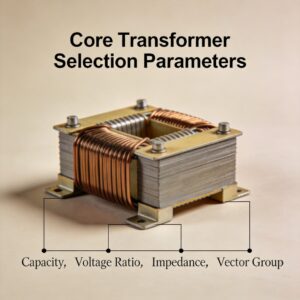
- Confirm the electrical spec fits both options. Verify capacity (30–5000 kVA), high voltage (6–35 kV), low voltage (0.38–0.72 kV), impedance (4–10%), insulation class (F or H), and connection group (Dyn11 or Yyn0) before comparing price.
- Verify standards compliance. Confirm the chosen unit meets EN 50588, IEC 60076, UL, and CE for your region. Non-compliant units void warranties and fail inspection.
If steps 1 through 3 all point to “dry and clean,” the deciding factor is step 4 — and at that point, cost and repair access decide it.
Performance and Cost Comparison Table
The table below maps each decision variable to a concrete outcome. Use it after you finish the steps above to confirm your choice.
| Factor | Cast Resin | Impregnated (VPI) |
|---|---|---|
| Moisture resistance | High — solid epoxy barrier | Moderate — varnish seal only |
| Short-circuit strength | High — windings mechanically locked | Moderate — relies on bracing |
| Fire behavior | Self-extinguishing, low smoke | Combustible varnish, higher smoke |
| Upfront cost | Higher | Lower |
| Repairability | Low — winding replacement typical | Higher — partial re-varnish possible |
| Typical environment | Humid, dirty, coastal, indoor | Dry, clean, ventilated, indoor |
| Capacity range | 30–5000 kVA | 30–5000 kVA |
| Insulation class | F or H | F or H |
Notice that capacity, voltage, impedance, and insulation class are identical across both types — the SCB platform supports 6–35 kV high voltage, 0.38–0.72 kV low voltage, 4–10% impedance, and Dyn11 or Yyn0 connection groups either way. The real split is environmental and financial, not electrical.
Common Mistakes and Fixes
These are the errors that show up most often in real installations. Each one has a symptom you can check and a fix you can apply.
- Mistake 1: Choosing VPI for a humid room to save money. Symptom: insulation resistance readings drop month over month, and the unit trips on earth fault after a wet season. Fix: replace with cast resin, or install a dehumidifier and verify the room stays below 70% relative humidity year-round.
- Mistake 2: Assuming cast resin never needs maintenance. Symptom: dust builds on the epoxy surface and creates a tracking path. Fix: wipe the winding surfaces and bushings on the schedule in the manual; the epoxy resists moisture but not accumulated contamination.
- Mistake 3: Ignoring short-circuit current when selecting VPI. Symptom: winding deformation or turn-to-turn failure after a downstream fault. Fix: recalculate available fault current, upgrade upstream protection, or switch to cast resin if the fault level exceeds the VPI unit’s rating.
- Mistake 4: Mixing connection groups across a parallel bank. Symptom: circulating current between units and unexplained heating. Fix: confirm both units use the same connection group (Dyn11 or Yyn0) and the same impedance before paralleling.
- Mistake 5: Skipping standards verification. Symptom: inspection failure or voided warranty. Fix: require EN 50588, IEC 60076, UL, and CE documentation before purchase.
Each fix is checkable: you can measure humidity, read insulation resistance, recalculate fault current, and inspect nameplates. None of these require guesswork.
FAQ
Which type lasts longer? In a dry, clean room, both can reach similar service life. In a humid or contaminated room, cast resin lasts longer because moisture cannot reach the winding. The room, not the transformer, usually sets the lifespan.
Can I install either type outdoors? The reference specification lists indoor installation for the SCB platform. For outdoor use, you need an enclosure rated for the environment regardless of type — and cast resin is the safer starting point because it tolerates moisture better.
Is cast resin always more expensive? The upfront purchase cost is higher. Over the life of the unit, the gap narrows if the VPI unit needs early replacement or added room dehumidification. Compare total cost over the expected service period, not just the invoice.
What capacity range do both cover? Both cover 30–5000 kVA with high voltage from 6 kV to 35 kV and low voltage from 0.38 kV to 0.72 kV. Non-standard customization is supported for both.
Which one should I pick for a basement electrical room? If the basement is dry and ventilated, either works — pick on budget. If it floods, condenses, or smells damp, choose cast resin. When in doubt, consult a qualified professional to measure the actual humidity and fault current before ordering.
You now have a repeatable method: check moisture, check fault current, check fire and ventilation, then check budget and repair access. Run the four checks, confirm the electrical spec against the SCB parameters, and the decision follows from the data rather than from a sales pitch.

 English
 Français
 Español
 Deutsch