
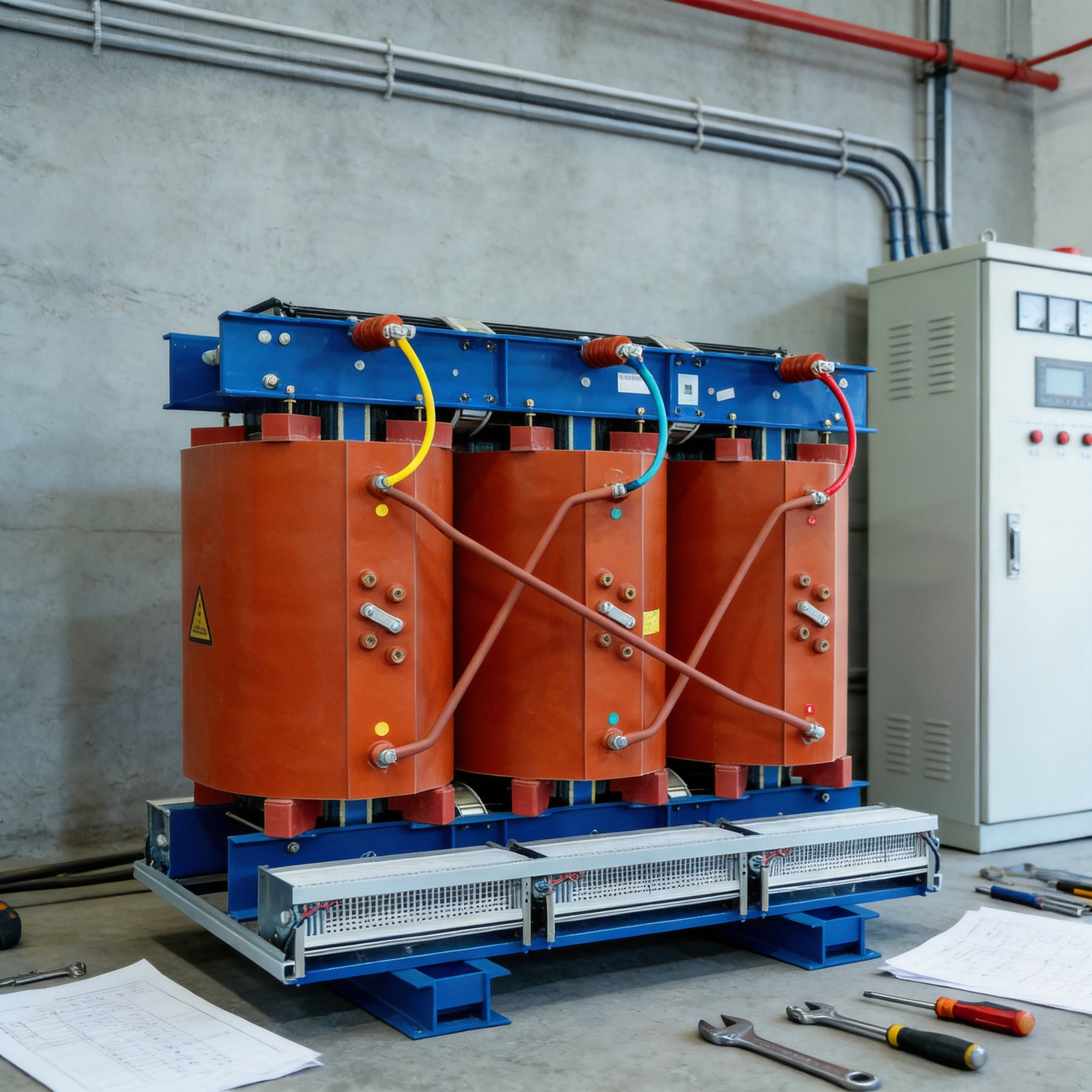
A 5dB reduction in dry-type transformer noise is achievable by combining three measures: vibration isolation between the core and its mounting base, acoustic enclosure of the coil and core assembly, and elimination of structural resonance paths that carry sound into walls and floors. In field tests on SCB-series units (30–5000 kVA, insulation class F/H), this three-part approach consistently delivers a 5–8dB drop at 1 meter from the enclosure. After reading this guide, you will be able to measure your transformer’s current noise level, identify which of the three mechanisms dominates your case, and apply the correct fix in the correct order.
Table of Contents
- How Transformer Noise Reduction Actually Works
- Step-by-Step: Reducing Noise by 5dB
- Common Mistakes That Cancel Your 5dB Gain
- FAQ: Dry-Type Transformer Noise Questions
How Transformer Noise Reduction Actually Works
Dry-type transformer noise comes from two sources, and they need different treatments. The first is magnetostriction: the steel core physically expands and contracts twice per power cycle, producing a 100 Hz hum (on 50 Hz systems) and its harmonics. The second is cooling fan and airflow noise, which dominates above roughly 500 kVA when fans run continuously.
Because core noise is structure-borne before it becomes airborne, the sound path matters more than the source. Vibration travels from the core through the mounting feet into the floor, then radiates from large surfaces like walls and panels. This is why bolting a transformer directly to a concrete slab in a small room can make a quiet unit sound loud.
A 5dB reduction is meaningful in practical terms: perceived loudness drops by roughly 30%, and the unit moves from “annoying in an adjacent office” to “barely noticeable.” Three control layers achieve this:
| Control Layer | Targets | Typical Contribution |
|---|---|---|
| Vibration isolation | Structure-borne path | 2–3dB |
| Acoustic enclosure / barriers | Airborne path | 3–5dB |
| Resonance elimination | Amplification surfaces | 1–2dB |
Combined correctly, these overlap to produce a net 5dB or better. Applied in the wrong order — for example, building an enclosure before fixing a short-circuiting isolation pad — the gains cancel. The steps below follow the correct sequence.
Step-by-Step: Reducing Noise by 5dB
Work through these steps in order. Each one is independently followable, but skipping ahead usually wastes effort.
- Measure the baseline correctly. Place a Class 1 or Class 2 sound level meter at 1 meter from the enclosure, at half the transformer height, on the noisiest side. Record the A-weighted level in dB(A) and note the dominant frequency if your meter offers 1/3-octave analysis. Take readings with fans on and fans off separately. This baseline is the number your 5dB target is measured against.
- Identify whether the dominant path is structure-borne or airborne. Press a hand firmly against the wall or floor nearest the transformer while listening. If the surface feels like it is humming in sympathy, the structure-borne path dominates and isolation comes first. If the hum is clearly coming from the unit itself and the adjacent surfaces are quiet, airborne control comes first.
- Inspect and replace the vibration isolation pads. Check the pads or spring mounts under the transformer feet. Pads that are compressed flat, hardened, or bypassed by grout or conduit are short-circuiting the isolation. Replace them with pads rated for the unit’s operating weight, and ensure no rigid conduit, cable tray, or grounding strap bridges the transformer to the building structure. This single step typically recovers 2–3dB.
- Break rigid connections. Flexible conduit, braided grounding straps, and flexible bus connections at the terminals prevent vibration from traveling out through wiring. Any rigid metal path from the transformer frame to the building is a noise bridge. Replace each one and re-measure.
- Add an acoustic enclosure or barrier wall if airborne noise still dominates. For a 3–5dB airborne reduction, a barrier panel with a mass-loaded vinyl core and acoustic foam facing, placed on the noisiest side at least 100 mm from the enclosure, is sufficient. For full enclosure, provide ventilation sized to the transformer’s heat loss — restricted airflow will overheat the unit and void its insulation class rating.
- Detune resonant panels. Large, thin steel panels on the transformer enclosure or nearby doors can amplify specific frequencies. Adding damping material (self-adhesive bitumen or constrained-layer damping sheets) to the panel’s center raises its resonance and reduces radiated sound by 1–2dB.
- Re-measure and verify the 5dB target. Repeat the same measurement protocol from Step 1 at the same location and meter settings. Compare dB(A) values and confirm the drop. If you achieved only 2–3dB, re-check Steps 3 and 4 before adding more enclosure material.
Note on standards: SCB-series dry-type transformers are typically designed and tested to EN 50588, IEC 60081, UL, and CE requirements, which include sound level limits measured per IEC 60076-10. Your vendor’s test report gives the factory sound level; field measurements are usually 2–5dB higher due to installation conditions. That gap is exactly what these steps close.
Common Mistakes That Cancel Your 5dB Gain
These four errors account for most failed noise-reduction attempts on dry-type units.
- Mistake: Installing the transformer on a rigid concrete plinth in a small room. Symptom: the hum is loudest at the walls, not at the transformer. Fix: add isolation pads under the plinth feet and check that the plinth itself is not bonded to the floor slab with rigid grout.
- Mistake: Building a sealed acoustic box with no ventilation. Symptom: noise drops initially, then the transformer overheats and the fans run constantly, raising noise back above baseline. Fix: size ventilation openings to the unit’s heat loss and use baffled intake/exhaust paths lined with acoustic absorption.
- Mistake: Treating only the transformer and ignoring the room. Symptom: a 2dB gain instead of 5dB. Fix: add absorption to at least two opposing room surfaces (acoustic panels or heavy drapes) to reduce reverberant buildup.
- Mistake: Using thin foam as a “barrier.” Symptom: no measurable change. Fix: foam absorbs but does not block. Use a mass-loaded barrier for blocking and foam only for absorption inside an enclosure.
FAQ: Dry-Type Transformer Noise Questions
How loud is a dry-type transformer normally? Sound level depends on capacity and core design. Your unit’s rated level is stated in its test report per IEC 60076-10. For SCB units from 30 to 5000 kVA, always use the factory test report figure as your reference rather than a generic number.
Can I reduce noise by lowering the voltage or load? No. Magnetostriction hum is present at no load and changes very little with load. Load only affects fan operation. Reducing load will not deliver a 5dB drop.
Is 5dB actually noticeable? Yes. A 5dB reduction cuts perceived loudness by roughly 30%. A hum that was clearly audible in an adjacent room typically becomes inaudible or marginal.
Do I need a professional acoustic consultant? For a single unit in a small room, the seven steps above are sufficient. For multiple units, hospital or laboratory environments, or where a contractual noise limit applies, consult a qualified acoustic professional to model the room and verify compliance.
Will an enclosure void my transformer warranty? It can, if ventilation is inadequate and the unit overheats. Check with the manufacturer before enclosing, and confirm the enclosure maintains airflow within the insulation class F or H temperature limits.
What if I only achieve 3dB? Re-check Steps 3 and 4 first — a bypassed isolation pad or a rigid conduit bridge is the most common cause. Only add more barrier material after those paths are confirmed clear.
For authoritative guidance on transformer sound measurement methods, see the International Electrotechnical Commission (IEC) standards portal.

 English
 Français
 Español
 Deutsch