

Wann haben Sie zuletzt die stillen Arbeitstiere der Elektrotechnik so richtig gewürdigt? Versteckt in Industrieanlagen sorgen Trockentransformatoren unauffällig für eine zuverlässige Stromverteilung und sind daher unverzichtbar, werden aber oft übersehen. Man nimmt ihre Existenz schnell als selbstverständlich hin, bis eine Störung den Betrieb unterbricht. Die Kenntnis der wichtigsten Komponenten von Trockentransformatoren hilft nicht nur, solche Ausfälle zu vermeiden, sondern verbessert auch die Gesamtleistung des Systems.
Stellen Sie sich ein Orchester vor, in dem jeder Musiker eine entscheidende Rolle dabei spielt, eine Symphonie zum Leben zu erwecken. Genauso muss jede Komponente eines Trockentransformators einwandfrei funktionieren, um optimale Effizienz und Sicherheit zu gewährleisten. Vom Kern und den Wicklungen bis hin zur Isolierung und dem Gehäuse ist jedes Teil sorgfältig konstruiert, um elektrischen, thermischen und mechanischen Belastungen standzuhalten. Durch das Verständnis dieser integralen Elemente können Anlagenmanager und Ingenieure fundierte Entscheidungen treffen, die die Lebensdauer und Zuverlässigkeit erhöhen und einen reibungslosen Betrieb sicherstellen.

Kern: Das Rückgrat eines Trockentransformators
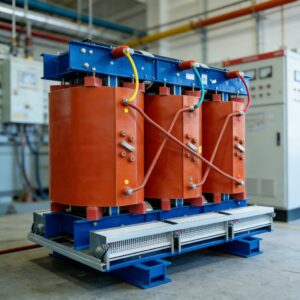
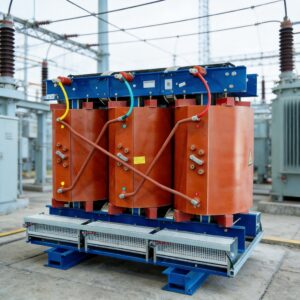
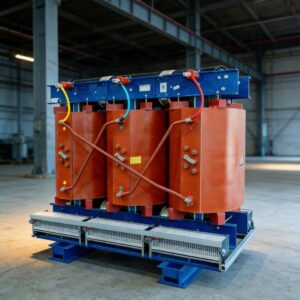
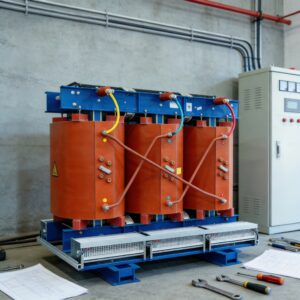
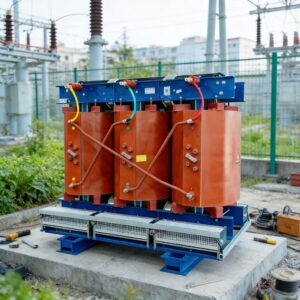
Das Herzstück jedes Trockentransformators ist sein Kern, der präzise konstruiert ist, um einen kontrollierten Pfad für den magnetischen Fluss zu gewährleisten. Typischerweise besteht der Kern aus dünnen, hochwertigen Siliziumstahlblechen. Seine Hauptfunktion ist es, die magnetischen Feldlinien zwischen Primär- und Sekundärwicklung zu bündeln und zu führen. Durch das Stapeln dieser Bleche mit präzisen Isolierbeschichtungen reduzieren die Hersteller Wirbelstromverluste erheblich, verbessern die Energieeffizienz und begrenzen die Wärmeentwicklung. Die Kerngeometrie – ob EI-, UI- oder C-Form – beeinflusst ebenfalls die Effektivität des Magnetkreises und sorgt für ein ausgewogenes Verhältnis von Kompaktheit, Gewicht und magnetischer Leistung. Fortschrittliche Fertigungstechniken wie Präzisionsstanzen, Laserschneiden und ultradünne Bleche minimieren zusätzlich Hystereseverluste. Die Ausrichtung der Faserrichtung im Siliziumstahl gewährleistet einen gleichmäßigen magnetischen Fluss, und die sorgfältige Montage mit hohem Stapeldruck sichert die mechanische Stabilität auch bei hohen Einschaltströmen und Kurzschlüssen. Die Anzahl der Schenkel (2, 3 oder 5) bestimmt die Phasenkonfiguration und -balance und beeinflusst somit die Leistung des Transformators in Mehrphasenanwendungen.
Ebenso wichtig für die Leistungsfähigkeit des Transformators ist die präzise Kontrolle der Kernverluste und des thermischen Verhaltens. Kernverluste, vor allem Hysterese- und Restwirbelströme, werden durch spezielle Siliziumlegierungen und eine optimale Blechdicke minimiert, die sorgfältig auf die Betriebsfrequenz und den Temperaturbereich abgestimmt ist. Der Stapelfaktor des Kerns, der das Verhältnis von magnetischem Material zu Luftspalten angibt, wird maximiert, um die Flussdichte zu erhöhen und gleichzeitig eine Sättigung zu verhindern. Die Zwischenlagenisolierung des Kerns ist ebenfalls entscheidend, da sie Ausgleichsströme zwischen den Blechen verhindert und somit Erwärmung und Geräusche reduziert. Strenge Fertigungstoleranzen gewährleisten bei der Montage einen gleichmäßigen Anpressdruck und verhindern Vibrationen und mechanischen Verschleiß. Darüber hinaus bietet die Erdung des Kernrahmens einen sicheren Pfad für Fehlerströme und reduziert die Streukapazität. Als eine der wichtigsten Komponenten von Trockentransformatoren bestimmen die Materialeigenschaften des Kerns, seine Geometrie und die Montagegenauigkeit gemeinsam die thermische Stabilität, die Lebensdauer und die Zuverlässigkeit des Transformators in anspruchsvollen industriellen Umgebungen.
Isoliermaterialien: Schutz vor elektrischen Durchschlägen
Bei Trockentransformatoren sind Isoliermaterialien unerlässlich, um die elektrische Isolation zwischen den Wicklungen, zwischen Wicklung und Kern sowie zwischen den aktiven Teilen und dem Gehäuse aufrechtzuerhalten. Diese Isoliersysteme müssen hohen Spannungen, thermischen Belastungen, Feuchtigkeit und Umweltschadstoffen standhalten, ohne sich zu zersetzen oder Teilentladungen zu verursachen. Hersteller verwenden häufig mit Lack imprägnierte Glasfaser-Epoxidharz-Verbundwerkstoffe, die eine außergewöhnliche Durchschlagsfestigkeit und mechanische Belastbarkeit bieten. Isoliermaterialien der Klassen F (155 °C) und H (180 °C), wie beispielsweise Nomex-Papier, Glimmer und Silikonharze, werden anhand der Nenntemperaturerhöhung des Transformators und der anwendungsspezifischen Anforderungen ausgewählt. Das Lacktauchverfahren und die Vakuumdruckimprägnierung (VPI) gewährleisten eine gleichmäßige, porenfreie Beschichtung der Wicklungen und reduzieren so das Risiko von Koronaentladungen erheblich. Moderne Duroplaste bieten zudem Flammschutz und verbessern damit die Brandsicherheit der Komponenten von Trockentransformatoren.
Eine adäquate Isolierung verhindert nicht nur katastrophale elektrische Durchschläge, sondern beeinflusst auch die langfristige Zuverlässigkeit und Leistungsfähigkeit. Die Materialien müssen niedrige Wärmeausdehnungskoeffizienten aufweisen, um mechanische Spannungen bei Temperaturwechseln zu minimieren und so Risse oder Delaminationen zu vermeiden. Eine hohe Durchschlagsfestigkeit ist entscheidend, um Kriechströme und Kurzschlüsse, insbesondere in feuchten oder staubigen Umgebungen, zu begrenzen. Qualitätskontrollprüfungen wie Spannungsfestigkeits-, Teilentladungs- und Tangens-Delta-Messungen überprüfen die Integrität der Isolierung, bevor der Transformator das Werk verlässt. Im Betrieb erkennen regelmäßige Infrarot-Thermografie- und Isolationswiderstandsmessungen frühzeitig Anzeichen von Feuchtigkeitseintritt oder Isolationsverschlechterung. Durch die Priorisierung robuster Isolationssysteme stellen Ingenieure sicher, dass Transformatoren sicher arbeiten und auch unter dauerhafter Hochlast ihren maximalen Wirkungsgrad beibehalten.
Kühlsysteme: Temperaturregulierung für optimale Effizienz
Eine effektive Kühlung ist für die Aufrechterhaltung der Leistungsfähigkeit und die Verlängerung der Lebensdauer von Trockentransformatoren unerlässlich. Beim Stromfluss durch die Wicklungen entsteht ohmsche Erwärmung, wodurch die Temperatur der Leiter und des Kerns ansteigt. Ohne ausreichende Wärmeabfuhr beschleunigen erhöhte Temperaturen die Alterung der Isolierung und können zu einem thermischen Durchgehen führen. basieren typischerweise auf Designmerkmalen Zur passiven Wärmeableitung können beispielsweise offene, belüftete Gehäuse oder hermetisch abgedichtete Spulen verwendet werden. Der Einsatz von Lüftungskanälen, Kühlrippen und optimierten Oberflächen fördert die natürliche Konvektion, während spezielle Transformatorgeometrien eine gleichmäßige Luftströmung um die Wicklungen und den Magnetkern gewährleisten. Bei Anwendungen mit hoher Kapazität oder in rauen Umgebungen können zusätzlich Ventilatoren oder Gebläse zur Zwangslüftung eingesetzt werden, um Spitzenlasten zu bewältigen.
Fortschrittliche thermische Simulationswerkzeuge unterstützen Ingenieure bei der Optimierung von Kühlstrategien, der Vorhersage von Hotspots und der Verlegung von Luftkanälen. Einige Konstruktionen ergänzen Luftkühlung Mit hitzebeständigen Isolierfüllstoffen oder wärmeleitenden Vergussmassen wird die Wärme effizienter vom Kern und den Spulen abgeführt. Regelmäßige Wartung, einschließlich der periodischen Reinigung der Lufteinlassfilter und der Entfernung von Ablagerungen aus den Kühlkanälen, erhält den Luftstrom und die thermische Leistung aufrecht. Zusätzlich liefert die kontinuierliche Temperaturüberwachung mittels integrierter Thermoelemente oder RTD-Sensoren Echtzeitinformationen über die Innentemperaturen und löst Alarme aus oder passt die Lüfterdrehzahl an, sobald Schwellenwerte überschritten werden. Durch eine robuste und proaktive Kühlung können Anlagenbetreiber die Lebensdauer des Transformators verlängern, ungeplante Ausfallzeiten minimieren und die Energieeffizienz unter verschiedenen Betriebslasten aufrechterhalten. Effektive Kühlstrategien sind entscheidend für den Erhalt der Integrität der Komponenten von Trockentransformatoren und beeinflussen direkt deren Zuverlässigkeit und Belastbarkeit.
Überwachungs- und Steuerungssysteme: Gewährleistung der Betriebssicherheit
Einbeziehung fortschrittlicher Überwachungstechnologien Systeme in Trockentransformatoren Das System wandelt passive Anlagen in intelligente Systeme um, die Selbstdiagnose und vorausschauende Wartung ermöglichen. Temperatursensoren, darunter Widerstandsthermometer (RTDs) und Tauchhülsen, liefern kontinuierliche Messwerte der Wicklungs- und Kerntemperaturen und erkennen anormale Temperaturschwankungen, bevor diese zu kostspieligen Ausfällen führen. Teilentladungsdetektoren (TE-Detektoren), akustische Sensoren und Feuchtigkeitssensoren überwachen kontinuierlich den Zustand der Isolation und warnen die Bediener vor beginnender dielektrischer Verschlechterung. Druckschalter, die bei Trockentransformatoren seltener eingesetzt werden, können den internen Luftdruck in geschlossenen Bauformen überwachen. Zusammen bilden diese Instrumente ein umfassendes Diagnosenetzwerk, das vor Überhitzung, Koronaentladungen und Feuchtigkeitseintritt schützt.
Steuerungssysteme nutzen die Daten dieser Sensoren, um Korrekturmaßnahmen zu automatisieren, Lüfter anzusteuern, die Lastverteilung anzupassen oder Alarme auszulösen. Schutzrelais schützen vor Überlastung, Kurzschlüssen und Erdschlüssen und trennen den Transformator vom Netz, sobald Schwellenwerte überschritten werden. Integrierte Bedienfelder oder SCADA-Schnittstellen ermöglichen die zentrale Überwachung und erlauben es Anlagenmanagern, Leistungstrends zu visualisieren, Wartungswarnungen zu generieren und historische Daten für die Berichterstattung zu protokollieren. Moderne digitale Steuerungen verfügen über integrierte Analyse- und Machine-Learning-Algorithmen, die selbst geringfügige Leistungsänderungen erkennen und so eine vorausschauende Wartung ermöglichen. Durch den Einsatz ausgefeilter Überwachungs- und Steuerungsstrategien können Ingenieure die Betriebszeit maximieren, den Energieverbrauch optimieren und den sicheren Betrieb ihrer Trockentransformatorkomponenten über deren gesamte Lebensdauer gewährleisten.
Fazit: Leistungsoptimierung durch Komponentenverständnis
Das Verständnis der Funktion jeder einzelnen Komponente eines Trockentransformators – vom Magnetkern und den Isoliermaterialien bis hin zu Kühlsystemen und fortschrittlicher Überwachung – ermöglicht es Ingenieuren, Leistung, Zuverlässigkeit und Sicherheit zu optimieren. Durch die Auswahl hochwertiger Bauteile und die Einhaltung bewährter Konstruktionspraktiken können Anlagenbetreiber Ausfallzeiten minimieren und die Lebensdauer des Transformators verlängern.
Regelmäßige Inspektion, vorbeugende Wartung und Echtzeitdiagnose verbessern die Betriebsstabilität zusätzlich. Durch die Anwendung dieser Strategien wird sichergestellt, dass Ihre Trockentransformatorkomponenten auch in den kommenden Jahren einwandfrei funktionieren, eine unterbrechungsfreie Stromversorgung gewährleisten und kritische Industrieprozesse unterstützen.

 English
 Français
 Español
 Deutsch