
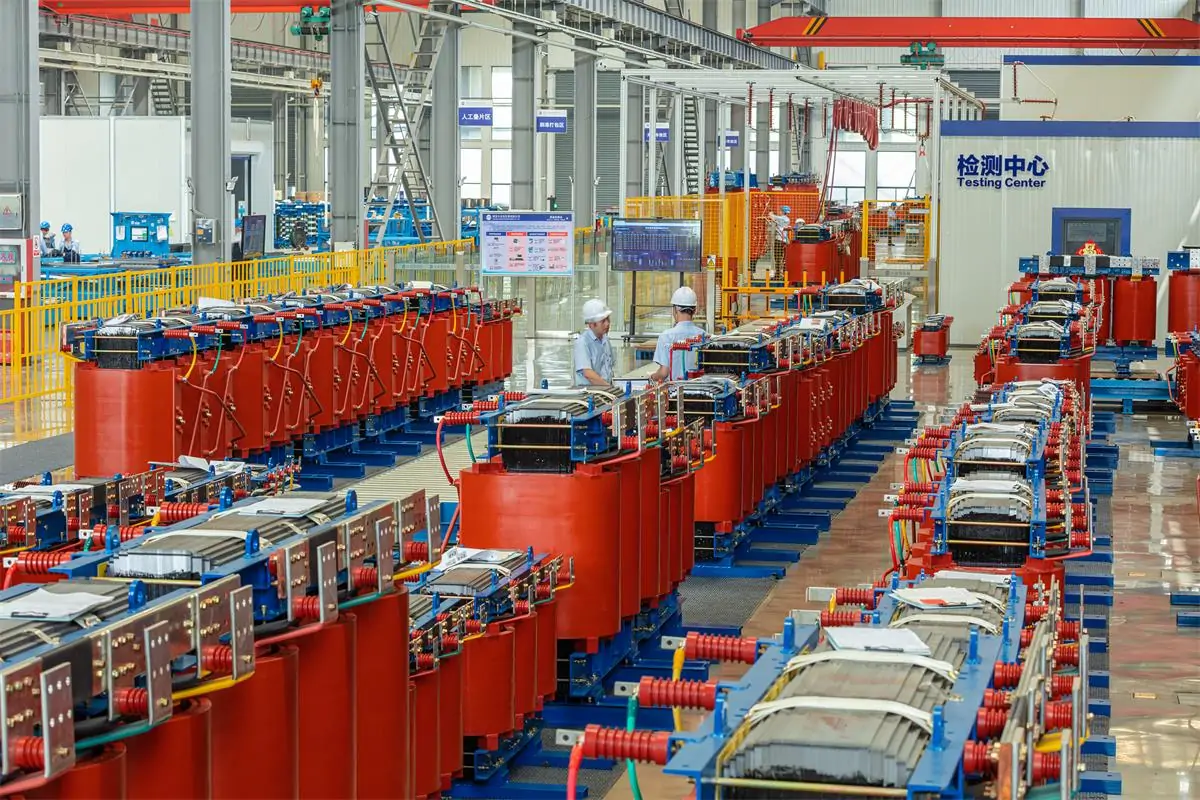
Der Trockentransformator ist ein unverzichtbares elektrisches Gerät, das Energie mittels elektromagnetischer Induktion zwischen Stromkreisen überträgt. Er spielt eine entscheidende Rolle bei der Energieübertragung und -verteilung, indem er die Spannung an unterschiedliche Anwendungsanforderungen anpasst. Durch Erhöhen oder Verringern der Spannung tragen Transformatoren dazu bei, Energieverluste zu reduzieren und eine effiziente Stromversorgung über große Entfernungen zu gewährleisten.
Neben großflächigen Stromversorgungssystemen sind Transformatoren weit verbreitet in elektronischen Geräten Um eine stabile und geeignete Spannung für die Komponenten bereitzustellen, wird ein sicherer und zuverlässiger Betrieb gewährleistet, wodurch Transformatoren zu einem unverzichtbaren Bestandteil der modernen elektrischen Infrastruktur werden.

Arten von Transformatoren
Transformatoren lassen sich im Allgemeinen anhand ihrer Isolations- und Kühlmethoden kategorisieren. Obwohl alle Transformatoren Energie zwischen Stromkreisen übertragen, variiert ihre Bauweise je nach Anwendungsbedingungen.
Ölgefüllte Transformatoren
Ölgefüllte Transformatoren Die Wicklungen werden mit Isolieröl umhüllt und gekühlt.. Das Öl hilft, die während des Betriebs entstehende Wärme abzuleiten und bietet Schutz vor elektrischen Fehlern.
Diese Transformatoren eignen sich hervorragend für anspruchsvolle Anwendungen und raue Umgebungen. Sie werden häufig im Freien installiert, beispielsweise in Umspannwerken und Kraftwerken, wo hohe Leistung und Langlebigkeit erforderlich sind. Das Öl schützt zudem die internen Komponenten vor Feuchtigkeit und Verunreinigungen.
Allerdings erfordern ölgefüllte Transformatoren regelmäßige Wartungsarbeiten, einschließlich Inspektionen auf Öllecks, was Umwelt- und Sicherheitsrisiken bergen kann.
Trockentransformatoren
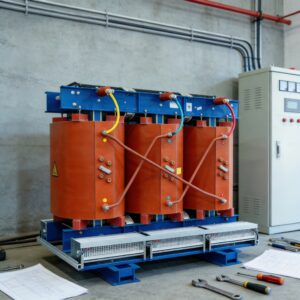
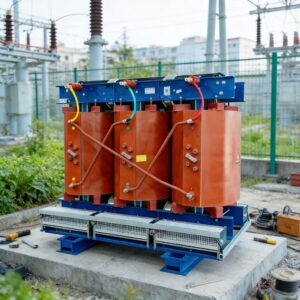
Trockentransformatoren nutzen Luft oder Gas anstelle von Öl als Kühlmedium. Sie sind typischerweise in Schutzgehäusen eingeschlossen, was die Sicherheit erhöht und das Risiko elektrischer Fehler verringert.
Diese Transformatoren werden hauptsächlich in Innenräumen eingesetzt, insbesondere dort, wo Brandschutz und Reinheit höchste Priorität haben. Da sie kein Öl enthalten, besteht kein Risiko von Leckagen und sie sind weniger anfällig für Umweltverschmutzungen.
Trockentransformatoren werden häufig in Krankenhäusern, Schulen, Bürogebäuden und Gewerbebetrieben eingesetzt, wo geringer Wartungsaufwand und hohe Sicherheitsstandards erforderlich sind.
Ölgekühlte Trockentransformatoren
Ein ölgekühlter Trockentransformator vereint die Vorteile von ölgefüllten und Trockentransformatoren. In diesem Hybridsystem wird Öl kontrolliert eingesetzt, um die Kühlleistung zu verbessern und gleichzeitig viele der Sicherheitsvorteile von Trockentransformatoren zu erhalten.
Diese innovative Konstruktion bietet eine ausgewogene Lösung für die modernen Anforderungen an die Stromverteilung.
Wesentliche Merkmale
Effizientes Kühlsystem
Öl dient als Kühlmedium zur Verbesserung der Wärmeableitung. Dies steigert die Betriebseffizienz und ermöglicht dem Transformator, höhere Lasten bei gleichzeitig stabiler Temperatur zu bewältigen.
Verbesserte Leistung und Zuverlässigkeit
Die Kombination verschiedener Kühlmethoden reduziert thermische Belastungen und Vibrationen und führt so zu einem stabileren und zuverlässigeren Betrieb. Dies verlängert die Lebensdauer des Transformators.
Energie-Effizienz
Eine bessere Kühlung reduziert Energieverluste, verbessert die Gesamteffizienz und senkt langfristig die Betriebskosten.
Umweltfreundliches Design
Im Vergleich zu herkömmlichen ölgefüllten Transformatoren verbraucht dieser Typ deutlich weniger Öl. Dies reduziert Umweltrisiken und unterstützt Nachhaltigkeitsziele.
Vorteile von ölgekühlten Trockentransformatoren
1. Verbesserte Kühlleistung
Diese Transformatoren bei niedrigeren Temperaturen arbeiten im Vergleich zu luftgekühlten Trockensystemen. Niedrigere Temperaturen verringern die Alterung der Isolierung und verlängern die Lebensdauer der Geräte.
2. Hohe Stabilität und geringe Belastung
Stabile Betriebstemperaturen minimieren mechanische und thermische Belastungen und gewährleisten so eine gleichbleibende Leistung auch unter anspruchsvollen Bedingungen.
3. Verbesserte Sicherheit
Durch den reduzierten Ölgehalt ist das Risiko von Bränden und Umweltschäden deutlich geringer. Diese Transformatoren eignen sich für explosionsgefährdete oder sensible Bereiche, einschließlich solcher mit strengen Brandschutzauflagen.
4. Umweltvorteile
Geringerer Ölverbrauch bedeutet ein reduziertes Risiko von Leckagen und Umweltverschmutzung. Viele Komponenten sind recycelbar und tragen so zu einer nachhaltigen Entwicklung und einem reduzierten CO₂-Fußabdruck bei.
5. Kosteneffizienz
Obwohl die anfänglichen Investitionskosten höher sein können, werden langfristige Einsparungen durch geringere Wartungskosten, verbesserte Effizienz und längere Lebensdauer erzielt.
Anwendungen
Ölgekühlte Trockentransformatoren sind vielseitig und finden in verschiedenen Branchen breite Anwendung:
Kommerzielle Gebäude
Ideal für den Innenbereich in Bürogebäuden, Einkaufszentren und öffentlichen Einrichtungen, wo Sicherheit und Platzeffizienz wichtig sind.
Industrielle Einrichtungen
Sie liefern zuverlässige und effiziente Energie für Fertigungs-, Bergbau- und Automatisierungssysteme. Dank ihrer Fähigkeit, hohe Lasten zu bewältigen, eignen sie sich für anspruchsvolle Anwendungen.
Rechenzentren
Gewährleisten Sie eine stabile und unterbrechungsfreie Stromversorgung bei minimalem Brandrisiko und unterstützen Sie so die kritische IT-Infrastruktur.
Krankenhäuser
Sie bieten hohe Zuverlässigkeit und Sicherheit, die für medizinische Umgebungen, in denen eine kontinuierliche Stromversorgung entscheidend ist, unerlässlich sind.
Projekte für erneuerbare Energien
Unterstützung nachhaltiger Energiesysteme wie Wind- und Solarparks durch Effizienzsteigerung und Reduzierung der Umweltbelastung.
Transformatorwirkungsgrad und Bedeutung der Kühlung
Die Effizienz eines Transformators hängt eng mit seinem Kühlsystem zusammen. Eine unzureichende Kühlung kann zu Überhitzung, erhöhten Energieverlusten und potenziellen Geräteausfällen führen.
Ölgekühlte Trockentransformatoren optimieren das Wärmemanagement, gewährleisten eine gleichbleibende Leistung und reduzieren Betriebsrisiken. Die Wahl des richtigen Kühlverfahrens ist entscheidend für die Systemzuverlässigkeit und Kostenminimierung.
In Branchen wie dem Gesundheitswesen und der Datenverarbeitung, wo ein kontinuierlicher Betrieb erforderlich ist, effizientes Kühlsystem ist unerlässlich, um Ausfallzeiten zu vermeiden und die Sicherheit zu gewährleisten.
Schlussfolgerung
Ölgekühlte Trockentransformatoren stellen eine fortschrittliche Lösung für die moderne Energieverteilung dar. Durch die Kombination der Vorteile von ölgefüllten und Trockentransformatoren bieten sie einen höheren Wirkungsgrad, mehr Sicherheit und eine bessere Umweltverträglichkeit.
Diese Transformatoren eignen sich hervorragend für ein breites Anwendungsspektrum, von Gewerbegebäuden über Industrieanlagen bis hin zu Systemen für erneuerbare Energien. Ihre Fähigkeit, zuverlässigen, effizienten und umweltfreundlichen Strom zu liefern, macht sie zur idealen Wahl für die heutigen Energieanforderungen.
Mit der richtigen Transformatorlösung können Unternehmen und Organisationen eine stabile Stromverteilung erreichen und gleichzeitig die Betriebskosten und die Umweltbelastung reduzieren.

 English
 Français
 Español
 Deutsch